
Life as a Volunteer Firefighter: What Happens When the Tones Drop
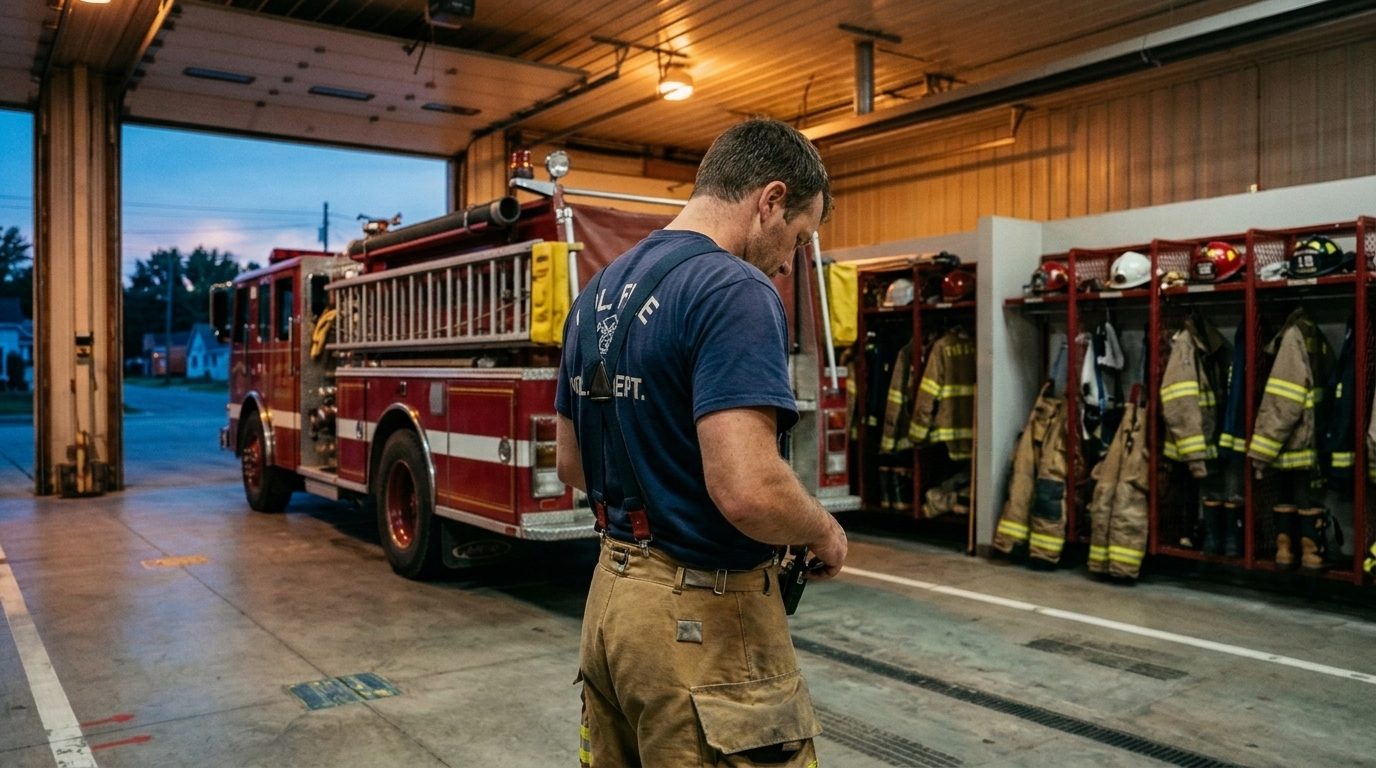
Life as a volunteer firefighter means fitting emergency service around work, family, and ordinary routines that can change without warning. A pager may interrupt dinner, sleep, or a quiet afternoon. Roger Lown Jr. captures that interruption in The Life and Tones of the Lake City V.F.D., a fictional account shaped by his own volunteer fire service experience. Through the members of Lake City, he shows how responding to emergencies becomes part of everyday life, supported by preparation and relationships that most residents never see.
The Moment an Ordinary Evening Changes
The manuscript opens with a fire alarm at Tripp’s Hardware Store. What begins as an activation develops into a substantial response involving Lake City crews and neighboring departments. For the reader, the sequence establishes what the pager represents: limited information followed by decisions that cannot wait until morning.
Lown moves between homes, vehicles, and the station as members respond. Those transitions matter because a volunteer crew must assemble from people who were doing something else moments earlier. The scene gives the alert a human setting. Behind every responding vehicle is someone who has left a household, changed plans, and accepted responsibility for the next assignment.
The book also includes calls that resolve with relatively little damage. An alarm during Family Day turns out to involve burned food. Its place in the story is useful. Volunteers cannot know the outcome when they first hear the dispatch. The initial response must take the reported problem seriously, even when the explanation eventually proves ordinary.
Preparation Makes the Response Possible
Knowing Where the Equipment Belongs
Much of volunteer firefighter life happens before a call. In Lake City, members check apparatus, become familiar with tools, and learn where equipment is stored. New recruits receive guidance about identifying tools and finding the correct compartment. These details may sound less dramatic than entering a burning building, but they explain how an unfamiliar person gradually becomes a useful crew member.
A tool that cannot be found quickly creates extra work for someone else. A recruit who knows its location can help without pretending to have skills they have not yet developed. Lown gives these modest contributions room in the story, showing that participation begins with learning and dependable assistance.
Speaking Honestly About Skills
Captain Wally Rinsdale asks members to identify the tasks they do not feel confident performing. Their answers shape the training calendar. The discussion moves the department beyond assuming that attendance or enthusiasm automatically produces competence.
For readers considering volunteer firefighting, this is an especially valuable distinction. Wanting to help is a starting point. Becoming useful requires instruction, supervised practice, and a willingness to admit uncertainty. The strongest moments in these scenes come when experienced members make room for questions rather than treating them as an embarrassment.
The book follows those questions into station life and emergency calls. Readers interested in this practical and personal view can Buy the book at Barnes & noble and follow the department through its changing seasons, responsibilities, and membership.
Every Call Has a Different Human Setting
A search at Strawberry Acres Farm draws on firefighter Tyler Villano’s familiarity with the fields. His local knowledge gives the crew something that cannot be supplied by equipment alone. He understands the place because he has worked there, and that background becomes relevant when someone needs help.
This scene broadens the meaning of preparedness. Members arrive with different occupations, experiences, and connections to the town. An effective leader notices when those differences can support an assignment. The book’s fictional setting allows Lown to show how community knowledge travels with the people who answer the pager.
Other calls involve storms, vehicles, and concerns inside homes. Together, they keep the narrative from treating volunteer service as an uninterrupted sequence of major fires. Residents need help in varied circumstances, and the department must move between those circumstances while maintaining attention and discipline.
The article’s examples are narrative illustrations, not instructions for carrying out emergency operations. Anyone interested in joining should ask their local department about its actual duties, qualifications, and training requirements. Lake City provides a way to understand the commitment, while local officers explain what participation involves in a particular community.
The Work Continues After the Emergency
Returning to the station does not immediately restore the evening that was interrupted. Equipment needs attention, apparatus must be ready again, and members may need food and rest. In Lown’s account, the Pantry Auxiliary Team supports that return through meals and practical care.
Their presence gives the book a broader view of service. The people handling food and drinks are part of the department’s working life. They help tired crews recover and make the station a place where members are looked after. Their contribution deserves attention alongside the more visible response.
Conversation also continues after calls. Members discuss decisions, tell stories, and ask questions. These exchanges connect the experience of one incident to preparations for another. They give younger members access to knowledge that might otherwise remain with the person who first learned it.
Making Room for Life Outside the Station
Lown also shows that service needs limits. Al Selig spends time with his family, and the narrative includes occasions when members are unavailable. These passages prevent commitment from being measured only by how often someone leaves home.
A department depends on people whose circumstances change. Work schedules shift, children need attention, and families experience illness or loss. A believable account of volunteer firefighter life must leave space for those realities. In Lake City, friendship and shared responsibility help members carry the commitment together.
For the town, that careful preparation may remain invisible until help is needed. Lown makes it visible by following the same people through quiet evenings and demanding calls. Readers can see that a dependable response grows from maintained equipment, familiar colleagues, and members who understand their responsibilities before the alert arrives.
Lown’s author biography describes more than twenty years in volunteer service, beginning as a junior firefighter at sixteen. His fictional town gives that experience a narrative home. The resulting picture includes urgency, routine, humor, and the work of learning to be dependable. When the tones drop, the response begins in public. The habits that support it have usually been forming quietly for much longer.
 Arabic
 English
 French
 Spanish
 Portuguese
 Deutsch
 Turkish
 Dutch
 Italiano
 Russian
 Romaian
 Portuguese (Brazil)
 Greek