
Improving Powder Handling Efficiency in Pesticide Manufacturing: Why Dust-Free Bag Discharging Matters

In chemical and pesticide production, the first stage of manufacturing often involves a task that receives less attention than mixing or grinding: transferring raw materials from bags into the production system. Although this operation may seem straightforward, handling fine powders manually can create several problems, including airborne dust, material spillage, inconsistent feeding and additional cleaning requirements.
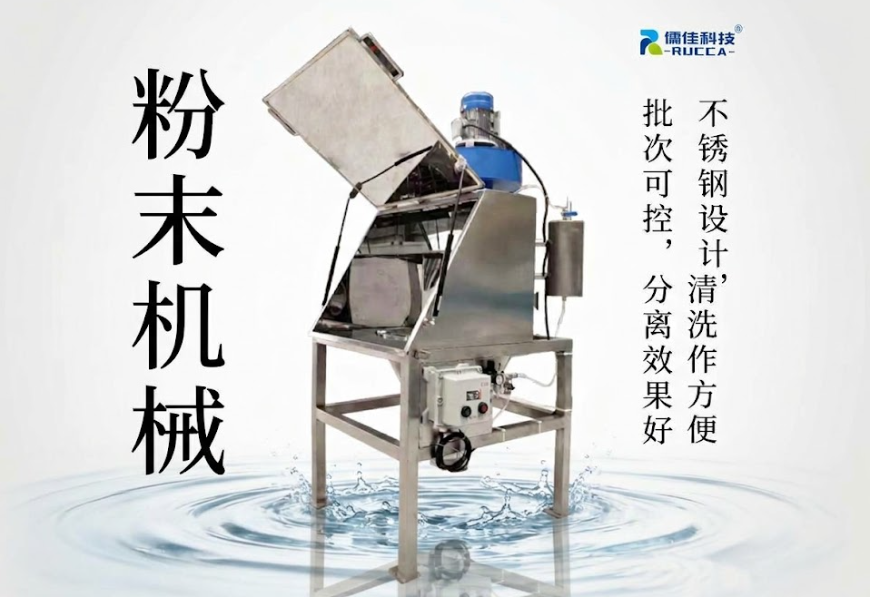
For manufacturers producing pesticide suspension concentrates (SC), these issues can affect both workplace management and production efficiency. A Small Bag Dust-Free Powder Discharging Station provides a more organized way to open, unload and transfer powdered ingredients while helping control dust at the feeding point.
1. Why Powder Handling Needs Better Dust Control
Many chemical ingredients are supplied in small bags for convenient transportation and storage. During manual unloading, however, opening and tipping bags can release fine particles into the surrounding environment. Repeated operations may cause powder accumulation on equipment, floors and nearby work surfaces.
This creates more than a housekeeping problem. Certain chemical powders require specific exposure controls, and uncontrolled dust can increase the workload associated with workplace cleaning and material management.
A dust-free powder discharging station creates an enclosed or controlled feeding area equipped with dust collection. Its negative-pressure feeding platform helps capture airborne particles generated during bag opening and unloading, reducing the amount of dust escaping into the production environment.
For pesticide manufacturers, this approach can help maintain a cleaner raw material feeding area and reduce unnecessary powder loss. Actual dust-control performance should be assessed according to the material properties, operating conditions and dust collection configuration.
2. Organizing Bag Unloading and Reducing Manual Handling
When production workers need to empty numerous bags throughout a shift, an unorganized feeding process can interrupt other operations. Spilled powder may require immediate cleanup, while repeated manual transfers make material handling more complicated.
A dedicated small bag powder unloading system provides a defined location for opening bags and feeding materials. Instead of handling powder at different points around the workshop, operators can follow a more consistent procedure.
This can bring several practical benefits:
-
A designated area for bag opening and powder discharge.
-
Better control over powder spillage during material transfer.
-
Reduced cleaning work around the feeding point.
-
More organized material handling for daily production.
-
Easier coordination between operators and downstream equipment.
The objective is not simply to increase unloading speed. A well-planned feeding station should make the operation easier to supervise while supporting appropriate worker protection and cleaning procedures.
3. Integrating Powder Discharging into Pesticide SC Production
Pesticide suspension concentrate manufacturing involves more than introducing raw materials into a mixing tank. Depending on the formulation, production may include powder feeding, premixing, high-speed dispersion, wet grinding and final blending.
The quality of the initial feeding stage can influence how smoothly materials enter subsequent processes. Poorly handled powders may form lumps, introduce unwanted foreign particles or create inconsistent feeding conditions.
A Small Bag Dust-Free Powder Discharging Station can serve as the front-end material handling unit in this workflow. Screening can be incorporated where required to remove foreign particles or oversized lumps before the powder moves to the next stage.
Rucca's equipment can also be connected with positive-pressure or negative-pressure conveying systems. This provides flexibility when transferring materials to storage hoppers, mixers or other downstream processing equipment.
For manufacturers planning a new pesticide SC production line, it is worth considering the entire material transfer route rather than purchasing the unloading station independently. The feeding system, conveying arrangement and mixing equipment should be evaluated together to ensure compatibility with the factory layout and production requirements.
4. Applications Beyond Pesticide Manufacturing
Dust-controlled powder feeding is relevant to a range of industries where dry materials need to be transferred from bags into processing equipment.
In pesticide and chemical plants, it helps manage powdered ingredients during raw material preparation. Food manufacturers may use similar equipment for dry ingredient handling, provided the design meets the required hygiene and cleaning standards. Pharmaceutical production also places importance on controlled material transfer and contamination management.
Other applications include plastics processing, coatings, pigments and various industrial chemical operations involving powdered additives.
However, equipment selection should never rely on industry classification alone. Powder particle size, bulk density, moisture sensitivity, flowability and potential hazards all affect the appropriate feeding arrangement.
5. Key Factors to Evaluate Before Purchasing
Before choosing a dust-free powder discharging station, manufacturers should provide the supplier with clear information about their operating conditions.
First, identify the materials to be handled. Fine powders, cohesive materials and moisture-sensitive ingredients may require different feeding and cleaning arrangements.
Next, evaluate the daily handling volume, bag dimensions and required feeding frequency. These factors help determine whether the proposed station can match the actual production workload.
The conveying method is equally important. If the powder needs to travel to a remote mixer or storage vessel, the station should be evaluated alongside the required pneumatic conveying equipment.
Finally, consider cleaning accessibility and material safety. Pesticide ingredients may require dedicated procedures for residue removal, worker protection and cross-contamination prevention. Depending on the material's hazard classification, additional measures for combustible dust, explosion protection or chemical exposure may also be necessary. Standard dust collection should not automatically be considered sufficient for every application.
6. Rucca's Solution for Small Bag Powder Feeding
Rucca's Small Bag Dust-Free Powder Discharging Station is designed for small-bag powder unpacking, feeding, screening and discharging. Its key features include a negative-pressure feeding platform, a structure intended to facilitate cleaning, and compatibility with positive-pressure or negative-pressure conveying systems.
These functions address several common concerns in industrial powder handling: dust generation during bag opening, powder accumulation around the feeding area and the need to transfer materials efficiently to subsequent production stages.
For pesticide manufacturers upgrading their raw material handling process, Rucca can evaluate the powder characteristics, feeding requirements and production layout to determine a suitable equipment configuration.
Conclusion
Powder handling is an important part of production efficiency, even though it takes place before the main mixing and grinding operations begin. Poorly organized bag unloading can increase dust, cleaning work and material transfer difficulties.
A Small Bag Dust-Free Powder Discharging Station helps establish a more controlled feeding process by providing a dedicated unloading area, dust collection and connections to downstream conveying equipment.
For pesticide SC manufacturers and other powder-processing businesses, improving the raw material feeding stage is a practical step toward cleaner workshop management and a more coordinated production workflow.
 Portuguese
 English
 Arabic
 French
 Spanish
 Deutsch
 Turkish
 Dutch
 Italiano
 Russian
 Romaian
 Portuguese (Brazil)
 Greek