
How Fiction Uses Alien Worlds to Examine Human Society and Values
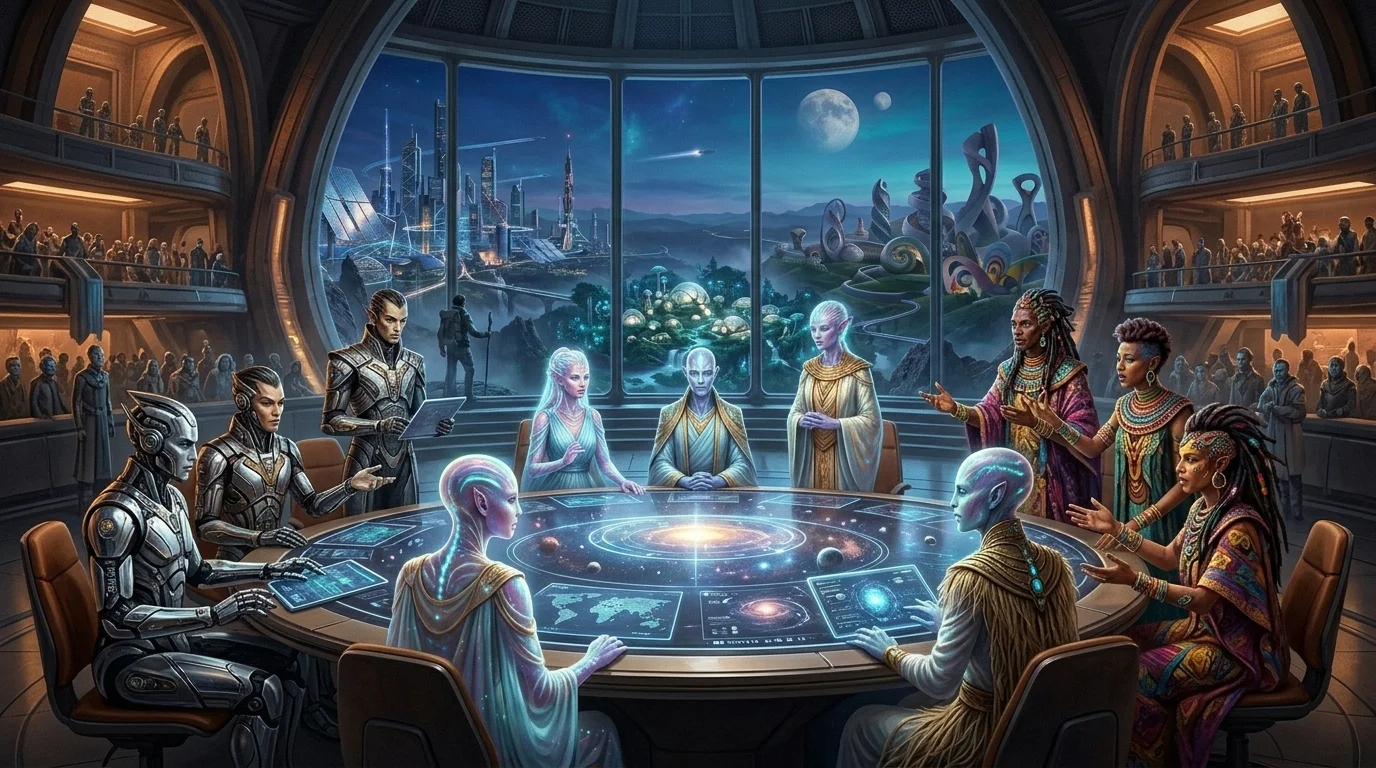
Why Alien Worlds Tell Human Stories
Science fiction has always used distant planets, unfamiliar civilizations, and imagined species to explore questions about humanity. While these stories may take place thousands of years in the future or across galaxies beyond our understanding, their central concerns often reflect issues people experience today.
From questions about equality and leadership to discussions about technology, identity, and cooperation, science fiction provides writers with a creative space to examine society from a new perspective. THE SKY PEOPLE by J.G. Littlejohn demonstrates this approach by creating different civilizations whose beliefs, traditions, and conflicts reveal larger questions about how societies develop and interact.
Alien worlds allow readers to step outside their own reality. When a story introduces a civilization with different values or social structures, readers are encouraged to think about their own world in a new way.
The purpose of these fictional societies is not only to entertain. They create opportunities to explore human experiences through imagination.
Alien Civilizations as Reflections of Society
One of the most important functions of science fiction is using fictional civilizations as mirrors for real-world ideas.
A writer can create an alien society with different customs, political systems, or beliefs and use that society to examine questions about human behavior. Because the setting is fictional, readers can analyze these issues without immediately connecting them to a specific modern group or situation.
In The Sky People, the civilizations of Veridian, Lyra, and Shion represent different approaches to knowledge, spirituality, creativity, and social organization.
The Zepharians of Veridian are portrayed as highly advanced beings focused on scientific achievement. They build monuments and cities inspired by the stars and dedicate themselves to discovery and progress.
The Lumins of Lyra represent a different perspective. Their society emphasizes spiritual connection, inner awareness, and communication through their unique abilities. Their glowing appearance and connection to chakra colors reflect how they express emotions and thoughts.
The Xianones of Shion approach existence through creativity, emotional expression, and artistic freedom. Their culture values individuality and resistance against restrictions on personal expression.
By creating these different societies, the story explores how civilizations can develop different priorities while still existing within the same universe.
Exploring Equality Through Fictional Societies
Science fiction frequently examines equality because imagined worlds allow writers to question how societies distribute power.
Alien civilizations often have their own systems of leadership, social roles, and expectations. These systems can reveal important questions about fairness and opportunity.
In The Sky People, disagreements about equality appear within the history of the Zepharians. The story describes tensions between different groups within Vera, including conflicts regarding the roles and treatment of the Phars and Rians.
Through these fictional conflicts, the story examines how traditions and social systems influence individuals. It raises questions about whether societies should preserve old structures or reconsider them as they evolve.
This is one reason science fiction remains relevant. By placing these discussions in imaginary settings, authors can explore important social questions through creative storytelling.
Technology and the Impact of Progress
Technology is another major theme that science fiction uses to examine society.
Future technology often represents both opportunity and challenge. Advanced inventions may solve problems, but they can also create new questions about responsibility, control, and access.
The Sky People presents Vera as a civilization with significant scientific achievements. Their scientists work on projects designed to harness the energy of their solar system and expand their capabilities.
However, the story also explores concerns surrounding power. Other civilizations question Vera’s intentions and whether cooperation could affect their independence. During discussions about uniting civilizations, concerns arise about whether unity could become a form of control.
This reflects a common science fiction theme: progress is not only about what technology can achieve, but also about how societies choose to use it.
Readers can discover more about these ideas and the complete story through Buy the book at Amazon.
The Importance of Cultural Differences in Science Fiction
Another reason alien worlds are powerful storytelling tools is because they highlight cultural differences.
A fictional universe with multiple civilizations allows authors to explore how groups with different experiences can communicate, cooperate, or disagree.
In The Sky People, different civilizations must work toward a shared mission despite their histories and conflicting viewpoints. The discussions between Vera, Luma, and Xianone show the challenges of creating cooperation between groups that do not always trust one another.
This creates a realistic foundation for the story because successful cooperation requires understanding rather than simply agreement.
Science fiction often suggests that differences between societies do not have to prevent progress. Instead, those differences can become sources of knowledge and growth.
Why Readers Relate to Imaginary Worlds
Although science fiction introduces unfamiliar environments, readers connect with these stories because the emotional experiences remain recognizable.
Characters still search for belonging. Communities still struggle with change. Leaders still face difficult decisions. Individuals still question their place within society.
The distance between Earth and fictional planets allows readers to examine these ideas from a fresh perspective.
An alien world may appear completely different, but the questions it raises are often deeply human:
How should societies use knowledge?
How can different groups work together?
What responsibilities come with advancement?
How should traditions change over time?
These questions help science fiction remain meaningful across generations.
The Continuing Role of Science Fiction in Understanding Society
Science fiction continues to provide one of the most creative ways to examine social values. By creating alien worlds, authors can explore real challenges through imagination and storytelling.
The strongest science fiction does not simply predict future technology. It examines relationships, choices, and the values that shape civilizations.
The Sky People demonstrates how fictional societies can explore themes of cooperation, equality, discovery, and cultural identity. Through its different worlds and civilizations, the story encourages readers to consider how societies develop and how different groups can move toward a shared future.
Alien worlds may exist only within fiction, but the questions they ask remain connected to the real world. That is why science fiction continues to inspire readers and challenge the way we think about society, progress, and humanity’s future.
For more about J.G. Littlejohn and The Sky People, Check out our website.
Explore a science fiction story where distinct civilizations bring different beliefs and ambitions to an interstellar journey.
Discover how questions of progress, independence, and cooperation shape its imagined universe.

 English
 Arabic
 French
 Spanish
 Portuguese
 Deutsch
 Turkish
 Dutch
 Italiano
 Russian
 Romaian
 Portuguese (Brazil)
 Greek