
Projection Nut Welder: Advanced Welding Solutions for Strong, Precise Joints
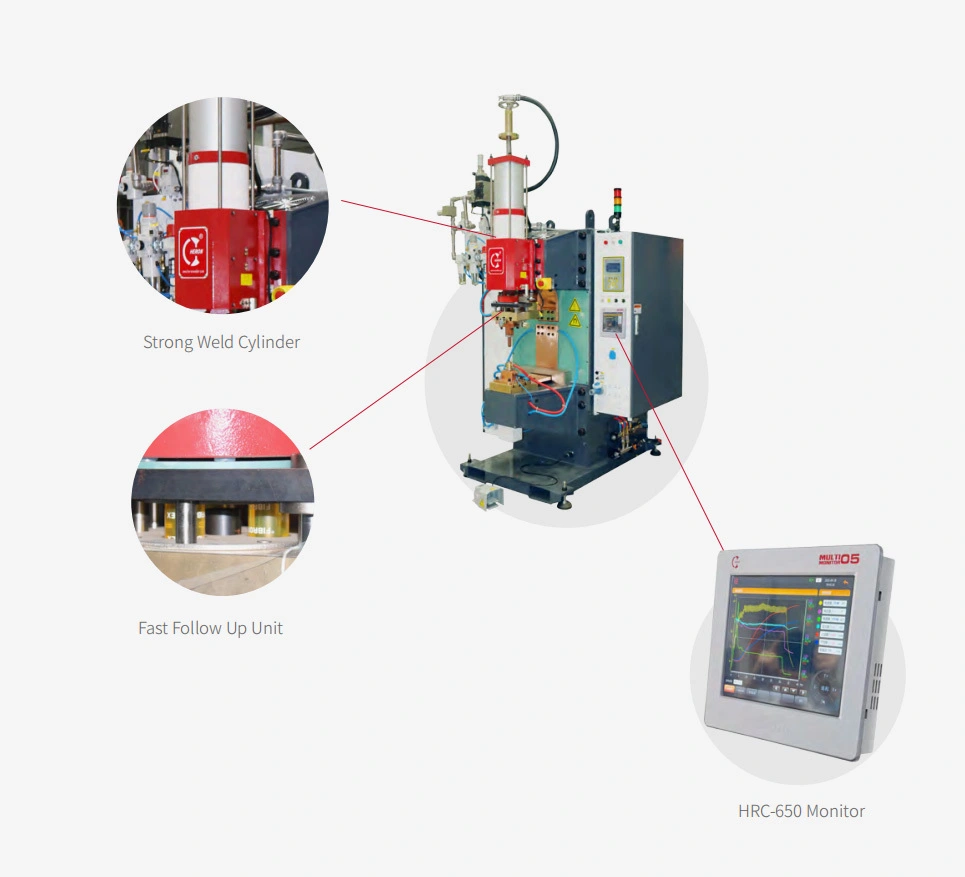
A projection nut welder is an advanced industrial welding solution designed to join nuts securely to metal sheets, components, and fabricated parts. It uses resistance welding technology to create strong, consistent, and reliable connections through specially designed projections on the nut surface. This welding process is widely used in automotive manufacturing, metal fabrication, home appliance production, electrical equipment manufacturing, and other industries that require dependable fastening solutions.
In modern manufacturing, product quality depends heavily on the strength and accuracy of welded connections. Traditional fastening methods may require additional operations, while projection welding provides an efficient approach to attaching nuts directly to metal components. With advanced equipment from Heron Welder, manufacturers can improve production efficiency, achieve consistent welding results, and support demanding industrial applications.
What Is a Projection Nut Welder?
A projection nut welder is a specialized resistance welding machine that attaches projection nuts to metal workpieces using controlled electrical current and pressure. Projection nuts feature small raised sections on their contact surfaces. These projections concentrate electrical resistance and heat at specific welding points, allowing the nut to bond securely with the base material.
During operation, the machine positions the nut and metal workpiece between welding electrodes. Pressure is applied, and an electrical current passes through the contact area. The resulting heat softens and fuses the materials at the projection points, creating a strong welded connection.
Heron Welder provides industrial welding solutions designed to support accurate positioning, controlled welding parameters, and reliable production performance. These capabilities make projection nut welding an effective choice for manufacturers seeking repeatable results and efficient assembly processes.
How Does a Projection Nut Welder Work?
Understanding the working process helps manufacturers select suitable equipment for their production requirements. Projection nut welding follows a carefully controlled sequence to achieve a secure connection.
Workpiece Positioning: The metal sheet or component is placed in the appropriate welding fixture. The projection nut is positioned accurately at the required location to ensure proper alignment.
Electrode Contact: The welding electrodes move toward the workpiece and apply the required pressure. Correct electrode positioning helps maintain stable contact throughout the welding cycle.
Electrical Current Application: A controlled electrical current passes through the projection points. Electrical resistance generates localized heat, allowing the contact surfaces to reach the required welding temperature.
Welding and Fusion: The projections collapse under pressure as the heated materials form a metallurgical bond between the nut and the metal sheet.
Cooling and Completion: After the current stops, the electrodes maintain pressure briefly while the welded area solidifies. The finished component is then released for the next production operation.
This controlled process helps manufacturers achieve consistent welding quality while supporting efficient industrial production.
Key Features of a Modern Projection Nut Welder
Choosing suitable welding equipment is essential for achieving reliable production results. A high-quality projection nut welder should offer features that support precision, productivity, and consistent performance.
1. Accurate Welding Control
Precise control of welding current, pressure, and welding time helps create uniform connections. Advanced control systems allow manufacturers to adjust welding parameters according to material thickness, nut specifications, and production requirements.
2. Advanced Capacitor Discharge Technology
Capacitor discharge technology delivers concentrated welding energy within a very short period. Heron Welder offers medium-voltage capacitor discharge welding solutions that support applications involving hot-stamped steel, galvanized steel, and other demanding materials.
3. Strong and Durable Machine Construction
Industrial welding machines must withstand continuous production operations. A sturdy machine frame and reliable mechanical components help maintain stable electrode movement and consistent welding pressure.
4. User-Friendly Operation
Modern welding equipment can incorporate intelligent controls, touchscreens, programmable settings, and monitoring systems. These features help operators manage welding parameters and maintain repeatable production processes.
5. Automation Compatibility
Manufacturers increasingly integrate welding equipment with automated production lines. A projection nut welder that supports PLC controls, robotic systems, and automatic feeding can help streamline manufacturing operations.
Major Advantages of Using a Projection Nut Welder
Investing in a professional projection nut welder offers several advantages for industrial manufacturers. Its specialized welding process supports accurate fastening, efficient production, and dependable product assembly.
Improved Welding Strength: Projection welding concentrates heat at specific contact points, helping create strong metallurgical connections between nuts and metal components. This is especially important for automotive structures and industrial assemblies that require dependable fastening.
Higher Production Efficiency: The process offers short welding cycles and can complete multiple welds simultaneously when the workpiece and machine configuration allow it. This helps increase production capacity and maintain consistent manufacturing schedules.
Reduced Energy Consumption: Modern capacitor discharge welding technology concentrates energy into the welding area. This approach can reduce unnecessary heat generation and improve energy utilization during production.
Minimal Heat-Affected Area: Controlled energy delivery helps limit heat exposure around the welding point. This is valuable when working with heat-sensitive materials and high-strength steel components.
Better Thread Protection: Appropriate welding parameters and precise energy control help preserve the nut's threaded section. Maintaining thread quality supports smooth bolt installation during subsequent assembly operations.
Consistent Product Quality: Programmable welding parameters help manufacturers maintain repeatable results across production batches. Consistency is particularly important for businesses supplying automotive and appliance manufacturers.
Longer Electrode Service Life: Optimized welding processes can reduce unnecessary heat and electrode wear, supporting stable machine operation and more efficient maintenance planning.
Industrial Applications of Projection Nut Welder Equipment
A projection nut welder is suitable for numerous manufacturing industries because welded nuts are commonly required in metal structures, equipment housings, and mechanical assemblies.
Automotive Manufacturing
The automotive industry is one of the major users of projection nut welding technology. Nuts are welded onto vehicle body panels, chassis components, seat rails, reinforcement plates, bumper structures, and battery tray assemblies. These welded connections provide fastening points for subsequent manufacturing and vehicle assembly operations.
Home Appliance Production
Manufacturers of refrigerators, washing machines, ovens, air conditioners, and water heaters use welded nuts in metal panels and structural components. Projection nut welding helps create reliable attachment points while supporting efficient large-scale production.
Electrical Equipment Manufacturing
Electrical cabinets, distribution panels, circuit breaker housings, and industrial enclosures frequently require securely attached nuts. Projection welding provides an effective solution for assembling these metal components.
Compressor Manufacturing
Compressor manufacturers use resistance welding technologies to assemble different metal components. Projection nut welding can support the production of brackets, housings, mounting structures, and related fastening components.
General Metal Fabrication
Metal fabrication businesses can use projection nut welders for manufacturing equipment frames, brackets, industrial cabinets, metal furniture, and other fabricated products. The process helps simplify assembly and improve production consistency.
Why Choose Heron Welder for Projection Nut Welding?
Heron Welder is an established manufacturer of industrial metal-joining equipment, with experience dating back to 1991. The company specializes in resistance welding, automated welding systems, clinching, and riveting technologies.
With more than three decades of industry experience, Heron focuses on providing practical welding solutions for manufacturers across automotive, home appliance, compressor, electrical, and hardware industries.
Its projection welding equipment includes medium-voltage capacitor discharge technology and medium-frequency direct-current welding solutions.
Advanced Capacitor Discharge Solutions: Heron's capacitor discharge projection welders are designed for high-precision fastening applications. Their concentrated energy delivery supports short welding cycles and a small heat-affected zone.
Solutions for High-Strength Materials: Heron equipment supports demanding applications involving hot-stamped steel, galvanized steel, press-hardened steel, and other advanced materials.
Flexible Machine Configurations: Different manufacturing requirements call for different equipment specifications. Heron offers multiple machine configurations, including L Series and H Series capacitor discharge welders, with solutions for various production needs.
Industrial Manufacturing Experience: Heron's experience in welding technology helps the company understand the requirements of modern production environments. Its equipment portfolio supports both individual welding operations and integrated manufacturing systems.
Automation and Intelligent Manufacturing: Heron also provides automated welding solutions designed to improve production coordination, operational efficiency, and welding consistency.
How to Select the Right Projection Nut Welder
Selecting appropriate equipment requires careful consideration of your manufacturing requirements. The right machine should match your materials, production volume, and welding applications.
Evaluate Material Specifications: Identify the type of metal, sheet thickness, nut material, and surface coating involved in your production process. These factors influence the required welding energy and pressure.
Consider Production Capacity: Manufacturers with high production volumes should evaluate welding cycle time, automation compatibility, and the possibility of simultaneous welding operations.
Check Energy Requirements: Compare available welding technologies and select an appropriate system according to your production environment and energy requirements.
Review Control Capabilities: Programmable controls and monitoring functions can help maintain consistent welding parameters and support quality management.
Consider Machine Configuration: Electrode arrangements, working space, throat depth, fixtures, and feeding systems should match the dimensions and design of your workpieces.
Choose an Experienced Manufacturer: Working with an experienced equipment manufacturer such as Heron Welder can help businesses identify suitable machine configurations and develop efficient welding processes.
Benefits of Investing in Advanced Welding Technology
Modern projection nut welding equipment provides long-term value by improving manufacturing operations. Businesses can benefit from simplified assembly processes, reliable fastening quality, reduced secondary operations, and better production planning.
The technology also supports automation, making it suitable for manufacturers looking to modernize their production facilities. By integrating appropriate welding equipment with automated handling systems, companies can improve workflow consistency and manage larger production volumes.
Another important benefit is product reliability. Properly welded nuts provide secure threaded attachment points, helping ensure that finished products meet their intended mechanical and assembly requirements.
For manufacturers operating in competitive industrial markets, these advantages can contribute to improved productivity, stronger product quality, and greater manufacturing efficiency.
Final Thoughts: Choose Heron Welder for Reliable Projection Nut Welding Solutions
A projection nut welder is an important investment for manufacturers seeking strong, accurate, and repeatable metal fastening solutions. Its specialized resistance welding process delivers reliable connections while supporting efficient production across automotive, home appliance, electrical, compressor, and metal fabrication industries.
From advanced capacitor discharge technology to flexible industrial machine configurations, modern projection nut welding equipment offers valuable benefits for businesses focused on manufacturing quality and productivity.
Heron Welder combines decades of manufacturing experience with advanced metal-joining technology to provide professional welding equipment for diverse industrial requirements. Its projection welding solutions are designed to support precision, energy efficiency, consistent welding performance, and modern manufacturing operations.
For businesses planning to improve their welding capabilities, choosing the right projection nut welder from Heron Welder can be a valuable step toward building a more productive, reliable, and efficient manufacturing process.
 English
 Arabic
 French
 Spanish
 Portuguese
 Deutsch
 Turkish
 Dutch
 Italiano
 Russian
 Romaian
 Portuguese (Brazil)
 Greek