
European Automotive Industry Restructuring Creates New Challenges for Global SUV Competition
The European automotive industry is entering a period of significant structural adjustment. Traditional manufacturers are facing increasing pressure from rising production costs, changing consumer demand, international competition, and the transition toward new automotive technologies.
A recent development in Germany highlights the scale of these challenges. According to a November 23, 2026 Reuters report, major automotive companies, including Volkswagen and Mercedes-Benz, are preparing for difficult labor negotiations as they consider workforce reductions, investment adjustments, and potential factory restructuring. Automotive suppliers are also experiencing pressure on profitability as the industry faces a more challenging business environment. <Cite refs={["turn515229news10"]}/>
These developments reflect a broader transformation in the global automotive market. For Chinese manufacturers such as Geely, changes in Europe's traditional automotive sector may create new competitive opportunities, while overseas dealers will need to pay closer attention to shifting market conditions.
1. European Automakers Are Facing Increasing Cost Pressure
For decades, Germany has been one of the world's most influential automotive manufacturing centers. Established brands have benefited from engineering expertise, strong supplier networks, and international distribution channels.
However, maintaining these advantages has become more difficult. High labor expenses, energy costs, investment requirements, and changing market conditions are putting pressure on manufacturers' operating margins.
Companies are therefore reconsidering how they organize production and allocate resources. Factory utilization, workforce efficiency, product development budgets, and supplier relationships are becoming important areas for restructuring.
The impact extends beyond vehicle manufacturers. Automotive suppliers also face pressure as production volumes and investment priorities change. Businesses that depend heavily on traditional vehicle components may need to adjust their product strategies as the industry evolves.
2. Chinese Automotive Brands Are Changing the Competitive Landscape
One factor contributing to the changing European automotive environment is the growing presence of Chinese vehicle manufacturers.
Chinese automakers have expanded their capabilities in vehicle development, manufacturing, digital technology, and powertrain engineering. Their growing export activities are introducing additional competition into markets that were previously dominated by established international brands.
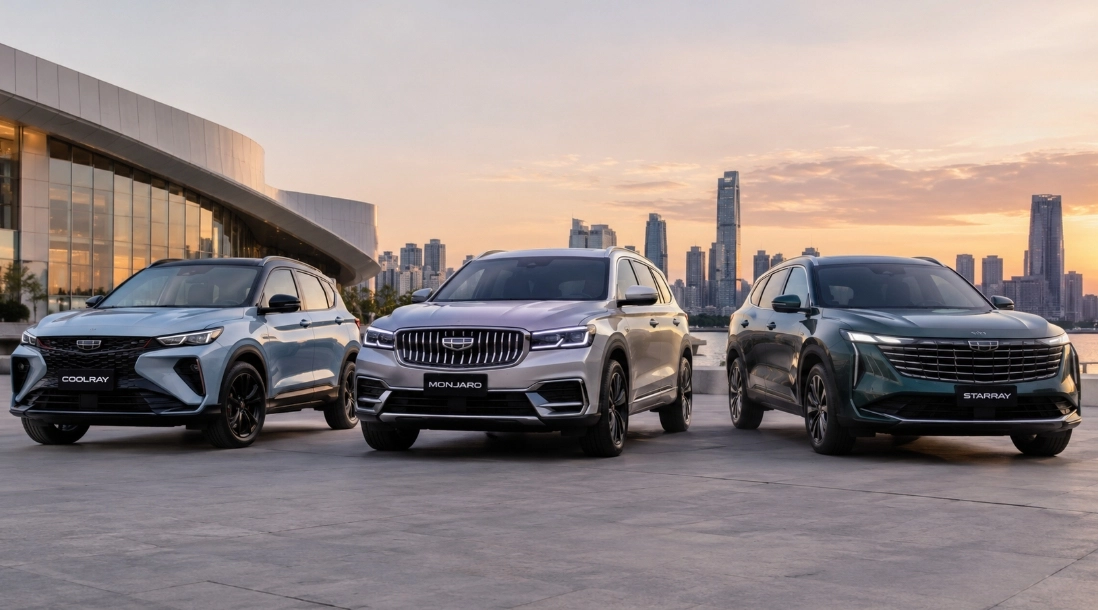
Geely is one of the manufacturers developing a broader international presence. Its SUV portfolio includes several models designed for different consumer segments.
The Geely Coolray competes in the compact SUV category, offering an option for customers interested in urban mobility and everyday practicality.
The Geely Starray, also known as the Atlas in certain markets, addresses buyers looking for additional cabin space and family-oriented versatility.
Meanwhile, the Geely Monjaro occupies a more premium SUV segment, targeting customers who place greater importance on interior comfort, equipment, and driving experience.
For overseas distributors, these models provide different options when evaluating Chinese SUV brands against established competitors. However, actual competitiveness depends on local pricing, vehicle specifications, brand recognition, and regulatory requirements.
3. Manufacturing Restructuring Could Change International Vehicle Competition
The restructuring of European automotive production may influence the industry's international development over the coming years.
When manufacturers reduce factory capacity or adjust production investment, they may reconsider where vehicles and components should be manufactured. International partnerships, regional production facilities, and localized supply chains could become more important.
At the same time, governments are increasingly considering industrial policies designed to protect domestic manufacturing and strengthen regional supply networks.
For Chinese automotive manufacturers, this creates both opportunities and challenges. Expanding into overseas markets may help them reach new customer groups, but trade policies, local manufacturing requirements, and import regulations can influence their market-entry strategies.
International dealers should therefore monitor not only vehicle prices and product updates but also changes in regional production and trade policies.
4. What Does This Mean for Overseas SUV Distributors?
Changes in the European automotive industry do not automatically translate into higher demand for Chinese SUVs. However, they highlight the importance of maintaining a flexible vehicle portfolio.
Dealers should consider several factors when evaluating their future purchasing strategies.
Competitive pricing: Compare imported Chinese SUVs with established brands in the same local price segment. Initial purchase prices should be evaluated alongside taxes, shipping expenses, and other landed costs.
Product differentiation: Consider whether vehicle design, cabin space, technology, and powertrain options offer meaningful advantages for local customers.
Market positioning: Avoid relying on a single vehicle category. Compact and larger SUVs may appeal to different customer groups and purchasing budgets.
Regulatory developments: Follow changes in import duties, vehicle certification, emissions requirements, and regional trade policies.
Inventory management: Adjust purchasing quantities according to local demand rather than assuming that international market trends will produce the same results everywhere.
A more flexible approach can help distributors respond to changes in brand competition and consumer preferences.
5. Reliable Vehicle Sourcing Remains Important
As international automotive competition develops, overseas buyers need dependable sourcing arrangements and accurate vehicle information.
Importers purchasing Geely SUVs from China should confirm the model year, engine configuration, equipment package, and export specifications before placing an order. Differences between domestic and export versions can affect both the purchasing decision and the vehicle's suitability for the destination market.
Moluoni supports international vehicle buyers with vehicle sourcing, specification confirmation, pre-shipment inspection, export documentation, and international shipping coordination.
For distributors considering Geely Coolray, Starray, or Monjaro imports, a well-organized procurement process can help improve purchasing efficiency and reduce avoidable shipment-related issues.
Conclusion
The restructuring of Germany's automotive industry reflects the broader challenges facing established manufacturers as global competition intensifies. Rising operating costs, changing production strategies, and pressure from international competitors are encouraging traditional automotive companies to reconsider their business models.
For Chinese manufacturers such as Geely, these developments form part of a changing international competitive environment. Overseas distributors can respond by evaluating different SUV segments, monitoring regional market developments, and building more flexible sourcing strategies.
Ultimately, long-term success in the global automotive market will depend not only on competitive vehicle products but also on manufacturing efficiency, market adaptation, and reliable international distribution.
https://www.moluoni.com/blog/geely-suv-comparison-which-model-is-right-for-your-market.html
 Greek
 English
 Arabic
 French
 Spanish
 Portuguese
 Deutsch
 Turkish
 Dutch
 Italiano
 Russian
 Romaian
 Portuguese (Brazil)