
Automatic Stirrup Bender Machine: Enhancing Precision in Reinforcement Production
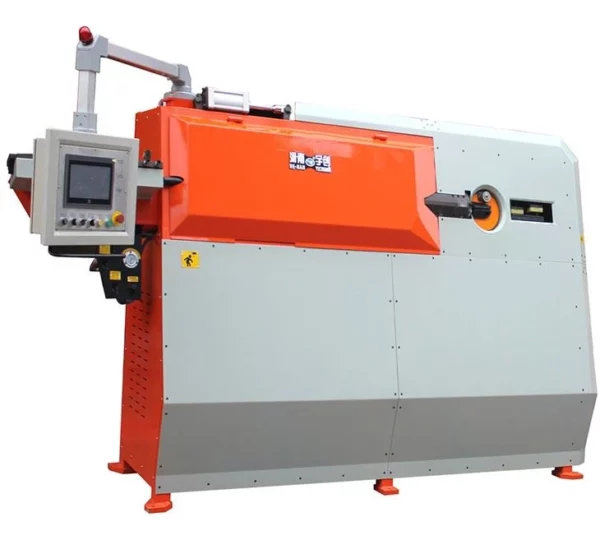
Reinforcement steel plays a critical role in modern construction, helping concrete structures withstand different loads and maintain their structural strength. Among the various reinforcement components used in buildings, bridges, foundations, and infrastructure projects, stirrups are particularly important. They help hold reinforcing bars in position and contribute to the structural performance of reinforced concrete beams and columns. Producing these components accurately and consistently requires suitable processing equipment. A modern automatic stirrup bender machine can help steel fabrication businesses improve their production processes while reducing the manual effort involved in repetitive bending operations.
Understanding the Role of Stirrups in Construction
Stirrups are reinforcement elements commonly manufactured from steel bars and bent into rectangular, square, or other specified shapes. They are used around longitudinal reinforcement bars in reinforced concrete structures.
Their dimensions, spacing, and shapes depend on engineering drawings and structural requirements. Accurate production is essential because incorrectly formed reinforcement components can create installation difficulties and affect compliance with project specifications.
Construction companies and reinforcement suppliers therefore need reliable methods for preparing stirrups in consistent sizes. As project requirements increase, relying entirely on manual bending can become time-consuming and difficult to standardise.
Why Automatic Stirrup Bending Equipment Matters
Traditional stirrup production often involves several manual steps, including measuring, cutting, bending, and checking the finished components. These operations require skilled workers and careful attention to dimensions.
Automatic bending equipment helps simplify repetitive production tasks by using controlled mechanical operations. Depending on the machine configuration, operators can enter required parameters and process reinforcement bars according to programmed instructions.
This approach can reduce repeated manual adjustments and help maintain consistency across production batches. It is particularly useful for facilities that manufacture large quantities of reinforcement components for construction projects.
Benefits of CNC-Controlled Bending Technology
Modern CNC systems allow operators to control bending operations through programmed settings. Instead of manually repeating every movement, the equipment follows predefined instructions to create required shapes.
Several advantages make this technology valuable for reinforcement processing:
-
Consistent dimensions: Programmed bending settings help produce components with repeatable measurements.
-
Improved productivity: Automated operations can process repetitive designs more efficiently.
-
Reduced manual workload: Operators spend less time performing physically demanding bending tasks.
-
Better production control: Stored programs can help manage recurring manufacturing requirements.
-
Reduced processing errors: Controlled operations can limit certain manual measurement and bending mistakes.
-
Flexible production: Suitable systems can support different stirrup configurations within their technical capabilities.
Actual output depends on machine specifications, reinforcement material, operator training, and the complexity of the required shapes.
Applications in Construction and Steel Fabrication
Stirrups are used in a wide range of reinforced concrete applications. Residential buildings require them for beams, columns, and other structural elements. Commercial developments and industrial facilities may require substantial quantities of consistently prepared reinforcement components.
Infrastructure projects also depend on accurate steel processing. Bridges, highways, tunnels, drainage structures, and other civil engineering developments often involve extensive reinforcement work.
Steel fabrication companies and reinforcement suppliers can use automated bending equipment to prepare components for different customers. Consistent production helps simplify packaging, transportation, and installation at construction sites.
Precast concrete manufacturers may also benefit from organised stirrup production because standardised reinforcement components can support repeatable manufacturing workflows.
Important Factors When Selecting a Machine
Choosing industrial bending equipment requires more than comparing appearance or advertised production speed. Businesses should evaluate whether the machine matches their actual processing requirements.
Important considerations include:
Bar diameter capacity: Confirm the supported reinforcement diameters and material specifications.
Bending capability: Review the available bending shapes, angles, and dimensional range.
Production performance: Compare the expected output with daily or monthly manufacturing requirements.
Control system: Examine the CNC interface, programming process, and ease of operation.
Construction quality: Assess the machine frame, mechanical components, and overall build.
Safety arrangements: Check emergency stops, protective features, and recommended operating procedures.
After-sales support: Consider technical assistance, operator training, maintenance guidance, and spare parts availability.
Evaluating these factors can help businesses select equipment that remains suitable as production requirements change.
Improving Workshop Organisation and Safety
Automated machinery can improve production efficiency, but a well-organised workshop is equally important. Reinforcement bars should be stored in designated areas, with clear separation between incoming materials, processing operations, and finished components.
Operators should receive appropriate training before using bending equipment. They need to understand machine controls, supported material specifications, emergency procedures, and safe material handling practices.
Routine maintenance is another essential responsibility. Regular inspection of mechanical parts, electrical systems, and operating components can help identify problems early. Following the manufacturer's maintenance recommendations supports dependable operation and helps reduce unexpected interruptions.
Supporting the Future of Reinforcement Processing
Construction projects increasingly require accurate reinforcement components delivered within demanding production schedules. Automated bending technology offers fabrication businesses an opportunity to improve consistency and manage repetitive work more systematically.
However, successful implementation also depends on suitable machine selection, trained operators, quality materials, and effective production planning. Businesses should assess their requirements carefully before investing in new equipment.
For manufacturers and construction suppliers exploring modern reinforcement solutions, XYCSteel Machine provides an opportunity to review specialised processing equipment. Selecting an appropriate automatic stirrup bender machine can help improve bending consistency, streamline workshop operations, and support the production of reinforcement components for different construction applications.
 English
 Arabic
 French
 Spanish
 Portuguese
 Deutsch
 Turkish
 Dutch
 Italiano
 Russian
 Romaian
 Portuguese (Brazil)
 Greek