
Key Factors to Consider When Selecting a Pharmaceutical Chiller
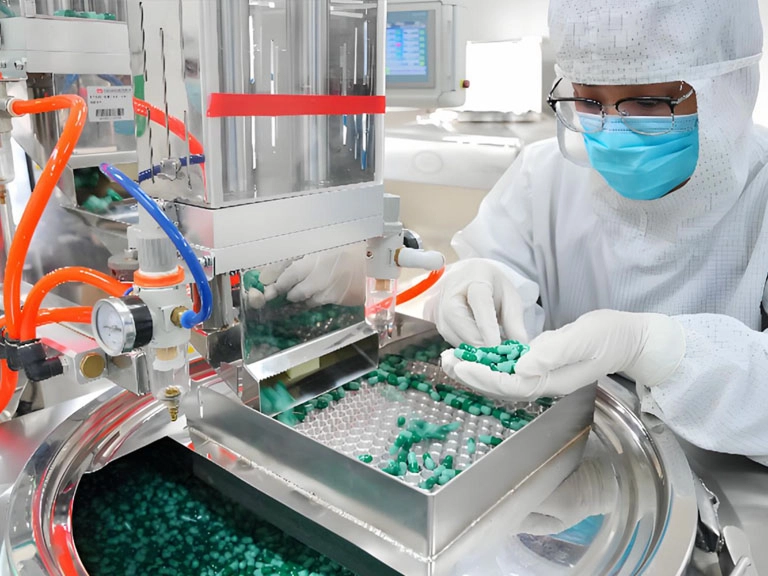
Temperature control is a critical requirement in pharmaceutical manufacturing, research laboratories, biotechnology facilities, and drug storage operations. Many pharmaceutical processes depend on stable thermal conditions to maintain product quality, support consistent production, and protect temperature-sensitive materials. Even small temperature fluctuations can affect certain formulations, biological materials, chemical reactions, and manufacturing processes. This makes selecting the right pharmaceutical chiller an important decision for pharmaceutical companies.
A pharmaceutical chiller is an industrial cooling system designed to remove heat from equipment, process fluids, and other applications that require controlled temperatures. Depending on the facility's requirements, it may support pharmaceutical production, laboratory testing, reactor cooling, liquid circulation, and other temperature-sensitive operations.
However, not every chiller is suitable for every pharmaceutical application. Factors such as cooling capacity, temperature accuracy, fluid compatibility, energy efficiency, hygiene requirements, system reliability, and regulatory expectations must be considered before making a purchase.
Choosing the wrong equipment can lead to temperature instability, unnecessary energy consumption, maintenance difficulties, and production interruptions. On the other hand, a properly selected cooling system can support efficient operations and help maintain consistent process conditions.
What Is a Pharmaceutical Chiller?
A pharmaceutical chiller is a cooling system used to maintain controlled temperatures in pharmaceutical manufacturing, research, and related industrial applications. It removes unwanted heat from a process or piece of equipment and transfers that heat to another medium, typically air or water.
Depending on the application, pharmaceutical chillers may be used with reactors, mixing vessels, laboratory equipment, process-fluid circulation loops, and selected temperature-controlled manufacturing systems.
A typical chiller uses a refrigeration circuit containing a compressor, condenser, expansion device, and evaporator. These components work together to absorb heat from the process fluid and release it to the surrounding environment or a separate heat-rejection system.
Some pharmaceutical applications require cooling water, while others need a carefully selected glycol solution or a specialized heat-transfer fluid. The appropriate choice depends on the operating temperature, process materials, equipment specifications, and contamination-control requirements.
Why Is Choosing the Right Pharmaceutical Chiller Important?
Pharmaceutical processes often involve temperature-sensitive ingredients, active pharmaceutical ingredients, biological materials, and chemical reactions. Maintaining suitable temperatures helps manufacturers achieve consistent operating conditions and reduce the risk of process deviations.
A properly selected pharmaceutical chiller offers several important advantages.
1. Maintaining Temperature Stability
Many pharmaceutical processes operate within defined temperature limits. If the process becomes too warm or too cold, the results may differ from the intended specifications.
A suitable chiller helps regulate process temperatures by removing excess heat as it is generated. The required control accuracy depends on the specific application, equipment, and process protocol.
2. Supporting Product Quality
Temperature can influence chemical stability, viscosity, reaction rates, and other product characteristics. Effective cooling helps maintain the operating conditions needed for consistent manufacturing.
However, cooling alone cannot guarantee product quality. It must work alongside appropriate process controls, monitoring, and quality assurance procedures.
3. Improving Production Efficiency
A chiller with the correct cooling capacity can help equipment operate within its specified temperature range. Reliable temperature control reduces the likelihood of cooling-related interruptions and can support more predictable production schedules.
4. Managing Operating Costs
Energy consumption is an important consideration in facilities that operate cooling equipment for extended periods. An appropriately sized, efficient chiller can help reduce electricity use and unnecessary operating expenses.
5. Supporting Compliance and Documentation
Pharmaceutical facilities may need documented evidence that critical equipment operates as intended. Depending on the application, this can include temperature records, calibration certificates, qualification documentation, maintenance logs, and alarm records.
The level of documentation and qualification should be determined by the intended use and applicable regulatory requirements.
Key Factors to Consider When Selecting a Pharmaceutical Chiller
Selecting a pharmaceutical chiller requires a clear understanding of the process, operating conditions, and facility requirements. The following factors can help businesses make an informed decision.
1. Determine the Required Cooling Capacity
Cooling capacity should be one of the first factors evaluated when selecting a pharmaceutical chiller.
The system must remove enough heat to maintain the required process temperature under realistic operating conditions. If the chiller is undersized, it may struggle to control temperature during peak production. If it is significantly oversized, the equipment may cost more than necessary and could operate inefficiently if its controls are not designed for variable loads.
To determine the required capacity, consider:
-
Heat generated by the process or production equipment.
-
Heat entering the system from the surrounding environment.
-
The volume and thermal properties of the process fluid.
-
Required cooling time and production cycle duration.
-
Maximum expected operating load.
-
Future production expansion.
For example, a pharmaceutical reactor that generates heat during mixing or chemical reactions may require a different cooling capacity from a laboratory instrument with a relatively small and predictable heat load.
A qualified engineer should calculate the total thermal load and select a chiller with suitable operating margins.
2. Evaluate the Required Temperature Range
Different pharmaceutical processes require different operating temperatures. Some applications use chilled water at moderately low temperatures, while others require specialized systems capable of operating below the freezing point of water.
Before choosing a pharmaceutical chiller, identify the minimum and maximum required process temperatures.
You should also consider the temperature of the fluid entering and leaving the chiller, the expected ambient temperature, and the temperature variation the process can tolerate.
3. Check Temperature Control Accuracy and Stability
Temperature accuracy and temperature stability are related but different characteristics.
Accuracy describes how closely the measured temperature matches the target value. Stability describes how much the temperature fluctuates over time under specified conditions.
For pharmaceutical manufacturing, both characteristics may be important. A process that requires tightly controlled conditions may need more sophisticated sensors, controllers, and fluid-circulation arrangements than a general industrial application.
When evaluating a chiller, consider:
-
Temperature control accuracy.
-
Stability under changing process loads.
-
Sensor quality and calibration.
-
Response time after a temperature disturbance.
-
Supply and return temperature monitoring.
-
Alarm settings and data-recording capabilities.
The required performance should be established from the process specifications. Avoid selecting a system based only on the smallest temperature tolerance advertised without checking how that figure was measured.
4. Select the Appropriate Cooling Technology
Pharmaceutical chillers are available in different configurations, including air-cooled and water-cooled systems.
Air-cooled pharmaceutical chiller
An air-cooled chiller rejects heat directly to the surrounding air through a condenser and fan arrangement.
Potential advantages include simpler installation in suitable locations and reduced dependence on a cooling tower. However, performance can be affected by ambient temperature, ventilation, and the amount of heat the unit must reject.
Water-cooled pharmaceutical chiller
A water-cooled chiller typically rejects heat through a condenser connected to a cooling-water system, which may include a cooling tower or another suitable heat-rejection arrangement.
This configuration may be appropriate for facilities with existing cooling-water infrastructure and substantial continuous cooling requirements. It also introduces additional considerations involving water treatment, pumps, piping, and maintenance.
The best option depends on the facility layout, cooling load, environmental conditions, utilities, maintenance resources, and total cost of ownership.
5. Consider Process Fluid Compatibility
The process fluid must be compatible with the chiller's pumps, piping, heat exchangers, seals, and other wetted components.
Some pharmaceutical applications use water, while others require glycol mixtures or specialized heat-transfer fluids. The choice depends on temperature requirements, heat-transfer performance, freezing risk, and material compatibility.
Where the process involves sensitive pharmaceutical materials, the system should also be designed to prevent unwanted contamination.
For example, an appropriate heat exchanger can separate the process fluid from the chiller's secondary cooling circuit. This can help protect process integrity when designed and maintained correctly.
Before purchasing a pharmaceutical chiller, confirm the fluid specifications and review the materials used in every component that contacts the fluid.
6. Understand Hygiene and Contamination-Control Requirements
Pharmaceutical manufacturing may involve strict cleanliness requirements, particularly when equipment interacts directly or indirectly with product-contact systems.
The necessary hygiene provisions depend on the application. A chiller that serves a general equipment-cooling loop may have different requirements from equipment used in a validated process involving product-contact surfaces.
Important considerations may include:
-
Corrosion-resistant materials where required.
-
Suitable heat-exchanger design.
-
Separation of process and secondary cooling fluids.
-
Drainability and cleanability where applicable.
-
Compatibility with cleaning and sanitization procedures.
-
Prevention of leaks or unwanted cross-contamination.
It is important to distinguish between a chiller used for equipment cooling and a system that forms part of a product-contact process. Not every pharmaceutical application requires the same sanitary design.
7. Review Automation and Monitoring Features
Modern pharmaceutical chillers can include automated controllers, digital displays, alarms, and operating-data records.
These features help operators monitor system performance and identify deviations that could affect the process.
Useful functions may include:
-
Real-time supply and return temperature readings.
-
High- and low-temperature alarms.
-
Flow and pressure monitoring.
-
Compressor and pump status.
-
Fault notifications.
-
Operating-hour records.
-
Data logging and communication with facility control systems.
For regulated applications, the suitability of electronic records, access controls, audit trails, and data-integrity features should be assessed separately. A standard chiller controller should not automatically be assumed to meet every requirement for regulated electronic records.
8. Evaluate Energy Efficiency
Energy efficiency can significantly affect the long-term cost of operating a pharmaceutical chiller.
Compressors, pumps, condenser fans, and other components consume electricity. The amount of energy required depends on the cooling load, operating temperatures, ambient conditions, and equipment design.
When comparing systems, consider compressor efficiency, part-load performance, condenser design, pump requirements, and available control strategies.
Variable-speed components may improve efficiency when cooling demand changes, provided the system is designed to operate effectively under variable conditions.
It is also important to compare performance at realistic operating conditions rather than relying entirely on a single nominal efficiency rating.
9. Check Reliability and Maintenance Requirements
A pharmaceutical chiller should be reliable enough for its intended operating schedule. Cooling interruptions may delay production or cause a process to move outside its permitted temperature range.
Review the expected service life, maintenance intervals, component availability, and accessibility of major parts.
You should also consider whether the application requires redundant pumps, backup cooling capacity, or automatic fault notifications.
Preventive maintenance should cover the refrigeration circuit, heat exchangers, coolant quality, sensors, electrical components, and circulation equipment.
For critical production processes, a documented response plan should specify what happens when cooling performance falls outside the acceptable range.
10. Consider Installation Space and Environmental Conditions
The physical installation can influence chiller performance and operating cost.
Air-cooled equipment needs adequate airflow and space for heat rejection. Water-cooled equipment requires appropriate piping, water circulation, and supporting infrastructure.
Other considerations include:
-
Available floor space.
-
Electrical supply.
-
Ambient operating temperatures.
-
Noise restrictions.
-
Drainage and access for servicing.
-
Indoor or outdoor installation requirements.
-
Heat rejection into surrounding areas.
A chiller should be selected with the actual facility conditions in mind, not only the laboratory or production room requirements.
11. Assess Total Cost of Ownership
Purchase price is only one part of the total cost of a pharmaceutical chiller.
Long-term expenses can include electricity, maintenance, replacement components, coolant, water treatment, installation, and downtime.
A lower-priced chiller may become more expensive to operate if it consumes more energy or requires frequent servicing. Conversely, a higher initial investment may be justified when it delivers better performance, reliability, or serviceability.
A total cost of ownership assessment helps compare systems on a more practical basis.
12. Verify Qualification and Documentation Needs
Pharmaceutical facilities may operate under quality systems that require equipment qualification and documented performance verification.
Depending on the intended use, relevant activities may include design review, installation qualification, operational qualification, calibration, temperature mapping, and performance verification.
These activities are not automatically required in the same way for every chiller. Their scope should be based on the system's role in the manufacturing process and the applicable quality and regulatory framework.
Discuss documentation expectations with the equipment supplier and the facility's engineering and quality teams before finalizing the purchase.
Applications of Pharmaceutical Chillers
Pharmaceutical chillers support a variety of processes in manufacturing, research, and biotechnology.
Pharmaceutical Manufacturing
Cooling systems can remove heat from mixing vessels, reactors, processing equipment, and fluid circulation loops. Stable temperature management helps maintain the conditions required by the manufacturing process.
Biopharmaceutical Production
Biotechnology processes may require careful temperature control during fermentation, cell culture, and related operations. The cooling arrangement must match the biological process, equipment design, and required operating range.
Laboratory Research
Laboratories use chillers to regulate the temperatures of selected instruments, analytical systems, and experimental equipment. Consistent cooling can help maintain operating conditions and support repeatable experiments.
Chemical Processing
Pharmaceutical production may include chemical reactions that generate heat or require controlled temperatures. Suitable process chillers help remove excess heat and maintain the intended operating range.
Pharmaceutical Storage and Supporting Equipment
Certain storage or support applications use chilled-water systems to manage the temperature of equipment or surrounding systems. However, a process chiller should not be treated as a substitute for a qualified pharmaceutical refrigerator or storage system unless the complete installation is specifically designed and validated for that purpose.
Pharmaceutical Chiller vs. Battery Thermal Management System
A pharmaceutical chiller and a battery thermal management system serve different industries, but both illustrate the importance of controlled temperature management.
A pharmaceutical chiller removes heat from manufacturing equipment, process fluids, or other compatible applications to maintain specified operating conditions.
A battery thermal management system regulates battery temperature during charging, discharging, storage, and operation. Depending on the battery design and application, it may use air cooling, liquid cooling, refrigerant-based cooling, heating, or a combination of methods.
Battery systems need thermal management because excessive temperatures can accelerate degradation and affect performance. In certain battery chemistries and operating conditions, temperature control also forms part of the broader safety strategy.
The main differences are summarized below:
|
Feature |
Pharmaceutical Chiller |
Battery Thermal Management System |
|
Primary purpose |
Cool pharmaceutical processes and equipment |
Manage battery operating temperature |
|
Typical applications |
Reactors, laboratories, manufacturing equipment |
Electric vehicles, energy storage, battery testing |
|
Main requirement |
Process temperature stability and fluid compatibility |
Suitable battery temperatures and thermal uniformity |
|
Cooling method |
Often a refrigeration-based fluid-cooling system |
Air, liquid, refrigerant-based, or combined systems |
|
Key considerations |
Process requirements, cleanliness, documentation |
Battery chemistry, heat generation, safety, charging conditions |
Although these technologies are designed for different applications, both depend on appropriate heat-transfer design, reliable sensors, and effective control strategies.
Tekin Cooling's industrial cooling focus is relevant to understanding the wider principles of thermal management across demanding industrial environments. Equipment selection, however, should always be based on the specific application and verified technical requirements.
Common Mistakes to Avoid When Selecting a Pharmaceutical Chiller
Avoiding common purchasing mistakes can help improve system performance and reduce unexpected costs.
Choosing capacity based only on current demand: The chiller should account for peak loads and reasonable future expansion where appropriate.
Ignoring the actual operating temperature: Cooling capacity and efficiency can change significantly with operating conditions.
Overlooking fluid compatibility: Incompatible materials or heat-transfer fluids can create corrosion, leakage, or performance problems.
Focusing only on the purchase price: Energy use, maintenance, service availability, and downtime also affect the long-term cost.
Ignoring monitoring requirements: Critical applications may need alarms, calibrated sensors, and reliable operating records.
Assuming every chiller is pharmaceutical-grade: The suitability of equipment depends on its design, materials, documentation, and intended application.
Neglecting maintenance planning: Even a well-designed chiller can lose performance if its refrigeration circuit, heat exchangers, sensors, and pumps are not maintained properly.
Maintenance Tips for Long-Term Performance
Routine maintenance helps a pharmaceutical chiller operate reliably throughout its service life.
-
Inspect the refrigeration system for abnormal operating conditions and visible signs of leakage.
-
Clean condenser surfaces and maintain suitable airflow or cooling-water circulation.
-
Check pumps, filters, valves, and piping for obstructions or wear.
-
Monitor coolant quality and maintain the recommended fluid concentration.
-
Verify temperature sensors and arrange calibration at suitable intervals.
-
Review alarms, operating trends, and service records.
-
Follow the manufacturer's preventive maintenance schedule.
-
Document maintenance activities and investigate recurring faults.
The maintenance plan should reflect the equipment design, operating environment, and criticality of the process being cooled.
How Tekin Cooling Fits into Industrial Cooling Requirements
Tekin Cooling specializes in industrial refrigeration, commercial cooling systems, and HVAC solutions. These areas involve many of the same engineering principles used in process temperature management, including heat removal, refrigeration performance, energy efficiency, and dependable operation.
When evaluating cooling equipment for pharmaceutical applications, businesses should clearly define their process requirements and confirm that the proposed system meets the required temperature range, capacity, fluid compatibility, and documentation expectations.
Reviewing technical specifications with an experienced cooling-system supplier can help identify a suitable configuration for the application. The final choice should be based on verified performance and the facility's quality requirements rather than on general product descriptions alone.
Conclusion
Selecting the right pharmaceutical chiller is an important step toward maintaining stable temperatures, supporting product quality, and improving the reliability of pharmaceutical manufacturing operations.
The most important considerations include cooling capacity, temperature range, control accuracy, cooling technology, process-fluid compatibility, contamination control, automation, energy efficiency, maintenance requirements, and qualification needs.
A careful assessment of these factors helps manufacturers choose a system that meets current production requirements while supporting reliable long-term operation. It is equally important to establish a maintenance plan and verify that the installed equipment performs as expected under actual operating conditions.
Temperature management remains essential across many industries, from pharmaceutical manufacturing to battery technology. Although a pharmaceutical chiller and a battery thermal management system serve different purposes, both demonstrate how well-designed thermal control can support dependable equipment operation.
Tekin Cooling provides industrial refrigeration and cooling solutions for demanding applications. Businesses exploring temperature-management options can to learn more about its products and industrial cooling expertise.
 French
 English
 Arabic
 Spanish
 Portuguese
 Deutsch
 Turkish
 Dutch
 Italiano
 Russian
 Romaian
 Portuguese (Brazil)
 Greek