
Fancy Shapes vs Round Cuts: Lab Grown Diamonds Price Guide
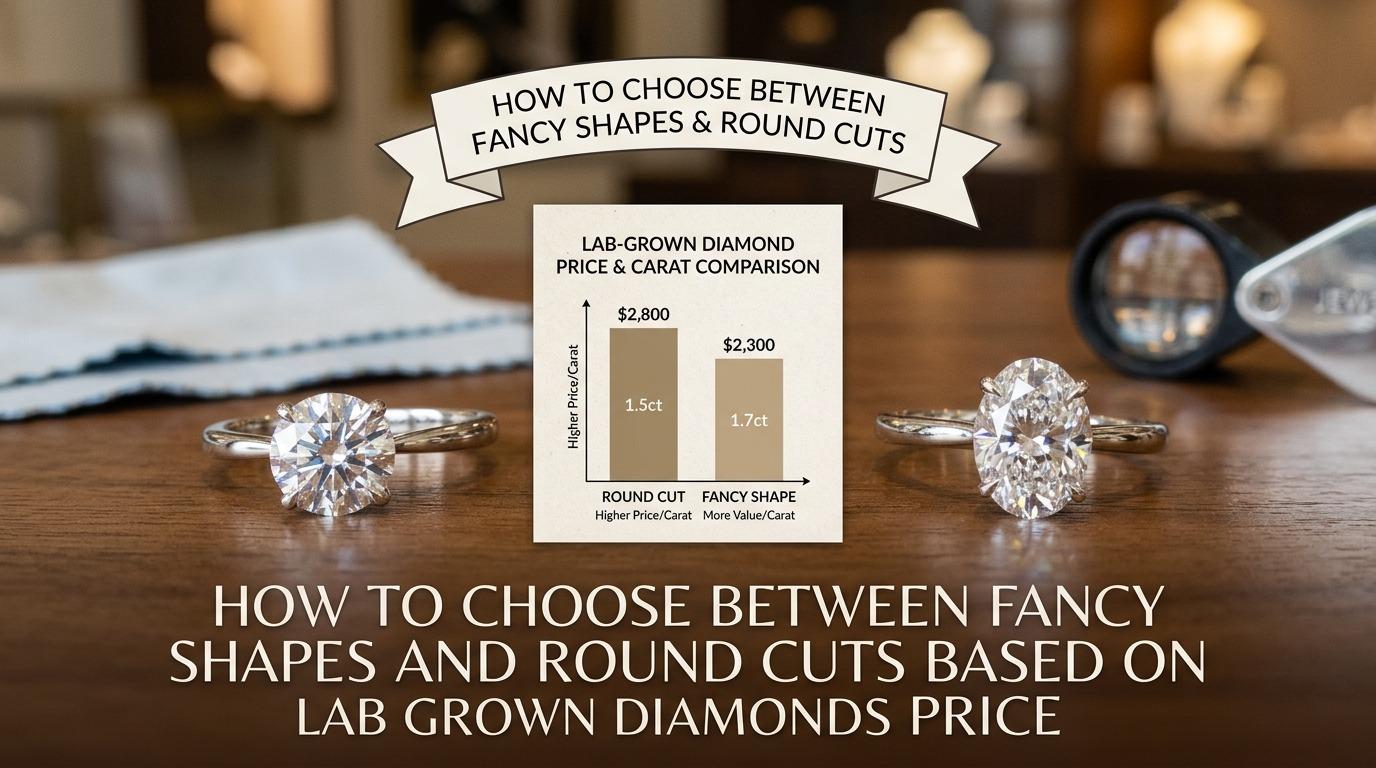
Round cuts usually carry the highest lab grown diamonds price per carat, while fancy shapes such as oval, emerald, cushion and pear often cost less for the same carat weight or look larger for the money. The right choice depends on your budget, the size you want to see on the hand, and the style you love.
Shape is one of the biggest levers on the lab grown diamonds price, yet many buyers pick a shape first and only check the cost afterward. Choosing between a classic round and a fancy shape is really a question of what you want to maximize: sparkle, finger coverage, or savings.
At Precious Carbon, we help buyers compare shapes with the numbers in front of them. In this guide you will learn why shapes are priced differently, how round and fancy cuts compare, how to choose step by step, and which trends are shaping demand.
What Is the Lab Grown Diamonds Price Difference Between Fancy Shapes and Round Cuts?
The lab grown diamonds price difference between fancy shapes and round cuts is the gap in cost per carat between a round brilliant and shapes like oval, pear, emerald, cushion, princess or marquise at the same carat weight, color and clarity. Round diamonds typically sit at the top of the price range, while several fancy shapes cost less per carat.
This matters because a shape choice can free up hundreds or thousands of dollars, which can go toward a larger stone, a better cut grade or a finer setting.
Shape preference is also changing as lab grown goes mainstream. According to The Knot 2025 Real Weddings Study, 52% of couples said their engagement ring featured a lab grown stone, the first year more than half did, which means more buyers are comparing shapes on price rather than defaulting to round.
From the questions Precious Carbon buyers ask most, the common surprise is that a fancy shape often delivers more visible size or a lower price per carat than a round of the same weight.
Round Cut vs. Fancy Shapes: What's the Difference?
The table below summarizes how round and popular fancy shapes generally compare. Price direction reflects general market patterns and varies by seller and individual stone.
|
Shape |
Typical Price per Carat |
Visual Character |
Best For |
|---|---|---|---|
|
Round |
Usually highest |
Maximum sparkle, classic look |
Buyers who prioritize brilliance and tradition |
|
Oval |
Often lower than round |
Elongated, looks larger per carat |
Finger-lengthening look on a budget |
|
Emerald |
Often lower than round |
Step cuts, clean, mirror-like flashes |
Buyers who love a sleek, vintage look |
|
Cushion |
Often lower than round |
Soft corners, romantic glow |
Warm, classic style with value |
|
Pear |
Varies, often lower |
Teardrop, elongated |
Distinctive look with strong finger coverage |
|
Princess |
Often lower than round |
Square, modern, bright |
Modern settings and geometric style |
Precious Carbon offers both round and fancy lab grown diamonds, so you can compare shapes with the same certification details side by side.
Why Does Round Cut Carry a Higher Lab Grown Diamonds Price?
Round cuts usually cost more because demand is highest and the round brilliant cut generally uses more of the rough stone, leaving more waste. Higher demand plus lower yield pushes the lab grown diamonds price per carat above many fancy shapes.
What Factors Decide Lab Grown Diamonds Price by Shape?
Two stones of the same carat weight can differ widely in price once shape, proportions and face-up size come into play.
How Does Diamond Shape Affect Lab Grown Diamonds Price Per Carat?
Shape affects lab grown diamonds price per carat through demand, how much of the rough stone is used, and how large the stone looks face-up. Popular shapes with higher waste cost more per carat, and less popular shapes often cost less.
Demand and Lab Grown Diamonds Price
Round remains the most requested shape, and strong demand supports higher prices. Fancy shapes with less demand can offer better value for the same quality.
Face-Up Size and Lab Grown Diamonds Price
Elongated shapes such as oval, pear and marquise spread their weight across a longer surface, so they can look larger than a round of the same carat. That makes the effective cost per visible size lower.
Cut Quality and Lab Grown Diamonds Price by Shape
A poorly proportioned fancy shape can look dull or show a dark bow-tie effect, no matter how attractive the price. Always check the cut quality and the length-to-width ratio before you commit.
What Is a Length-to-Width Ratio and Why Does It Matter for Lab Grown Diamonds Price?
Length-to-width ratio is the stone's length divided by its width, and it defines how slim or full a fancy shape looks. Two ovals with the same price can look very different if the ratios differ, so ratio should be part of any price comparison.
Precious Carbon lists dimensions and grading details for each stone, so buyers can judge ratio and cut instead of relying on shape name and price alone.
Before you commit to any shape, check these five things:
-
Independent grading report that matches the exact stone
-
Cut grade and polish, not just carat weight
-
Length-to-width ratio for fancy shapes
-
Price per carat compared with similar stones of the same shape
-
Setting style that suits the shape, since prongs and bands affect how the stone looks
How to Choose Between Fancy Shapes and Round Cuts Based on Lab Grown Diamonds Price: Step-by-Step
Use this six-step process to choose a shape that fits your budget and your style:
-
Set a total budget that includes the setting, so the stone is not priced alone.
-
Decide your top priority: maximum sparkle, biggest look, or lowest price per carat.
-
Shortlist two or three shapes, usually one round and two fancy options.
-
Compare price per carat across stones with matching color, clarity and cut grade.
-
Check face-up size and length-to-width ratio for any fancy shape you like.
-
Look at the stone in a setting, or in clear photos and video, before you decide.
Precious Carbon supports this process with certified stones, clear grading details and honest guidance on where a shape change can save money.
Best Shapes to Compare for Lab Grown Diamonds Price in 2026
Some shapes consistently stand out for buyers who want to balance cost and visual impact.
|
Shape |
Price Position |
Visual Impact |
Best For |
|---|---|---|---|
|
Round |
Higher |
Most sparkle, timeless |
Classic, maximum brilliance |
|
Oval |
Moderate |
Looks larger, elongating |
Best balance of size and value |
|
Cushion |
Moderate to lower |
Soft and romantic |
Vintage-inspired style |
|
Emerald |
Moderate to lower |
Sleek, elegant |
Clean, sophisticated look |
Precious Carbon carries all of these shapes in certified lab grown stones, so you can compare them fairly in one place.
The Future of Lab Grown Diamonds Price and Shape Trends to Watch
Shape trends keep moving as more buyers shop on value and personal style rather than tradition.
Elongated Shapes Keep Growing in Popularity
Oval, pear and emerald cuts continue to gain attention because they combine a larger look with approachable pricing. Rising demand can narrow price gaps over time.
How Will Lab Grown Diamonds Price Change for Round and Fancy Shapes?
Lab grown diamonds price is widely expected to stay accessible as production scales, and shape gaps may shift with demand. Compare current offers rather than waiting, because no one can predict exact movements.
Precious Carbon tracks these shape trends so buyers see what a fair price looks like for each cut today.
Conclusion
Choosing between fancy shapes and round cuts comes down to what you value most, and the lab grown diamonds price makes it easy to pick the shape that stretches your budget the furthest.
Key takeaways from this guide:
-
Round cuts usually carry the highest lab grown diamonds price per carat.
-
Oval, emerald and cushion shapes often deliver more size or value for the money.
-
Always check cut quality and length-to-width ratio on fancy shapes.
-
Compare price per carat on certified stones with the same grading details.
Ready to compare shapes? Explore certified round and fancy lab grown diamonds at Precious Carbon and find the shape that fits your style and your budget.
Frequently Asked Questions
Is round or fancy shape cheaper in lab grown diamonds price?
Fancy shapes such as oval, emerald and cushion are often cheaper per carat than round, because round has higher demand and typically uses more of the rough stone. Prices vary by seller and stone, so compare certified options of the same grade.
Which fancy shape looks biggest for the lab grown diamonds price?
Elongated shapes such as oval, pear and marquise usually look largest for their carat weight, because the stone spreads across a longer surface. Check the length-to-width ratio to be sure the proportions suit your taste.
Does shape change the lab grown diamonds price per carat?
Yes. Shape changes the lab grown diamonds price per carat through demand, how much of the rough stone is used, and how large the stone looks face-up. Two stones of the same carat weight and grade can cost noticeably different amounts.
How Does Precious Carbon Help With Lab Grown Diamonds Price by Shape?
Precious Carbon helps buyers compare lab grown diamonds price across round and fancy shapes using certified stones and clear grading details. You can see dimensions, cut grade and price per carat together, then choose the shape that fits your budget and style.
Is a round lab grown diamond worth the higher price?
A round lab grown diamond is worth it if you value maximum sparkle and a timeless look. If you want more size or savings, a well-cut oval, emerald or cushion can deliver strong value, so decide based on your priorities.
About the Author
The Precious Carbon Editorial Team is made up of lab grown diamond specialists who help buyers in the USA understand diamond shapes, grading, pricing and certification. Our guides are updated regularly as the market changes.
Sources: The Knot 2025 Real Weddings Study (theknot.com/content/wedding-data-insights). Price direction by shape reflects general market patterns and varies by seller.
 Portuguese
 English
 Arabic
 French
 Spanish
 Deutsch
 Turkish
 Dutch
 Italiano
 Russian
 Romaian
 Portuguese (Brazil)
 Greek