
Data Center Real Estate: The 2026 Guide to Site Selection and Investor Returns
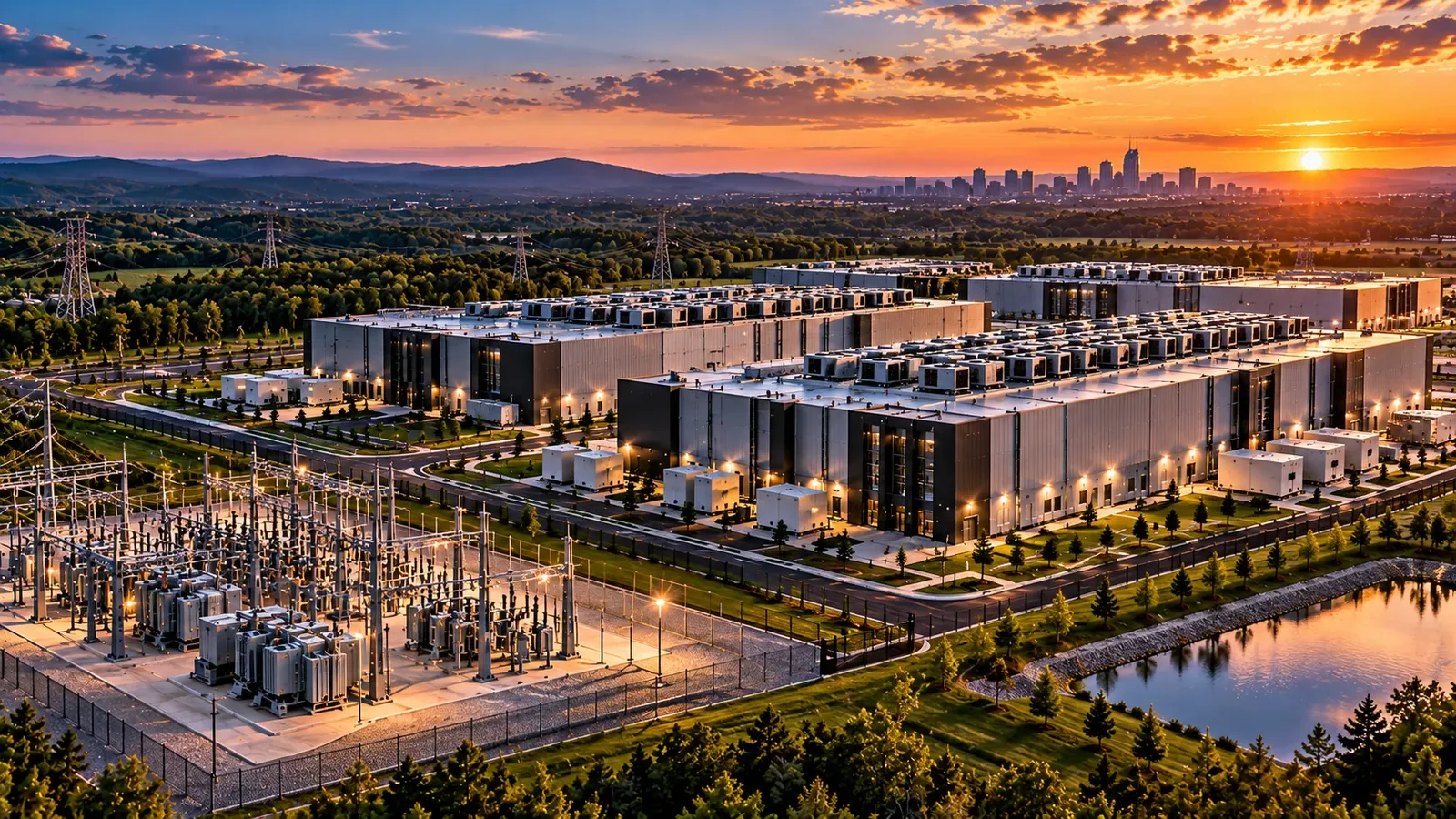
Real estate investors are used to looking at deals by location, rent per square foot, and cap rate. Data center real estate is a different ball game, and the most important thing any investor can do right now is understand that difference. The game has shifted. The metrics are different. And the rewards to those who understand the new framework are genuinely substantial.
Here’s why this asset class popped up so fast
It is useful to understand how fast data center real estate became a thing because it helps explain why the opportunity is still so huge today. In just three years, demand for AI-driven computing has evolved from a growing trend to an industrial force that requires physical facilities at massive scale. The buildout is led by the most creditworthy tenants in the history of commercial real estate. They’re signing long-term leases and committing capital at a rate we’ve never seen before.
The Revolutionary Lease Structure
In traditional commercial real estate, you negotiate rent per square foot and the length of the lease in years. In data center real estate you negotiate per kilowatt per month lease rates and power commitments per megawatt. That difference is more than a semantic one. It fundamentally changes how you model the investment, how you assess risk and how you structure the capital stack.” A 100-megawatt campus with a long-term lease to a creditworthy hyperscale tenant creates cash flows that would be the envy of any trophy office or logistics portfolio.
The Organizing Principle of This Market: Power First
Ask any experienced data center developer and investor and they will tell you the same. And the first question is never acreage. How many mega watts is it? Data center real estate near available substation capacity is inherently more valuable than larger parcels without near-term power access. This is not a subtlety. It’s the whole thesis. “The megawatt drives the timeline, the cost to develop, the ability to attract tenants and, ultimately, the exit value of the finished product.
Assessing Power Availability at Any Location
The power analysis should be the first step in evaluating any potential site for data center development.
-
Locate nearest transmission substation and available capacity in megawatts
-
Research the interconnection queue at that substation and know the time line to service
-
Evaluate appetite for utility for large commercial load additions and incentive programs that apply
-
Evaluate fiber routes traversing or in proximity to the site
-
Confirm water availability for cooling systems for the planned plant size
All these steps must be taken before any real decision can be made on land acquisition or development.
The Brownfield Opportunity that Most Investors Miss
Brownfield sites offer one of the most compelling, yet underappreciated, opportunities in data center real estate. Located on former industrial or commercial sites that are tax-foregone and adjacent to large power infrastructure. Converting these properties into modern data center campuses generates tremendous value for developers, significant economic benefits for local communities and attractive investment returns for capital partners who understand the asset class.
In this respect, the industrial heritage of a brownfield site is actually a strategic asset. Retired factories and legacy industrial campuses were once built beside heavy power infrastructure. That same infrastructure is exactly what modern ai data centers need. With the right environmental due diligence and remediation planning these sites can be turned into world class development platforms.
TVA Territory Advantage: What It Is
The Tennessee Valley Authority is a federally owned power utility serving a seven-state area of the American Southeast. The TVA territory has a unique combination of benefits for data center development that are really hard to find anywhere else. “There is the availability of power infrastructure, relatively lower land costs and a regulatory environment that reflects the realities of significant data center demand growth, which creates conditions that are very conducive to both development and investment activity.”
In addition, the TVA region has robust corridors of fiber connectivity, access to water resources for cooling and a pipeline of workforce development that has been increasingly influenced by the region’s expanding position in the national data center market. Investors who are aware of these regional dynamics are positioning themselves in a market that is ahead of wider investor awareness.
Confidently Underwrite Data Center Transactions
The underwriting framework for data center investments is one that rewards being prepared and knowing your stuff. Key inputs are NOT square footage and market rent. They are megawatts contracted, lease rate per kW per month, interconnection timeline, power usage effectiveness ratio and tenant credit profile. The underwriting is supported by the tenant’s credit quality and the power position of the AI data center. These two foundations derive all other variables.
What Development Economics Really Looks Like
The development economics here are driven by the spread between the cost to deliver powered infrastructure and the lease rate that a creditworthy tenant will pay for that capacity. And when a developer has been able to lock in a low basis land position next to available power, and has moved quickly through the interconnection and permitting processes, the spread can be significant. 2026 guide on passive.investments covers the entire development economics framework including the most common capital stack structures used in data center transactions.
Quick Summary For All Investors In This Space
Whether you are entering this market as a landowner, a developer, a private equity investor or a passive capital partner, there are some common principles that apply across the board.
-
Power access is more important than land size in every evaluation.
-
Brownfield sites near heavy power infrastructure should be considered
-
The TVA region has structural advantages that are undervalued
-
Tenant credit quality and lease structure are the foundation of any underwriting analysis
-
Once you understand the megawatt math, the investment case is clear and compelling
Summary
Data center real estate is not a flash in the pan. This is a long term structural shift in the commercial property landscape and it will reward investors who take the time to understand it deeply. passive.investments 2026 guide provides the framework, megawatt math, site selection criteria and underwriting tools to participate intelligently in this exceptional market.
 English
 Arabic
 French
 Spanish
 Portuguese
 Deutsch
 Turkish
 Dutch
 Italiano
 Russian
 Romaian
 Portuguese (Brazil)
 Greek