
How Air Column Bags Dramatically Reduce Transit Damage
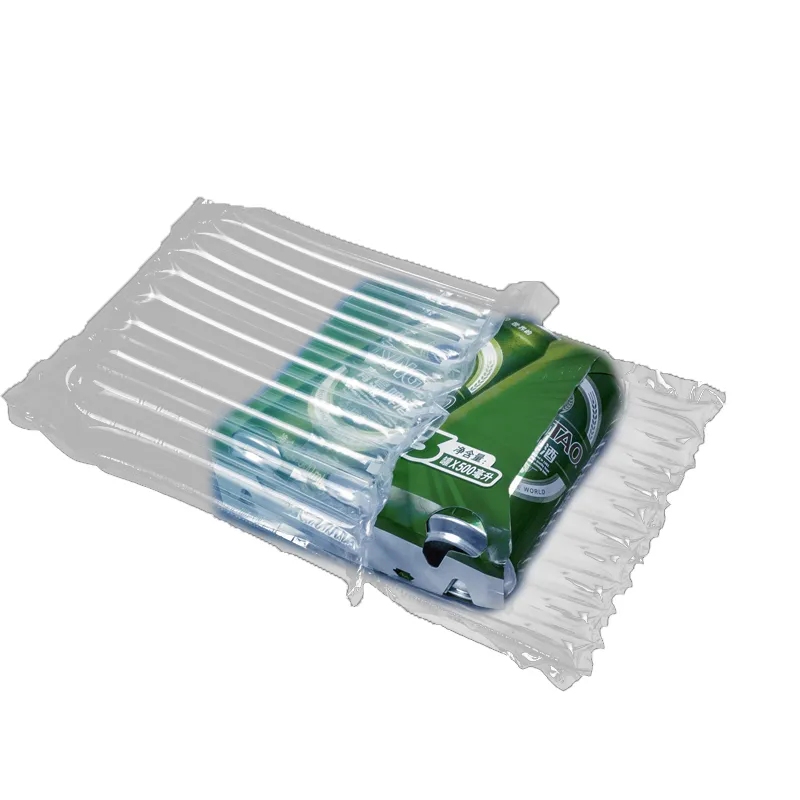
Transit damage is one of the most persistent and costly problems in shipping and logistics. Products that leave the warehouse in perfect condition arrive at their destination damaged, creating financial losses, customer dissatisfaction, and operational complexity in the form of damage claims and replacement shipments. The root cause in most cases is not carrier negligence or bad luck. It is inadequate protective packaging that fails to absorb the routine impacts and handling stresses that every shipment encounters.
Air column bags address the fundamental physics of transit damage by providing consistent, reliable cushioning that protects products through all phases of the shipping journey.
LockedAir manufactures and supplies air column bags for businesses that need to reduce their transit damage rates and the costs associated with them.
Understanding When and How Transit Damage Occurs
Transit damage happens most often during handling events rather than during the in-transit portion of the journey. Loading onto trucks, sorting at distribution facilities, unloading at delivery points, and last-mile delivery handling are all moments when packages experience impact forces that can damage inadequately protected contents. A product that survives a thousand miles in a truck may be damaged in the final fifty feet from the delivery truck to the front door.
Packaging that protects products through these handling events is the key to reducing transit damage rates.
Why Air Column Bags Outperform Traditional Cushioning in Handling Scenarios
Traditional cushioning materials like foam peanuts and crumpled paper provide some protection but are susceptible to failure at the moments when they are needed most. Foam peanuts settle and compact over the course of a long journey, reducing the cushioning they provide by the time the most significant handling events occur at the end of the journey. Crumpled paper can tear or compress under repeated impacts.
Air column bags maintain their pressure and cushioning performance throughout the entire shipping journey, providing consistent protection even after the package has been handled many times.
LockedAir's air column bags are manufactured to maintain reliable pressure and cushioning performance from the moment they are inflated until the moment the customer opens the package.
Calculating the True Cost of Transit Damage
Businesses that have not done a careful analysis of their transit damage costs often underestimate them significantly. Direct costs include replacement product costs and return shipping expenses. Indirect costs include customer service labor, lost customer lifetime value, negative reviews, and in business-to-business contexts, potential contract penalties. When all of these costs are accounted for, the total cost of transit damage typically exceeds the cost of proper protective packaging by a significant multiple.
Working with a quality air column bags supplier like LockedAir to implement better protective packaging is therefore a financially compelling decision for most businesses.
Setting Up Air Column Bag Standards Across Your Packing Operation
Reducing transit damage rates through better packaging requires not just having the right materials available but ensuring they are applied consistently across all packing team members. Establishing clear packaging standards that specify which bag configurations to use for which product categories, how bags should be positioned around products, and how to verify proper inflation before sealing the box all contribute to consistent protection outcomes.
LockedAir can support businesses in developing packaging standards that make the most effective use of air column bags across their packing operations.
Monitoring and Measuring Damage Rate Improvements
Once better protective packaging is in place, tracking damage rates over time provides valuable data on the impact of the change. Comparing damage rates before and after implementing air column bag packaging demonstrates the value of the investment and provides a basis for ongoing packaging optimization decisions.
Most businesses that switch to air column bag packaging from less effective alternatives see measurable improvements in their damage rates within the first few months of implementation.
Building a Culture of Packaging Quality
Long-term reduction in transit damage rates requires not just better materials but a team culture that values packaging quality. When packing team members understand why proper packaging matters and have the right materials and standards to work with, they consistently produce better packaging outcomes. Air column bags, being intuitive and satisfying to apply correctly, contribute to a positive packaging culture.
Conclusion
Air column bags from a reliable air column bags supplier like LockedAir provide the consistent, reliable cushioning protection that reduces transit damage rates and the significant costs associated with them. Investing in better packaging is one of the highest-return operational improvements available to businesses that ship physical products, and air column bags are among the most effective tools for achieving that improvement.
 Italiano
 English
 Arabic
 French
 Spanish
 Portuguese
 Deutsch
 Turkish
 Dutch
Dutch
 Russian
 Romaian
 Portuguese (Brazil)
 Greek
Greek