
Is Heart Care CoQ10 Supplement In Nigeria Safe Daily?
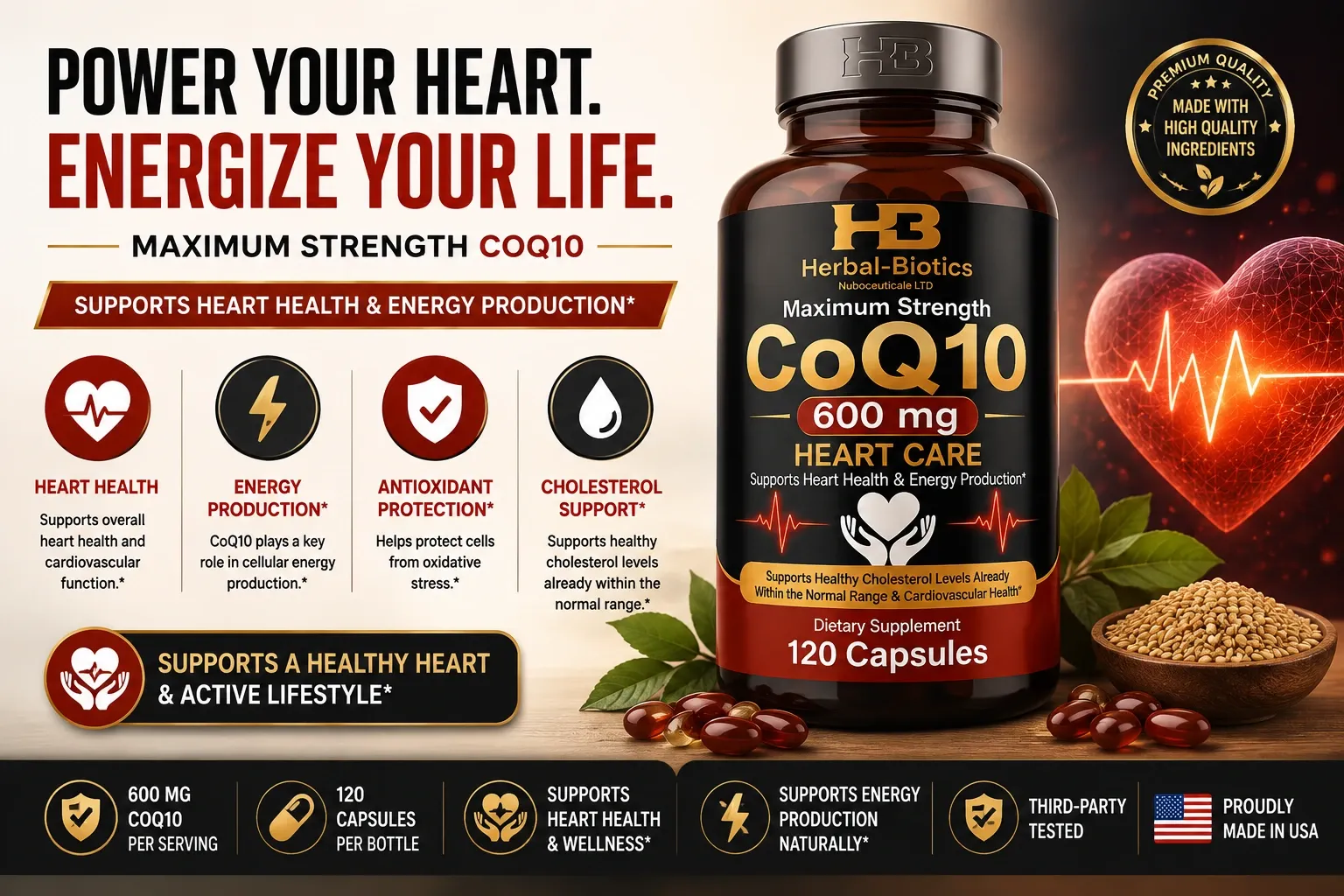
The short answer is that CoQ10 is generally well tolerated by many adults when used appropriately, and daily use can be reasonable for some people. But that does not mean every person can safely take every CoQ10 product every day.
When someone asks whether a Heart Care CoQ10 Supplement In Nigeria is safe daily, the important question is not simply whether CoQ10 is "safe." The more useful question is whether the particular dose, formulation, product quality, medicines, health conditions, and individual circumstances make daily use appropriate for that person.
CoQ10 has been used in supplements for years, and serious adverse effects have not been commonly reported. Mild digestive symptoms, headache, dizziness, sleep disturbance, or other unwanted effects can occur, while interactions with medicines such as warfarin deserve particular attention.
There is another practical issue in Nigeria: not every Shilajit Supplement sold online or through informal channels should automatically be assumed to contain exactly what its name suggests. The label, manufacturer details, batch information, expiry date, storage instructions, and relevant NAFDAC information all matter.
So yes, daily CoQ10 can be reasonable. "Automatically safe for everyone" is a different statement, and it would be wrong.
What Is Heart Care CoQ10 Supplement?
CoQ10, short for coenzyme Q10, is a compound naturally present in the body. It is involved in the production of cellular energy, particularly in tissues that have substantial energy demands. It also has antioxidant properties, which is one reason it has attracted interest in cardiovascular and general health research.
When you see CoQ10 or Coenzyme Q10 on a supplement label, you are looking at a nutritional supplement intended to provide additional CoQ10 rather than a conventional prescription heart medicine.
The name "Heart Care" can make a product sound more medically specific than it actually is. That is something worth remembering when shopping. A product carrying a heart-related name does not automatically mean it has been proven to treat heart disease, hypertension, heart failure, high cholesterol, or any other cardiovascular condition.
There may also be important differences between products sold under similar names. One CoQ10 supplement may contain 30 mg per serving, another 100 mg, and another 200 mg. Some contain ubiquinone, some contain ubiquinol, and some combine CoQ10 with other ingredients.
That is why general information about CoQ10 should not be mistaken for verified information about a particular Heart Care CoQ10 product. The actual label needs to be checked.
What Does CoQ10 Do for the Heart?
The reason CoQ10 is associated with heart health starts with energy production. Heart muscle works continuously, so the body's cells require efficient energy-producing systems. CoQ10 participates in the processes cells use to produce energy.
CoQ10 also has antioxidant activity. That sounds impressive on a supplement label, but it should not be translated into "cleans arteries" or "prevents heart attacks." Those are very different claims, and ordinary CoQ10 supplementation has not established itself as a replacement for evidence-based cardiovascular treatment.
Researchers have studied CoQ10 in several cardiovascular settings, including blood pressure and heart failure. Results have not been uniformly strong enough to treat CoQ10 as a standard treatment for cardiovascular disease. In particular, the NCCIH notes that the available evidence suggests CoQ10 probably does not have a meaningful effect on blood pressure overall.
Heart failure research has generated interest because of CoQ10's role in cellular energy, but research interest is not the same thing as a recommendation that everyone with heart disease should take it.
The same distinction matters with statins. Statin users sometimes ask about CoQ10 because statins affect a biochemical pathway involved in CoQ10 production, and researchers have investigated whether supplementation might help with statin-associated muscle symptoms. That does not mean every person taking a statin needs CoQ10, or that CoQ10 reliably prevents or treats statin side effects.
A supplement can be biologically interesting without being a proven treatment. Keeping that distinction clear prevents a lot of confusion.
Is Heart Care CoQ10 Supplement Safe to Take Every Day?
For many adults, daily CoQ10 is reasonably well tolerated, particularly when the product is used according to its directions. Available safety information has not identified serious adverse effects as a common problem, although mild side effects can occur.
The mistake is turning "generally well tolerated" into "safe for everybody."
Daily CoQ10 safety depends partly on dose. A person taking a modest amount may have a very different situation from someone taking several high-dose products at the same time. It also depends on what else the person takes. Warfarin is a particularly important example because CoQ10 may make warfarin less effective.
Blood-pressure treatment is another consideration. CoQ10 has been investigated for effects on blood pressure, and although NCCIH says the overall evidence suggests little meaningful effect, someone already taking antihypertensive medication should still consider the possibility of additive effects and monitor how they respond.
The same principle applies to diabetes medicines. CoQ10 has a reported interaction concern with insulin, so a person using insulin or other glucose-lowering treatment should not assume that a supplement is irrelevant simply because it is sold as a nutritional product.
Existing health conditions also matter. Someone with significant cardiovascular disease, several chronic conditions, multiple prescriptions, or an upcoming operation has a more complicated safety calculation than a healthy adult taking a supplement casually.
Then there is product quality. A carefully manufactured and properly labelled CoQ10 supplement is one thing. An untraceable bottle purchased from an unknown online seller is another.
So, is a Heart Care CoQ10 Supplement In Nigeria safe every day? It can be for an appropriate person using an appropriate product at an appropriate dose. That is a much more useful answer than an unconditional yes.
How Much CoQ10 Can You Take Daily?
CoQ10 dosage is one of those subjects where people often want one magic number. Real life is less tidy.
Supplement products commonly provide doses ranging from relatively small amounts to around 100 mg or more per daily serving, and some research has used considerably higher amounts. That does not mean a higher research dose is automatically appropriate for ordinary self-supplementation.
The right amount depends on why someone is taking CoQ10, the particular formulation, the product's instructions, age, other supplements, medicines, and health circumstances. There is no single universal daily dose that can responsibly be labelled "the safe dose for everyone."
The first practical rule is to look at the actual amount of CoQ10 per serving rather than relying on the product name. "Heart Care," "premium," "maximum strength," and similar wording do not tell you how much CoQ10 is present.
The second rule is not to assume that more is better. Increasing the dose because a supplement has not produced an obvious effect after a few days is not a sound strategy. CoQ10 is not a painkiller that should necessarily produce an immediate sensation.
If the label says one capsule daily, that is not an invitation to take three simply because another website discusses a larger research dose. The label belongs to that formulation and should be considered alongside the person's circumstances.
People taking CoQ10 for a specific medical reason should be especially careful about dose changes. If a healthcare professional has recommended a particular amount, that advice should take priority over generic internet dosing advice.
What Are the Side Effects of Taking CoQ10 Every Day?
CoQ10 side effects are usually described as mild when they occur. Digestive discomfort is one of the more practical complaints to watch for. Nausea, diarrhoea, heartburn, stomach discomfort, headache, and dizziness can occur. Sleep disturbance or insomnia has also been reported.
Not everyone experiences these effects, and a symptom appearing after starting CoQ10 does not automatically prove that CoQ10 caused it. People often change several supplements, medicines, foods, or routines at the same time, which makes cause and effect difficult to identify.
Taking the supplement with food may help with tolerability and absorption, particularly because CoQ10 is fat-soluble. If a person develops persistent symptoms, it is sensible to review the dose and the complete supplement and medication routine rather than simply adding another product to "fix" the problem.
More significant or unusual symptoms deserve more attention. Severe dizziness, fainting, significant allergic-type symptoms, major changes in blood pressure or glucose, or other concerning symptoms should not be dismissed as an ordinary supplement reaction.
Can Heart Care CoQ10 Interact With Medicines?
This is where the question of daily CoQ10 becomes much more personal. A supplement can be reasonably well tolerated in isolation while becoming a more complicated choice when combined with prescription medicines.
CoQ10 is not known for a huge number of dramatic drug interactions, but the interactions that matter are important precisely because some medicines have narrow safety margins or are being used to control serious conditions.
CoQ10 and Warfarin
Warfarin deserves particular caution. CoQ10 may reduce the effectiveness of warfarin, which can affect anticoagulation control. NIH sources specifically identify this as a potential interaction.
That does not mean a person taking warfarin can never use CoQ10. It means starting, stopping, or changing CoQ10 without discussing it with the healthcare professional managing the person's anticoagulation is a poor idea.
Someone taking warfarin is usually being monitored because the balance between too little and too much anticoagulation matters. Adding or removing a supplement that could influence that balance should therefore be treated as a medication-management issue, not merely a nutrition decision.
CoQ10 and Blood Pressure Medicines
People taking blood-pressure medicines sometimes ask about CoQ10 and blood pressure because CoQ10 has been studied for possible blood-pressure effects.
The overall evidence does not show a strong, meaningful blood-pressure-lowering effect, according to NCCIH. Still, an individual taking several blood-pressure medicines should pay attention to symptoms such as unusual dizziness or light-headedness, particularly after starting a new supplement.
This is less about assuming that CoQ10 will dramatically lower blood pressure and more about respecting the fact that an individual response can differ from an average research result.
CoQ10 and Diabetes Medicines
CoQ10 also deserves consideration in people using diabetes medicines. NCCIH identifies an interaction concern with insulin.
The practical point is not that CoQ10 inevitably causes dangerous low blood sugar. Rather, someone whose glucose is being actively controlled with insulin or other medicines should consider the entire treatment routine before adding supplements.
If glucose readings change unexpectedly after beginning a new supplement, the answer is not to guess whether the supplement is responsible. The person's medication, diet, activity, and supplement routine need to be reviewed together.
CoQ10 and Statins
The connection between CoQ10 and statins is frequently misunderstood.
Statins reduce cholesterol production through a pathway that is also connected to CoQ10 production. This has led to considerable interest in whether CoQ10 supplementation could help people who experience muscle symptoms while taking statins.
That research is one reason "CoQ10 and statins" appears so often in supplement discussions. It does not establish that every statin user is CoQ10-deficient or that every statin user will benefit from supplementation.
If muscle pain, weakness, or other symptoms develop while using a statin, the better approach is to discuss the symptoms with the clinician managing the treatment. CoQ10 should not be used as a reason to stop the statin without appropriate medical guidance.
Who Should Talk to a Doctor Before Taking CoQ10 Daily?
Professional advice is particularly useful when the person taking CoQ10 has something else going on that changes the safety calculation.
Someone taking warfarin needs guidance because of the potential effect on anticoagulation. Someone taking several prescription medicines needs a medication interaction review because it becomes harder to judge the effect of adding another substance. Someone using insulin or other diabetes treatment may need to consider glucose monitoring and treatment response.
The same applies to people taking multiple blood-pressure medicines. The issue is not that CoQ10 is known to be a powerful blood-pressure drug. It is that a person already being treated for hypertension has less room for casual experimentation with anything that might influence blood pressure.
People with established cardiovascular disease should also discuss supplements with the professional managing their condition, particularly when the supplement is being taken specifically because of the heart condition.
Pregnancy and breastfeeding deserve a separate level of caution because evidence about supplement use in these situations is often less extensive than evidence in ordinary adults. Someone preparing for surgery should also disclose supplements to the surgical and anaesthetic team rather than assuming that supplements do not count as medicines.
Finally, people with significant chronic illnesses should avoid treating general internet guidance as a personalised prescription. The more complicated the medical picture, the less useful a generic "take one capsule daily" answer becomes.
Is Daily CoQ10 Safe for Older Adults?
Age alone does not make CoQ10 unsafe.
Older adults may take CoQ10 without serious problems, and the same general tolerability principles apply. The bigger issue is that older adults are often more likely to take several prescription medicines for cardiovascular conditions, diabetes, cholesterol, blood pressure, or other chronic problems.
That increases the importance of checking for CoQ10 interactions and avoiding unnecessary duplication between supplements.
Dose also deserves attention. An older adult does not automatically need a higher amount simply because the supplement is marketed for "energy" or "heart support."
The sensible approach is to consider the actual reason for taking CoQ10, the amount being used, the person's medication list, and the quality of the product. Age should prompt more thoughtful review, not unnecessary fear.
Should You Take CoQ10 With Food?
CoQ10 is fat-soluble, so taking it with a meal containing some dietary fat can be useful for absorption. Research into CoQ10 absorption has found that formulation and how the compound is presented can influence bioavailability, which is one reason different products can behave differently.
There is no need to turn CoQ10 timing into a complicated ritual.
For most people, consistency matters more than finding a mythical "perfect" minute of the day. Follow the product directions and, unless instructed otherwise, taking it with a normal meal is a practical approach.
If a product's label gives specific instructions, those instructions should be followed because formulations are not identical.
Ubiquinone vs Ubiquinol: Which CoQ10 Form Is Better?
Ubiquinone and ubiquinol are two forms of CoQ10 that appear on supplement labels.
Ubiquinone is the oxidized form, while ubiquinol is the reduced form. That distinction sounds complicated, but consumers mainly encounter it as a difference between two formulations rather than something they need to manage inside the body themselves.
Ubiquinol is often marketed as the more easily absorbed or "better" form. There is some evidence that formulation influences CoQ10 absorption, but the practical evidence does not justify saying that one form is universally superior for every person. Research reviews have specifically noted differences in bioavailability and the importance of formulation.
The quality of the overall product matters too. A fancy name on the front of a bottle cannot compensate for poor manufacturing, questionable storage, incomplete labelling, or an uncertain supply chain.
For someone choosing between products, it is more sensible to compare the actual CoQ10 amount, form, formulation, manufacturer information, regulatory information, storage requirements, and seller reliability than to assume "ubiquinol always wins."
How to Check a CoQ10 Supplement in Nigeria
This is one area where Nigerian consumers should be practical rather than trusting appearances.
Start with the label. A legitimate-looking product should provide clear information about what it contains, how much is present per serving, directions for use, manufacturer information, relevant importer or distributor information where applicable, batch or lot details, expiry information, and storage instructions.
Look carefully at the packaging. Damaged seals, poor printing, missing information, inconsistent labels, spelling errors, unexplained stickers, or packaging that looks materially different from the manufacturer's normal presentation should make you pause.
Price deserves some attention too. A very low price does not prove a product is fake, but an unusually cheap product from an unknown seller should not be treated as a bargain until its source and product details make sense.
NAFDAC is particularly relevant in Nigeria. NAFDAC's current regulatory system provides product verification tools, and its NAPAMS platform allows users to verify products using a NAFDAC number. NAFDAC also maintains the Greenbook, a database that allows searches by product name, active ingredient, registration number, applicant, and other information.
NAFDAC's dietary supplement regulations state that dietary supplements are not to be manufactured, imported, exported, advertised, sold, or distributed in Nigeria unless registered in accordance with the regulations.
That makes checking the relevant registration information more than a cosmetic exercise.
However, a NAFDAC number printed on a package should not be treated as proof simply because it is printed there. Where appropriate, verify it through the official NAFDAC system and make sure the product details correspond to the item you actually have.
Buying from an established pharmacy or reputable, traceable seller is also preferable to buying from an anonymous social-media account. An online listing is not itself evidence of authenticity.
For a Heart Care CoQ10 Supplement In Nigeria, do not assume that the name alone identifies a single standardized formulation. Compare the actual label and regulatory information for the particular bottle you intend to buy.
NAFDAC product verification and registration portal
NAFDAC Greenbook registered product database
Can You Take Heart Care CoQ10 With Other Supplements?
The mistake here is looking at CoQ10 in isolation.
Someone may take a multivitamin in the morning, a "heart health" product at lunch, a blood-pressure supplement later in the day, an herbal product in the evening, and CoQ10 somewhere in between. Each bottle may look harmless on its own, but the complete combination is what the body receives.
"Natural" does not mean interaction-free. Dietary supplements can affect medicines, and some products may contain several active ingredients that create a more complicated interaction picture than the front label suggests. NCCIH specifically advises consumers to consider supplement and medication interactions rather than assuming supplements are automatically harmless.
The practical solution is simple: keep a complete record of everything you take, including prescription medicines, over-the-counter products, vitamins, minerals, herbal products, and other supplements.
If you are adding daily CoQ10, look at the entire routine rather than asking only, "Can CoQ10 be taken with this one product?"
Is CoQ10 a Replacement for Heart Medication?
No.
CoQ10 is a dietary supplement, not a general replacement for prescribed cardiovascular treatment. Research into CoQ10 for heart health does not justify telling someone with hypertension, heart failure, high cholesterol, coronary artery disease, or another cardiovascular condition to abandon established treatment.
This distinction is particularly important when a supplement produces a reassuring feeling. Feeling well does not necessarily mean a cardiovascular condition has been controlled.
If a doctor has prescribed a statin, blood-pressure medicine, anticoagulant, diabetes medicine, or another cardiovascular treatment, the medicine should not be stopped, reduced, or replaced simply because CoQ10 has been started.
CoQ10 can sometimes be considered as an addition to a person's health routine, depending on the circumstances. Addition and replacement are not the same thing.
When Should You Stop Taking CoQ10 and Seek Medical Advice?
If CoQ10 produces persistent or significant side effects, the situation deserves review rather than simply pushing through them.
Unexpected dizziness, faintness, concerning changes in blood pressure or glucose, persistent digestive symptoms, unusual rash or allergic-type reactions, or concerns about an interaction with a medicine are reasonable reasons to seek professional advice.
Upcoming surgery is another situation where supplements should be disclosed to the healthcare team. The important issue is not assuming that CoQ10 is dangerous, but making sure the people managing your care know everything you are taking.
Serious symptoms should never be treated as a supplement question. Chest pain, severe shortness of breath, fainting, sudden weakness, or other potentially serious cardiovascular symptoms require appropriate urgent medical assessment rather than another dose of CoQ10.
Conclusion
So, is Heart Care CoQ10 Supplement In Nigeria safe daily? For many adults, CoQ10 is generally well tolerated and daily supplementation can be reasonable, but there is no responsible way to say that every person can take every CoQ10 product every day without concern. The answer depends on the actual dose, the formulation, the person's medicines, existing health conditions, individual response, and the quality of the product.
The medication issue deserves particular attention. Warfarin users need to consider the potential reduction in anticoagulant effectiveness, while people taking diabetes or blood-pressure medicines should consider their treatment and monitor for unexpected changes. Statin users may be interested in CoQ10 because of research around statins and muscle symptoms, but taking a statin does not automatically create a need for CoQ10.
For Nigerian consumers, product quality is equally practical. Before buying a CoQ10 supplement, check the actual ingredient and dosage information, manufacturer and distributor details, batch and expiry information, packaging, storage instructions, and relevant NAFDAC registration information. NAFDAC provides official tools for product verification, and using an established pharmacy or reputable seller is preferable to treating an anonymous online listing as proof of authenticity.
The most useful way to think about daily CoQ10 is not "Is this supplement safe?" but "Is this particular product, at this particular dose, appropriate for me alongside everything else I take?" That question leads to a much safer and more realistic decision. CoQ10 can have a place in a supplement routine, but being generally well tolerated does not make it automatically suitable for everyone.
FAQs
Is Heart Care CoQ10 Supplement safe to take every day?
Many adults tolerate CoQ10 well when it is used appropriately, so daily use can be reasonable for some people. However, safety depends on the dose, the person's medicines and health conditions, individual response, and the quality and authenticity of the product. Some people may experience mild side effects such as stomach discomfort, nausea, diarrhea, headache, or difficulty sleeping.
The name Heart Care CoQ10 does not by itself establish that a particular product is safe for everyone. Check the actual label, follow the stated serving instructions, and pay particular attention to possible interactions if you take medicines such as warfarin, insulin, blood-pressure treatment, or multiple prescription medicines. If you have an ongoing medical condition or take regular medication, it is sensible to ask a healthcare professional before making daily CoQ10 part of your routine.
How long can you take CoQ10 daily?
There is no single maximum duration that applies to everyone. Some people use CoQ10 for extended periods, but the appropriate duration depends on why it is being taken, the dose, the person's health, and the other medicines or supplements involved. Taking it for longer does not necessarily mean it will provide additional benefits, so the reason for continued use should remain clear.
If daily CoQ10 becomes a long-term routine, it makes sense to periodically reassess whether there is still a good reason to take it and whether anything has changed in your medication, health, or supplement routine. If you develop new symptoms or start another medication, review the combination rather than assuming that a supplement can simply be continued without consideration.
What is the best time to take CoQ10?
A practical approach is to take CoQ10 consistently according to the product directions, often with a meal. Because CoQ10 is fat-soluble, taking it with food that contains some dietary fat can support absorption, while the formulation can also influence how efficiently the body absorbs it. Taking it with a regular meal can also make it easier to remember each day.
There is no need to obsess over an exact clock time. If taking it with breakfast or lunch makes it easier to remember and suits the product instructions, consistency is usually more useful than complicated timing rules. Some people prefer earlier in the day because CoQ10 can occasionally feel stimulating, although individual responses vary.
Can CoQ10 be taken with blood pressure medicine?
It may be possible, but people taking blood-pressure medicines should consider the possibility of an additive effect and pay attention to how they respond. Overall evidence suggests CoQ10 is unlikely to cause a large change in blood pressure for most people, but individual circumstances, medication combinations, and existing blood-pressure levels can make a difference.
If you already take antihypertensive medication, especially more than one medicine, adding daily CoQ10 is worth discussing with a healthcare professional who knows your treatment and blood-pressure history. It is also sensible to monitor your blood pressure as directed rather than assuming that adding CoQ10 will improve or worsen your readings in a predictable way.
Can I take CoQ10 if I use warfarin?
Warfarin users need particular caution because CoQ10 may reduce warfarin's effectiveness in some people. This can interfere with anticoagulation control, which is why starting or stopping CoQ10 should not be treated as an ordinary supplement decision. The concern is especially important because changes in anticoagulation can increase the risk of complications.
If you use warfarin, discuss CoQ10 with the healthcare professional managing your anticoagulation before starting it, stopping it, or changing the amount. Your healthcare team may consider your INR monitoring and overall treatment when deciding whether CoQ10 is appropriate. Do not adjust your warfarin dose yourself to accommodate a CoQ10 supplement.
 Spanish
 English
 Arabic
 French
 Portuguese
 Deutsch
 Turkish
 Dutch
 Italiano
 Russian
 Romaian
 Portuguese (Brazil)
 Greek