
What Is Milk Thistle Liver Detox Supplement In Nigeria For?
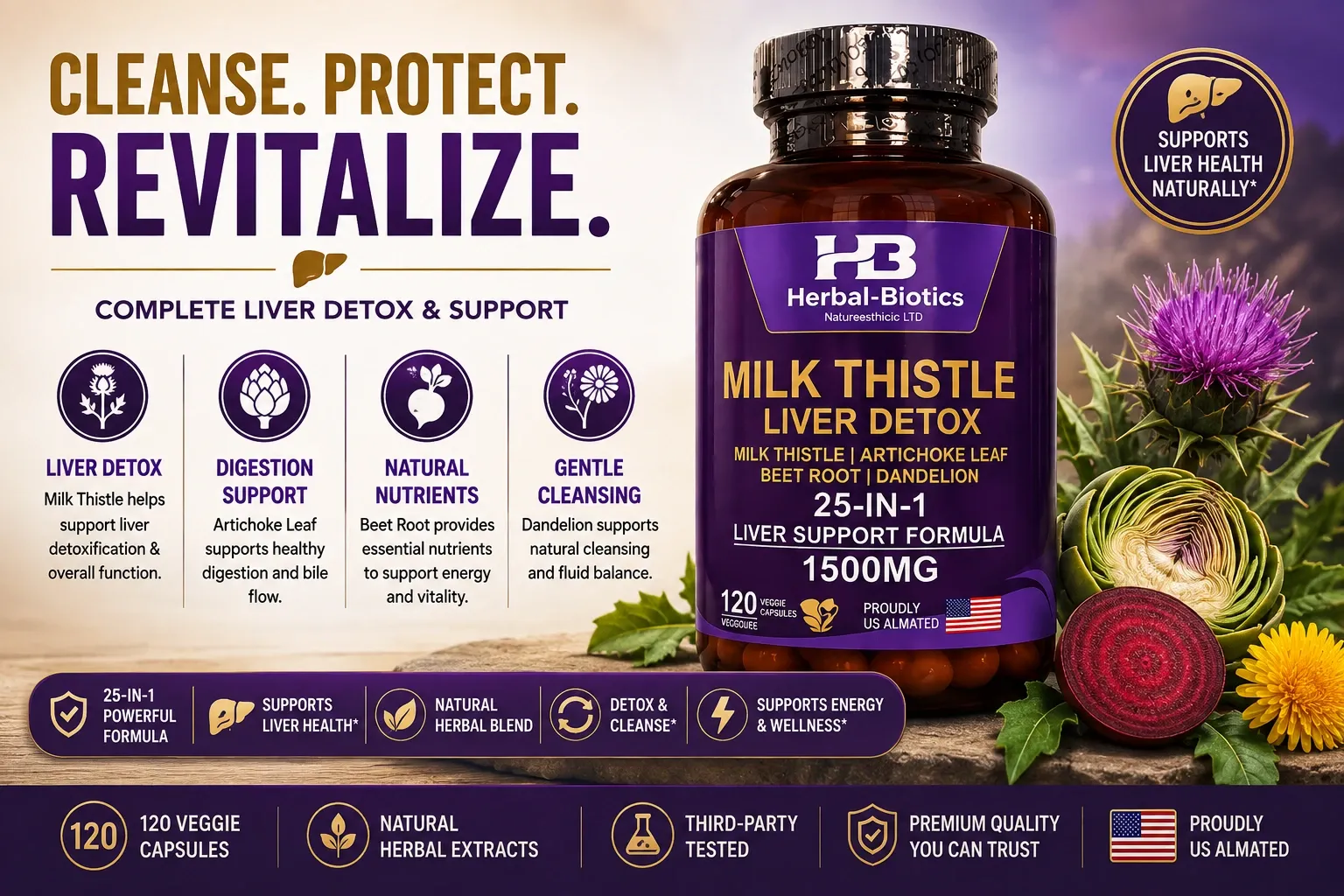
A Milk Thistle Liver Detox Supplement In Nigeria is generally a dietary supplement marketed to support liver health and overall wellness. Its main ingredient is milk thistle, a plant traditionally associated with liver support. Many products focus on an extract called silymarin, a mixture of compounds found in milk thistle.
The confusing part is the word “detox.” On a Milk Thistle Liver Detox Supplement label, liver detox can sound as though the product will remove accumulated toxins, cleanse the liver, or undo the effects of alcohol, poor diet, medicines, or environmental exposure.
That is much stronger than what the evidence can actually establish. Your liver already has sophisticated systems for processing substances and preparing many compounds for elimination.
So, what is a milk thistle supplement really for? In practical terms, it is mainly used by people who want an herbal form of liver support. Milk thistle and silymarin have been studied for various liver-related conditions, but human research has produced mixed results and does not establish milk thistle as a cure for liver disease.
This article explains what Heart Care CoQ10 Supplement contributes, what “detox” really means, what the research says about fatty liver and other liver concerns, how these products are commonly taken, possible side effects and interactions, and what Nigerian consumers should check before buying one.
What Is Milk Thistle Liver Detox Supplement In Nigeria For?
The simplest answer is that a Milk Thistle Liver Detox Supplement In Nigeria is usually intended to provide milk thistle extract as part of a product marketed for liver support. People commonly take these supplements because they want to support normal liver function, maintain general wellness, or add an herbal ingredient associated with liver health to their daily routine.
Milk thistle contributes an extract containing silymarin. Silymarin is not one single chemical but a mixture of compounds, including several flavonolignans. It is the part of milk thistle that has received much of the scientific attention.
The reason manufacturers use phrases such as “liver detox” is partly straightforward marketing. Liver health is a familiar consumer concern, and “detox” makes the purpose of a supplement immediately understandable. The problem is that consumers can easily interpret the word literally. A supplement label may suggest support, while the reader imagines a deep clean of the liver.
Those are not the same thing.
Milk thistle should not be understood as a substance that literally flushes toxins out of the liver. Nor should taking it create the impression that someone can regularly consume alcohol, ignore a liver problem, or take potentially harmful substances without consequences.
Research into milk thistle for liver diseases, including hepatitis and fatty liver disease, has produced conflicting findings. Some more recent analyses have reported improvements in certain liver-related laboratory markers, while other rigorous evaluations have found insufficient evidence for meaningful clinical benefits.
That distinction matters. A product may reasonably be described as a liver-support supplement, but that does not make it a treatment for liver disease.
What Is Milk Thistle?
Milk thistle is the common name for Silybum marianum, a flowering plant with distinctive purple flowers. It has a long history of traditional use, including use in connection with liver complaints. Modern dietary supplements usually use extracts derived from the plant's fruit or seeds.
The seeds are important because they contain the compounds collectively known as silymarin. This is why a bottle may say “milk thistle extract” on the front while the Supplement Facts or ingredient panel gives additional information about silymarin.
There is an important practical distinction here. Two products can both say “milk thistle” on the front and still be quite different. One may contain a concentrated extract standardized to a particular amount of silymarin, while another may simply contain powdered plant material or a different extract preparation.
That means the large “milk thistle” wording on the front of a bottle does not tell you everything you need to know.
Milk thistle is also not unique to Nigeria. It is sold internationally as a dietary or herbal supplement and is commonly promoted for liver-related wellness. However, the quality and labeling of individual products can vary, which makes the actual ingredient panel more useful than the marketing language on the front of the package.
What Is Silymarin and Why Is It Important?
Silymarin is a mixture of naturally occurring compounds obtained from milk thistle. It is often the main reason milk thistle attracts scientific interest.
In simple terms, researchers are interested in silymarin because laboratory and human studies have explored its antioxidant, cellular, and possible liver-supporting effects. Some research suggests that silymarin may influence processes associated with oxidative stress and cellular signaling. However, a proposed biological effect is not automatically the same as a proven health outcome in people.
This is one of the most important points when reading supplement claims. A manufacturer can take a genuine scientific observation, such as antioxidant activity, and turn it into a much broader consumer message about “protecting,” “cleansing,” or “repairing” the liver.
The first claim may have some scientific basis. The stronger claim may go well beyond the evidence.
Why Is Milk Thistle Used in Liver Detox Supplements?
Milk thistle became strongly associated with liver health through traditional use and subsequent scientific interest in its constituents, particularly silymarin. Because oxidative stress and inflammation are involved in many biological processes affecting the liver, researchers have investigated whether silymarin might influence some of these processes.
That gives milk thistle a logical place in products marketed for liver support. It also explains why you will often see it combined with other ingredients in formulas described as liver detox, liver cleanse, liver support, or hepatic support supplements.
But popularity should not be confused with proof.
A supplement can become extremely popular because its proposed mechanism sounds convincing. Consumers hear “antioxidant,” “liver protection,” and “detox,” and the conclusion can feel obvious. Human health is rarely that simple.
Clinical studies of milk thistle in liver conditions have not produced a consistent answer. The U.S. National Center for Complementary and Integrative Health notes that evidence from trials involving conditions such as hepatitis B and C, alcohol-related liver disease, and non-alcoholic fatty liver disease has been conflicting or too limited for firm conclusions.
So milk thistle has a reasonable connection to liver-support products, but the connection is not a guarantee of a medical benefit.
Does Milk Thistle Really Detox the Liver?
This is where the word “detox” needs a reality check.
Your liver is already a major processing organ. It helps transform many substances in the blood through complex chemical reactions, including substances from food, alcohol, medicines, and normal metabolism. Other organs and systems then help remove waste products from the body.
A “liver detox” supplement does not mean that the liver has become dirty and needs to be scrubbed clean. The liver is not a kitchen filter that becomes clogged with unnamed toxins every few months.
When supplement companies use “detox,” they may simply mean that the product is intended to support normal liver function or provide ingredients associated with liver health. Sometimes the language is much more dramatic, suggesting that a product can eliminate toxins, reverse years of unhealthy living, or restore a damaged liver. Those claims deserve considerable caution.
Milk thistle does have biological properties that researchers have investigated. Silymarin has demonstrated antioxidant and other cellular effects in laboratory research, but laboratory findings do not automatically translate into meaningful clinical benefits in humans.
Human research remains mixed. Some studies and meta-analyses report changes in liver enzymes or other measures, while higher-quality research has sometimes failed to demonstrate meaningful clinical advantages.
So if you buy a milk thistle liver detox, the sensible expectation is liver support as a wellness concept, not a literal cleansing procedure.
What Are the Potential Benefits of Milk Thistle?
The potential benefits of milk thistle are best discussed as areas of research rather than promises.
One area is antioxidant activity. Silymarin has been studied for its ability to interact with processes involving oxidative stress. This is scientifically interesting because oxidative stress is involved in many forms of cellular damage. However, knowing that a compound has antioxidant properties does not tell us that taking a capsule will prevent a particular disease.
Another area is liver-related laboratory markers. Some clinical research has found reductions in enzymes such as ALT and AST among people taking silymarin. A 2024 meta-analysis of randomized trials reported improvements in several liver-related measures, but the authors also noted the need for additional high-quality research to establish clinical effectiveness.
Milk thistle has also been studied in people with chronic liver conditions. Results have been inconsistent, and some important clinical trials have not demonstrated clear benefits. NCCIH specifically notes that studies in several liver diseases have been conflicting or too limited to support definite conclusions.
This means “milk thistle benefits” should not be interpreted as a guaranteed list of outcomes. The more accurate description is that milk thistle contains biologically active compounds that have potential effects being investigated in human research.
For someone interested in general wellness, that may be enough reason to consider the supplement. For someone with diagnosed liver disease, it is not enough reason to substitute milk thistle for proper medical care.
Is Milk Thistle Good for Fatty Liver?
Fatty liver is one of the reasons people often search for milk thistle supplements. The interest is understandable because silymarin has been investigated in people with non-alcoholic fatty liver disease and related conditions.
Research has produced some encouraging findings. For example, a 2024 systematic review and meta-analysis of randomized trials reported improvements in several metabolic and liver-related measures among people with NAFLD or NASH who received silymarin. Earlier research also found reductions in liver enzymes in some studies. However, researchers have raised concerns about study quality and differences between trials, and evidence does not establish milk thistle as a cure.
That distinction is particularly important because fatty liver is not simply a “toxin problem.” Depending on the cause, it can be associated with excess body weight, insulin resistance, diabetes, alcohol use, diet, medications, or other health factors.
A milk thistle supplement may be something a person discusses as part of their overall wellness approach, but it should not replace addressing the underlying cause. If someone has been told they have fatty liver, proper assessment and follow-up matter more than finding the strongest-sounding detox capsule.
How Does Milk Thistle Work in the Body?
The main research interest centers on silymarin and its effects at the cellular level.
Silymarin has been studied for antioxidant activity and for possible effects on cellular signaling, inflammation-related pathways, and cell membranes. Laboratory research has also suggested several mechanisms through which silymarin could influence cellular stress.
It is tempting to translate those findings into a simple statement such as “silymarin protects the liver.” That wording can be misleading if it sounds like a guaranteed clinical outcome.
A better way to understand it is that silymarin has biological activity that may be relevant to liver cells, and researchers are investigating whether those effects produce meaningful benefits in real people.
This is a recurring issue with herbal supplements. The chemistry can be real, the proposed mechanism can be plausible, and the final health benefit can still be uncertain.
How Do You Take a Milk Thistle Liver Detox Supplement?
Milk thistle is commonly sold as capsules, tablets, powders, liquid preparations, and standardized extracts. Capsules are particularly common because they are convenient and make it easier to provide a defined quantity of an extract.
There is no single universal “milk thistle dosage” that applies to every product. The amount of raw milk thistle, the type of extract, the concentration of silymarin, and additional ingredients can differ substantially between formulations.
This is why copying the dose from another bottle is not a good idea. Follow the instructions for the specific product and do not assume that two capsules from two different brands provide the same amount of active compounds.
It is also worth checking whether the label identifies the amount of milk thistle extract and, where applicable, the amount or standardization of silymarin. A transparent label makes it easier to understand what you are actually buying.
Is Milk Thistle Safe to Take Every Day?
For many adults, oral milk thistle appears to be reasonably well tolerated, and digestive symptoms are among the more commonly reported side effects. That does not mean daily use is automatically appropriate for everyone.
Safety depends on the individual, the formulation, the amount taken, other ingredients in the product, existing health conditions, and medications being used.
There is also an important difference between “generally well tolerated” and “proven safe for unlimited long-term use in every person.” Those statements are not interchangeable.
NCCIH notes that evidence about milk thistle safety during pregnancy and breastfeeding is limited. Anyone in those situations should seek appropriate professional advice rather than assuming that a product is safe simply because it is herbal.
What Are the Side Effects of Milk Thistle?
Milk thistle is generally considered well tolerated when taken orally, but it can cause side effects. Digestive complaints can include bloating, gas, nausea, abdominal discomfort, diarrhea, or a laxative effect.
Allergic reactions are also possible. This may be particularly relevant to people who react to plants in the same botanical family, including ragweed, chrysanthemums, marigolds, or daisies.
If someone develops a significant allergic reaction, severe digestive symptoms, or another unexpected reaction after taking a supplement, continuing to take it simply because it is marketed as “natural” is not sensible. Stop using it and seek appropriate medical advice, especially if symptoms are severe.
Who Should Be Careful With Milk Thistle?
Pregnant or breastfeeding people should be cautious because there is limited information about safety in these circumstances. The same principle applies to children unless a healthcare professional has specifically recommended the product.
People with plant allergies should also pay attention to the ingredient and their own allergy history. Milk thistle may cause allergic reactions, particularly in people sensitive to related plants.
Extra caution makes sense for people with diabetes or blood-sugar concerns because some research has suggested that milk thistle extracts may influence blood sugar. That does not mean milk thistle is a diabetes treatment, but it is a reason to discuss supplementation when blood-glucose management is already important.
Anyone with existing liver disease, unexplained abnormal liver tests, suspected hepatitis, or another significant medical condition should also avoid treating a supplement as a substitute for evaluation.
The same applies to people taking regular medicines. A herbal product can be biologically active, and “natural” does not mean interaction-free.
Can Milk Thistle Interact With Medicines?
Yes, potential interactions are one reason to take herbal supplements seriously.
Milk thistle can affect biological processes involved in how substances are handled in the body, and researchers have raised questions about interactions with some medicines. The exact significance can depend on the medication, dose, formulation, and individual circumstances.
You do not need to memorize a giant medication list to use common sense here. If you regularly take prescription medicines, particularly medicines for a chronic condition, ask a doctor or pharmacist before adding milk thistle.
This is especially important when someone is taking several medicines at once. The goal is not to make herbal supplements sound dangerous. It is simply to recognize that supplements can have pharmacological effects and should be considered alongside the rest of a person's medication routine.
How to Choose a Milk Thistle Liver Detox Supplement in Nigeria
For a Nigerian consumer, the first thing I would examine is not the large “liver detox” wording on the front. I would turn the bottle around and read the actual ingredient information.
Look at the amount of milk thistle extract. If the product provides information about silymarin, check what it says about the amount or standardization. “Milk thistle 500 mg” and “silymarin 500 mg” are not necessarily equivalent statements, and consumers should not assume they are.
The complete ingredient list also matters. Some products contain milk thistle alongside vitamins, minerals, turmeric, dandelion, or several other botanical ingredients. That may be perfectly reasonable, but it makes it harder to know which ingredient is responsible for an effect or side effect.
Manufacturer information is another basic quality check. A product should clearly identify the manufacturer or responsible company and provide understandable labeling. Be cautious about products with vague origins, incomplete ingredient information, suspicious spelling or packaging, or claims that sound far more dramatic than ordinary supplement language.
Check the expiry date and packaging condition before buying. Damaged seals, leaking containers, faded labels, unusual odors, or packaging that looks tampered with are reasons to walk away. Storage instructions matter too, particularly in a hot climate. If a product says it should be stored in a cool, dry place, that instruction is there for a reason.
Seller reliability is important as well. Established pharmacies, reputable health stores, and established online supplement sellers can provide a more sensible purchasing route than an anonymous seller offering a supposedly powerful detox product through an informal channel.
Finally, look carefully at the claims. “Supports liver health” and “contains milk thistle extract” are very different from “removes all toxins,” “reverses liver damage,” or “cures fatty liver.” The more dramatic the promise, the more skeptical I would be.
NCCIH has also highlighted a broader problem with dietary supplements: products can differ from their labels and may have quality or contamination issues. That is another reason transparent labeling and reliable sourcing matter.
Where Can You Buy Milk Thistle Supplements in Nigeria?
Milk thistle supplements may be encountered through pharmacies, health stores, supplement retailers, and established online sellers. The important issue is not simply where the bottle is sold, but whether you can reasonably establish what is inside it and whether it has been handled and stored appropriately.
Before purchasing, inspect the seal, expiry date, ingredient panel, manufacturer information, and condition of the packaging. If an online listing shows only the front of the bottle and provides no meaningful ingredient information, I would be cautious.
Be particularly careful with products sold through informal channels that promise unusually fast detoxification or dramatic liver results. A cheaper product is not necessarily a better bargain if you cannot establish its authenticity or contents.
Milk Thistle vs Other Liver Detox Ingredients
A liver-support formula may contain milk thistle alongside ingredients such as dandelion, turmeric, vitamins, minerals, or other botanical extracts. Manufacturers often combine ingredients because each one has a different traditional use or proposed biological role.
But a longer ingredient list does not automatically make a product better. In fact, it can make a supplement harder to evaluate because there are more ingredients that could affect the body, cause side effects, or interact with medicines.
This is why I would not judge a liver detox product by counting ingredients. Ten ingredients do not automatically provide ten times the value of one well-described ingredient.
Instead, consider what each ingredient is actually doing in the formula and whether the label tells you enough about the amounts. If the product prominently advertises milk thistle but provides little useful information about the extract, that is worth noticing.
The same principle applies to “premium,” “advanced,” and similar marketing language. These words may describe positioning rather than clinical effectiveness.
When Should You See a Doctor Instead of Taking a Liver Detox Supplement?
A supplement should not be used to delay medical evaluation when there may be a genuine liver problem.
Yellowing of the skin or eyes, unusually dark urine, persistent abdominal symptoms, significant unexplained fatigue, or other concerning changes deserve professional attention. Someone who already has liver disease or abnormal liver tests should also discuss the situation with a healthcare professional rather than assuming a detox supplement is the appropriate next step.
The same is true when hepatitis is suspected or when there is concern that a medication may be affecting the liver. Identifying the cause matters because different liver problems require very different approaches.
A milk thistle capsule cannot tell you why liver enzymes are abnormal. It cannot diagnose hepatitis, determine the cause of fatty liver, or establish whether liver damage is getting better or worse.
If there is a real medical concern, diagnosis comes first. A supplement can be considered separately if it is appropriate.
Conclusion
So, what is a milk thistle liver detox supplement actually for? In practical terms, it is an herbal dietary supplement mainly used by people seeking liver support or general wellness. Milk thistle provides silymarin, the group of compounds that has attracted much of the scientific interest. Researchers have investigated silymarin for antioxidant effects, cellular processes, liver enzymes, fatty liver, and several other liver-related questions. Some findings are encouraging, but the overall evidence is not strong or consistent enough to turn milk thistle into a universal treatment for liver disease.
The biggest misunderstanding comes from the word “detox.” A milk thistle liver detox product should not be viewed as a literal liver-cleaning treatment that flushes toxins away. Your liver already carries out complex detoxification and processing functions as part of normal physiology. A supplement may contain biologically active compounds that researchers are interested in, but that is very different from proving that the supplement can undo alcohol exposure, cure hepatitis, reverse fatty liver, or repair established liver damage.
For someone considering a milk thistle supplement in Nigeria, the sensible approach is to look beyond the front of the package. Check the actual formulation, the amount of extract and available silymarin information, the complete ingredient list, manufacturer details, expiry date, packaging, storage instructions, and reliability of the seller. Be skeptical of dramatic promises, especially when a product claims to cleanse, repair, or cure. Most importantly, consider your own health situation and medications before adding an herbal supplement.
Milk thistle can be part of someone's personal wellness choices, but it does not need to become the centre of their approach to liver health. If there is a genuine liver concern, abnormal liver test, persistent symptom, suspected hepatitis, or known liver disease, proper medical evaluation is far more important than finding a stronger-sounding detox supplement.
FAQs

 Dutch
 English
 Arabic
 French
 Spanish
 Portuguese
 Deutsch
 Turkish
 Italiano
 Russian
 Romaian
 Portuguese (Brazil)
 Greek