
The Hidden Engine Behind Modern Research: Understanding Laboratory Steam Generation
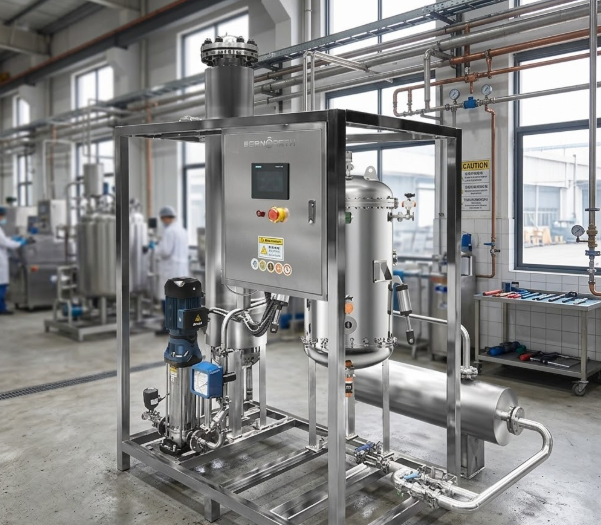
Laboratory research increasingly depends on precise control of temperature, pressure, and process conditions. In pharmaceutical development, biotechnology, food science, chemical research, and materials testing, thermal conditions can directly influence experimental results. For applications that require stable and controllable heat, steam remains one of the most practical process media available.
This has made the Lab Steam Generator an important part of many modern laboratory and pilot-scale facilities. Compared with conventional industrial boilers, laboratory steam generators are generally designed with a smaller footprint, simplified operation, rapid steam production, and more precise control.
For laboratories where space, safety, and process repeatability are important, selecting an appropriate steam generation system can have a direct impact on daily workflow and experimental efficiency.
Why Steam Is Useful in Laboratory Processes
Steam provides an efficient way of transferring thermal energy. When steam condenses, it releases a substantial amount of latent heat, allowing heat to be transferred effectively and relatively uniformly.
This makes steam useful for applications involving:
- Equipment sterilization
- Process heating
- Laboratory cleaning
- Reaction heating
- Distillation
- Sample preparation
- Pilot-scale processing
Another important advantage is that steam can be integrated with different types of laboratory equipment. Instead of relying on direct heating at every individual process point, a centralized or dedicated steam generator can provide thermal energy where it is needed.
What Is a Lab Steam Generator?
A Lab Steam Generator is a compact steam-generation system designed for laboratory, research, testing, and pilot-scale applications.
The system converts water into steam under controlled operating conditions. Depending on the design, laboratory steam generators may use electric heating or other energy sources and can incorporate automatic controls for water supply, pressure, temperature, and system protection.
Compared with large industrial boiler installations, laboratory-scale equipment generally places greater emphasis on:
- Compact dimensions
- Rapid startup
- Easy operation
- Precise control
- Safety protection
- Stable steam output
- Laboratory integration
The appropriate equipment configuration depends on the required steam volume, pressure, application, available utilities, and laboratory operating conditions.
Rapid Steam Generation Improves Laboratory Efficiency
Time is an important factor in research and development.
If a laboratory spends a significant amount of time waiting for a heating system to reach operating conditions, the overall experimental cycle can become less efficient. A fast-heating laboratory steam generator can shorten the preparation stage and allow researchers to begin testing sooner.
Rapid steam generation can be particularly useful in laboratories with frequent short-duration experiments or multiple daily test cycles.
It may help reduce:
- Equipment preparation time
- Idle operating periods
- Unnecessary energy consumption
- Delays between experimental batches
However, startup speed should always be considered together with steam stability and control accuracy rather than evaluated as an isolated specification.
Precise Pressure and Temperature Control
Different laboratory processes require different thermal conditions.
For example, sterilization, reaction heating, material conditioning, and pilot-scale processing may operate under different pressure and temperature requirements. A steam generator therefore needs to provide suitable control over its operating parameters.
Modern laboratory steam systems can incorporate sensors, controllers, automatic regulation, and safety protection to monitor key operating conditions.
Consistent control can contribute to:
- More repeatable experiments
- Stable process heating
- Reduced operator variation
- Improved equipment protection
- Better laboratory process management
For research applications, maintaining repeatable conditions is often just as important as achieving the desired temperature itself.
Compact Equipment for Limited Laboratory Space
Laboratory floor space is often expensive and limited, particularly in universities, research centers, pharmaceutical R&D facilities, and pilot plants.
A compact laboratory steam generator can provide the required steam supply without occupying the same space as a conventional industrial boiler system.
A smaller footprint can make it easier to:
- Integrate the generator into existing facilities
- Optimize laboratory workspace
- Install equipment close to the point of use
- Simplify system layout
Before installation, laboratories should still evaluate ventilation, electrical supply, water connections, drainage, steam piping, and applicable safety requirements.
Automation and Safety Features
Modern laboratory steam generators increasingly incorporate automated operating functions.
Depending on the equipment configuration, these may include automatic water replenishment, pressure monitoring, temperature monitoring, fault alarms, and automatic shutdown.
Automation can reduce the amount of routine manual operation required from laboratory personnel while helping maintain more consistent operating conditions.
Safety is particularly important because steam systems involve elevated temperatures and pressure. Appropriate pressure protection, control systems, water-level protection, electrical safety, and other safeguards should be incorporated according to the equipment design and applicable regulations.
Applications of Laboratory Steam Generators
Pharmaceutical and Life Science Research
Steam can be used for sterilization, equipment cleaning, process heating, and other laboratory operations. Where clean or high-quality steam is required, the generator and associated system should be selected according to the specific process and applicable regulatory requirements.
Biotechnology and Microbiology
Biological laboratories frequently use steam-based equipment for autoclaving, media preparation, equipment sterilization, and waste treatment.
Stable steam production can help support repeatable sterilization cycles and laboratory hygiene procedures.
Food Science
Food research laboratories use thermal processing for product development, testing, sterilization studies, and other experimental work.
A controllable steam source can provide consistent heating conditions for laboratory-scale testing.
Chemical Research
Steam is commonly used as a heat-transfer medium for reaction heating, distillation, evaporation, and pilot-scale chemical processes.
A suitable steam generator can provide researchers with a controllable thermal utility without requiring a large industrial boiler installation.
Materials Research
Materials laboratories may use steam or controlled humidity environments for polymer testing, aging studies, thermal conditioning, and other experimental applications.
The steam supply must be matched to the required pressure, temperature, humidity, and process conditions.
Energy Efficiency in Laboratory Steam Generation
Energy consumption is becoming an increasingly important consideration for research institutions.
Electric laboratory steam generators can convert electrical energy into heat without on-site fuel combustion. When combined with appropriate controls and efficient operating procedures, this can simplify energy management and reduce direct combustion emissions at the point of use.
Efficient water management is also important. Producing more steam than required can increase both water and energy consumption, while appropriate control allows the system to respond more closely to actual laboratory demand.
For this reason, energy efficiency should be evaluated based on the complete operating cycle rather than a single equipment specification.
Why Consider Nobeth Group?
Choosing laboratory steam equipment requires more than comparing steam output. Researchers and facility managers should consider reliability, operating pressure, control accuracy, safety functions, maintenance requirements, installation conditions, and technical support.
Nobeth Group provides steam-generation equipment for laboratory, commercial, and industrial applications. Its solutions can be configured according to different steam requirements, installation environments, and process applications.
For laboratories with specific requirements, customization can help align the steam generator with factors such as available space, required pressure, steam consumption, control preferences, and equipment integration.
Conclusion
The Lab Steam Generator plays an important role in modern research environments by providing a controllable source of thermal energy for sterilization, heating, sample preparation, testing, and pilot-scale processing.
Its value comes from the combination of compact design, rapid steam production, controllable operating conditions, automation, and safety protection. The correct system, however, should always be selected according to the actual application rather than simply choosing the highest-capacity equipment.
For pharmaceutical laboratories, biotechnology facilities, food research centers, chemical laboratories, and material testing institutions, a properly configured laboratory steam generator can improve process consistency while making better use of available space and energy.
With experience in steam technology and customized equipment solutions, Nobeth Group provides laboratory steam generation options designed to support the changing requirements of modern research facilities.


 Arabic
 French
 Spanish
 Portuguese
 Deutsch
 Turkish
 Dutch
Dutch
 Italiano
 Russian
 Romaian
 Portuguese (Brazil)
 Greek
Greek