
For more information,
Contacts – +97144576051
Instagram: burroblancouae

Few culinary debates get confused as often as Tex-Mex versus authentic Mexican food, and honestly, it's an easy mix-up to make. Both share tortillas, similar spices, and plenty of overlapping ingredients, yet they represent genuinely distinct culinary traditions with different histories, techniques, and defining dishes. Understanding what actually separates Tex-Mex from authentic Mexican cooking makes both far more enjoyable to eat, and easier to order with confidence.
Tex-Mex developed along the Texas-Mexico border, born from the blending of Mexican cooking traditions with American ingredients, ranching culture, and Southern influences over more than a century. It's not a lesser or diluted version of Mexican food, it's its own distinct regional cuisine, shaped by the specific history and available ingredients of the borderlands rather than a direct import from central or southern Mexico.
.jpg)
If there's one ingredient that instantly signals Tex-Mex over authentic Mexican cooking, it's cheese, and lots of it. Tex-Mex dishes lean heavily on shredded, melted cheese, think smothered enchiladas, cheese-stuffed burritos, and queso dip, reflecting the cattle-ranching heritage of Texas. Authentic Mexican cooking uses cheese far more sparingly, often as a light garnish, like crumbled cotija or a thin drizzle of crema, rather than the centerpiece of the dish itself.
Tex-Mex commonly relies on ground beef as its default protein, seasoned with a fairly standardized blend of cumin, chili powder, and paprika across most dishes. Authentic Mexican cooking, by contrast, showcases a far wider range of proteins and preparation methods depending on region, slow-braised barbacoa, spit-roasted al pastor pork, or fish prepared coastal-style, each reflecting local tradition rather than a single standardized seasoning approach used nationwide.
Interestingly, the burrito itself sits right at the center of this debate. While burritos do have roots in northern Mexico, the oversized, heavily stuffed version most people know today, packed with rice, beans, cheese, and sour cream, is largely a Tex-Mex and American innovation. Traditional Mexican burritos tend to be smaller and simpler, often just meat and beans in a tortilla, without the elaborate layering that defines the modern Tex-Mex burrito found across most casual dining menus today.
Tex-Mex sauces tend to be thicker, cheese-based, or built around a standardized chili gravy poured generously over enchiladas and other dishes. Authentic Mexican cooking favors fresh, often uncooked salsas, and more complex mole sauces built from a genuinely wide range of chilies, spices, and sometimes chocolate, varying dramatically from region to region rather than following a single consistent formula the way most Tex-Mex sauces do.
Tex-Mex rice is typically a Spanish-style yellow or red rice, often cooked with tomato and a standard seasoning blend served as a default side across most dishes. Authentic Mexican rice varies more by region and often incorporates local vegetables and broths specific to that area's cuisine. Beans follow a similar pattern, Tex-Mex generally serving refried beans as a near-universal side, while authentic Mexican cooking features a wider variety of bean preparations depending on region and dish.
It's worth being clear that Tex-Mex isn't an inferior imitation of Mexican food, it's a genuine culinary tradition in its own right, born from real cultural blending rather than a simplified copy. Both styles reward being appreciated on their own terms, Tex-Mex for its hearty, cheese-forward comfort food appeal, and authentic Mexican cooking for its regional depth and complexity.
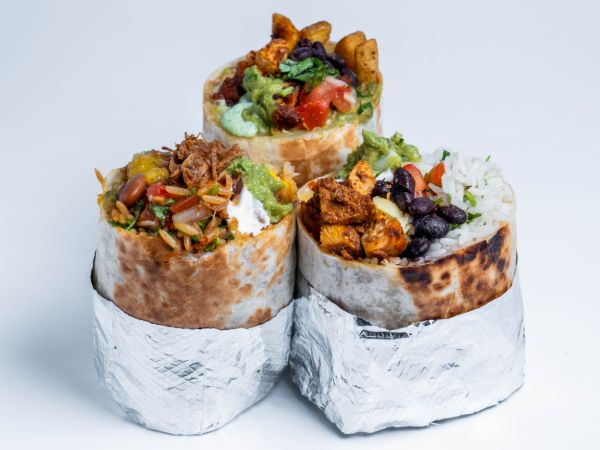
Burro Blanco, a Mexican street food spot with multiple locations across Dubai, leans confidently into the Tex-Mex side of this comparison, building its menu around loaded burritos, tacos, and other approachable Tex-Mex staples rather than attempting to replicate every regional variation of authentic Mexican food. As a dedicated burro restaurant, it embraces exactly the hearty, satisfying identity that's made Tex-Mex so consistently popular well beyond the Texas border it originally came from.
Understanding the real difference between Tex-Mex and authentic Mexican food comes down to recognizing them as two distinct culinary traditions rather than one being a watered-down version of the other. Tex-Mex earns its own identity through bold, cheese-heavy comfort food, while authentic Mexican cooking offers regional depth built over centuries. Both deserve genuine appreciation, and knowing which one you're actually craving makes ordering, and enjoying, either style considerably more satisfying.

 Arabic
 French
 Spanish
 Portuguese
 Deutsch
 Turkish
 Dutch
Dutch
 Italiano
 Russian
 Romaian
 Portuguese (Brazil)
 Greek
Greek