
Ringed Tailed Lemur: Facts, Habitat, Diet, and Behavior
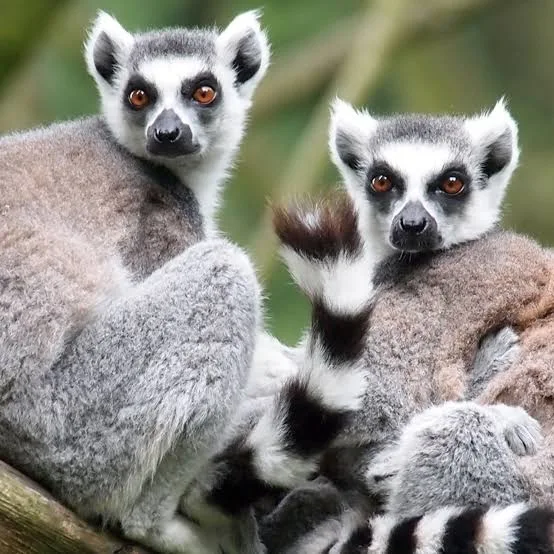
The ringed tailed lemur, commonly known as the ring-tailed lemur, is one of the most recognizable primates in the world. Its striking black-and-white striped tail, expressive face, and social behavior make it a fascinating animal to study. The scientific name of the ring-tailed lemur is Lemur catta, and it belongs to the Lemuridae family.
Native exclusively to Madagascar, the ringed tailed lemur has developed a number of interesting adaptations that help it survive in dry and seasonal environments. Unlike many other lemur species, it spends a considerable amount of time on the ground while also being an excellent climber. Its flexible diet, social lifestyle, and ability to use different habitats make it one of Madagascar's most distinctive native mammals.
Ringed Tailed Lemur Scientific Name
The scientific name of the ringed tailed lemur is Lemur catta. It belongs to the genus Lemur and the family Lemuridae within the primate order.
Scientific names provide a standardized way to identify animals. While common names can vary between regions, Lemur catta specifically refers to the ring-tailed lemur. The species is closely related to several other lemurs found exclusively on Madagascar.
Where Do Ringed Tailed Lemurs Live?
Ringed tailed lemurs are naturally found only on Madagascar, an island off the southeastern coast of Africa. Their distribution is concentrated primarily in southern and southwestern parts of the island.
They can inhabit several types of environments, including dry forests, spiny forests, scrublands, open woodland, rocky areas, and forests growing along rivers. These habitats can experience significant seasonal changes, with periods of rainfall followed by dry conditions.
The ability to use different habitats gives ring-tailed lemurs access to a wider range of food and shelter. However, the loss and fragmentation of natural habitat remain major concerns for wild populations.
Physical Characteristics
The most famous feature of the ringed tailed lemur is its long, striped tail. The tail is covered with alternating black and white rings, creating the appearance that gives the species its common name.
The tail is not prehensile, meaning it cannot be used to grasp branches. Instead, it helps with balance when the animal climbs, jumps, and walks across uneven terrain. The tail also serves as an important visual signal during social interactions and group movement.
Ring-tailed lemurs have grayish fur on much of their bodies, with lighter-colored areas around the face and underside. They have large eyes, pointed facial features, and strong limbs that allow them to move efficiently both on the ground and in trees.
Ringed Tailed Lemur Diet
The ringed tailed lemur is primarily a plant eater, although its diet can include some animal-based foods. It consumes fruits, leaves, flowers, seeds, bark, shoots, and other vegetation.
Depending on availability, ring-tailed lemurs may also consume insects and other small animal foods. Their diet changes throughout the year because the availability of plants and fruits varies between wet and dry seasons.
This dietary flexibility is particularly useful in Madagascar's dry environments. When preferred fruits are unavailable, ring-tailed lemurs can make use of leaves, flowers, bark, and other plant materials.
How Ringed Tailed Lemurs Find Food
Ring-tailed lemurs spend a significant portion of their active day foraging. They can search for food on the ground as well as in trees and shrubs.
Their ability to use both terrestrial and arboreal environments provides access to a wide range of food sources. They may travel together as a group while searching for vegetation, fruits, and other foods.
Seasonal changes can influence their feeding patterns. During periods when fruits and fresh vegetation are abundant, these foods can become important parts of their diet. During drier periods, they may depend more heavily on foods that remain available.
Ringed Tailed Lemur Behavior
Ringed tailed lemurs are primarily diurnal, meaning they are active during the daytime. Their daily activities include feeding, traveling, resting, grooming, communicating, and socializing.
One particularly recognizable behavior is sunbathing. In the morning, ring-tailed lemurs may sit upright with their arms spread outward toward the sun. This behavior helps them warm their bodies.
They are active and curious animals that regularly explore their surroundings. Their strong legs and flexible bodies allow them to move across branches, rocks, and the ground.
Social Structure
Ringed tailed lemurs are highly social and typically live in groups called troops. A troop can contain multiple adults, juveniles, and infants.
Females generally have priority over males within the social hierarchy. This female-dominated social structure is an interesting characteristic shared by several lemur species.
Social relationships are maintained through grooming, vocal communication, scent marking, and other behaviors. Grooming is particularly important because it helps maintain bonds between members of the group.
Communication
Communication plays an important role in the daily lives of ring-tailed lemurs. They use a variety of vocalizations to communicate with members of their troop.
Different calls can help animals maintain contact, signal danger, or communicate during social interactions. Body posture, facial expressions, tail movements, and scent marking also provide information.
Scent is especially important. Ring-tailed lemurs have specialized scent glands that allow them to leave chemical signals in their surroundings.
Stink Fighting
One of the most unusual behaviors associated with male ring-tailed lemurs is called stink fighting. Males possess specialized scent glands and can apply their scent to their tails.
They then wave their scented tails toward rivals during social competition. This behavior allows males to communicate information without necessarily engaging in direct physical combat.
The behavior is an excellent example of how scent communication has evolved as an important part of ring-tailed lemur social life.
Ringed Tailed Lemur Reproduction
Ring-tailed lemurs have a seasonal breeding pattern. Females generally give birth after a relatively short pregnancy and usually produce a single infant, although twins can sometimes occur.
Newborns initially remain close to their mothers and depend on them for protection and nourishment. As they grow, young lemurs gradually become more independent and begin exploring their environment.
Young members of the troop learn important behaviors by observing adults. Social interaction, feeding, movement, and communication are all important parts of their development.
Ringed Tailed Lemur Habitat
The habitat of the ringed tailed lemur is closely connected to its survival. Madagascar contains many unique ecosystems, but these environments are increasingly affected by human activities.
Deforestation, agricultural expansion, livestock grazing, fires, and the removal of natural resources can reduce available habitat. When forests and vegetation become fragmented, lemurs may have fewer places to find food, shelter, and safe areas for reproduction.
Protecting natural habitat is therefore one of the most important aspects of ring-tailed lemur conservation.
Are Ringed Tailed Lemurs Endangered?
The ring-tailed lemur is considered an endangered species. Wild populations have experienced serious declines, and habitat loss is one of the major factors contributing to the species' conservation concerns.
Other pressures can include hunting, environmental degradation, and changes in land use. Because the species is endemic to Madagascar, conservation efforts within the country are especially important.
Protected habitats, conservation programs, scientific research, and local community involvement can all contribute to the protection of wild ring-tailed lemurs.
Predators of Ringed Tailed Lemurs
Ring-tailed lemurs face threats from several natural predators. Young animals are particularly vulnerable.
Predators may include birds of prey, snakes, and carnivorous mammals depending on the region. Living in social groups provides some protection because multiple animals can remain alert and warn others when danger approaches.
Their daytime activity and ability to move between trees and the ground also influence how they respond to potential threats.
Ringed Tailed Lemurs and Conservation
Conservation of the ring-tailed lemur requires protecting both individual animals and their natural habitats. Maintaining healthy forests, woodland areas, and other native vegetation provides food and shelter for wild populations.
Conservation organizations and protected areas can help preserve important habitats. Education is also valuable because local communities and visitors can play a role in reducing pressure on fragile ecosystems.
Supporting responsible wildlife conservation can benefit ring-tailed lemurs as well as many other species that share Madagascar's unique habitats.
Ringed Tailed Lemurs in Zoos
Ring-tailed lemurs are commonly found in accredited zoos and professional wildlife facilities. These institutions can provide carefully designed habitats, balanced diets, social groups, enrichment, and specialized veterinary care.
Zoos can also help educate visitors about Madagascar's wildlife and conservation challenges. Some professional facilities participate in research and managed breeding programs that contribute to broader conservation goals.
Although ring-tailed lemurs may appear approachable because of their expressive faces and social behavior, they remain wild primates with complex needs.
Can Ringed Tailed Lemurs Be Pets?
Ringed tailed lemurs are not conventional household pets. They have specialized dietary, social, environmental, and veterinary requirements that can be difficult for private owners to meet.
Anyone considering exotic animal ownership should first investigate all applicable laws and regulations. Requirements can vary significantly depending on the country, state, or local jurisdiction.
Responsible animal care also requires appropriate housing, enrichment, nutrition, veterinary support, and the ability to provide lifelong care.
Interesting Facts About Ringed Tailed Lemurs
The ringed tailed lemur has many unusual characteristics. It is native only to Madagascar and is one of the lemur species that spends substantial amounts of time on the ground.
Its striped tail is primarily used for balance and visual communication rather than grasping. The species is active during the day and often begins its morning by warming itself in the sunlight.
Females generally dominate males socially, and males can participate in scent-based stink-fighting behavior. Their flexible diet allows them to survive in relatively dry habitats where food availability changes seasonally.
Final Thoughts
The ringed tailed lemur, or Lemur catta, is a remarkable primate with a distinctive appearance and fascinating social life. Its black-and-white tail, daytime activity, flexible diet, and ability to live both on the ground and in trees make it one of Madagascar's most recognizable animals.
Understanding the ringed tailed lemur also highlights the importance of conservation. These animals depend on healthy natural habitats for food, shelter, reproduction, and social life. Protecting Madagascar's remaining forests, woodlands, and other ecosystems is essential for giving wild ring-tailed lemurs a better chance of survival in the future.
 Deutsch
 English
 Arabic
 French
 Spanish
 Portuguese
 Turkish
 Dutch
 Italiano
 Russian
 Romaian
 Portuguese (Brazil)
 Greek