
Paid Time Off (PTO): Meaning, Types, Benefits, and How It Works
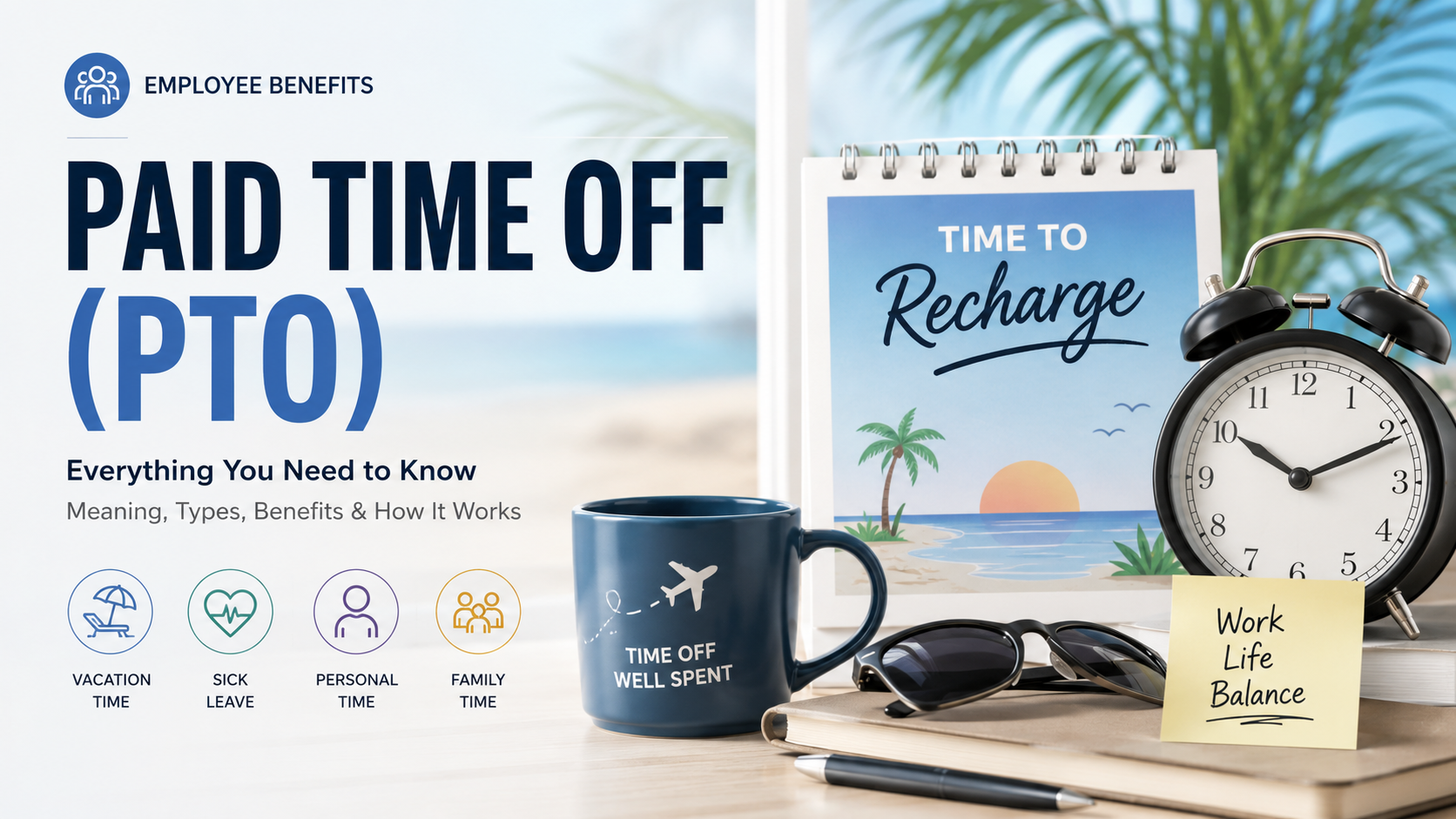
One of the most appreciated employee benefits in today's workplaces is called Paid Time Off (PTO). It provides staff the freedom to step off their normal work schedule and still be paid. Rather than having to leave their jobs because they need a break, employees can take their PTO vacation, be sick, have family obligations or just need to recharge. This shift in recognition of the value of work-life balance for staff and employers has led to PTO being a vital tool in attracting and retaining talented professionals.
What is Paid Time Off (PTO)?
Paid Time Off is a policy that provides a specific number of hours or days to be used by the employee for approved absences and paid for. Many employers have a leave bank that is a combination of vacation, sick, and personal leave, unlike traditional leave systems that keep each type of leave separate. The workers can then choose when and how to spend their time as their employer dictates.
PTO may be impacted by position, length of service, employment status and company policy. Some companies may offer employees PTO at the end of the year, but some offer it through an accrual program.
How Does PTO Work?
A PTO policy is a statement that details how employees accumulate, access and use PTO. Many employers will allow employees to earn PTO by the hour or the month. After they have built up enough leave, they can apply on their HR department or HR management system for approval by their manager.
Some employers may let you use up unused vacation time the next year while others have a "use-it-or-lose-it" policy. Some companies will also pay out unused PTO upon termination of employment, depending on the local labor laws and company policy.
Common Types of PTO
PTO is sometimes combined into a single balance, but may be comprised of multiple types of leave. Vacation leave; leave granted to employees for vacation or personal trip. Sick leave is taken when ill or attending to medical appointments or recuperating. Personal leave is for family emergencies or important personal commitments. A few organizations also offer mental health days, volunteer leave, bereavement leave, or parental leave as part of their paid leave policies.
With PTO, workers can choose when to take their PTO without having to balance different leave situations.
Advantages of PTO
Paid Time Off offers many benefits for employers and employees. Staff have an enhanced work-life balance, decreased stress and overall improved physical and mental health. Frequent breaks can help to avoid burnout, boost employee motivation, and ensure that they come back to work feeling rejuvenated and productive.
For employees, these policies are a great benefit as they allow them to get more out of their workday.For employers, the benefit of providing competitive PTO policies is that they will increase employee satisfaction and engagement. It helps to build recruitment through making the organisation attractive to the job seeker. A healthy PTO program can also help decrease employee absenteeism due to burnout or turnover, and help foster positive employee culture and values.
PTO Accrual vs. Unlimited PTO
Some companies have a PTO, or paid time off system that allows employees to gradually build up their paid time off during the entire year. This can give employers greater control of leave balances, and provide a benefit for those staying on the job.
Others have instituted unlimited PTO plans, in which case workers can request leave for a single day or a month or more if their workload is met and management approves, without limit on the number of leave days per year. Unlimited PTO is more flexible, but requires effective expectations and leave planning, and trust between employer and employee.
Managing PTO Effectively
To manage PTOs effectively, there must be transparency in policies and efficiency in tracking. Employers should make it clear what rules apply about eligibility, processes for approval, accrual, and carryover limits. With the help of modern HR software, managing PTO becomes simpler as it automates leave calculation, ensures accurate PTO records and enables leave tracking and employee self-service. This helps to minimize administration and maintain uniformity and compliance with corporate policy.
Overall
Paid Time Off is not just an employee benefit—it's an investment in their well-being and organizational success. Providing employees with paid time off means that they have time to rest, recover, and attend to their personal affairs, and this leads businesses to have healthier, more motivated, and more productive teams. Well designed PTO programs that are provided either as traditional accrual programs or through a flexible PTO policy can help foster a positive work environment and can help organizations attract and retain the best people for the job.
Note: If you wanna learn more about PTO terms or any other HR related topics, you can freely visit Managetrix HRMS website.

 English
 Arabic
 French
 Spanish
 Deutsch
 Turkish
 Dutch
Dutch
 Italiano
 Russian
 Romaian
 Portuguese (Brazil)
 Greek
Greek