
Inside the Risks of Buying Through Auction Houses

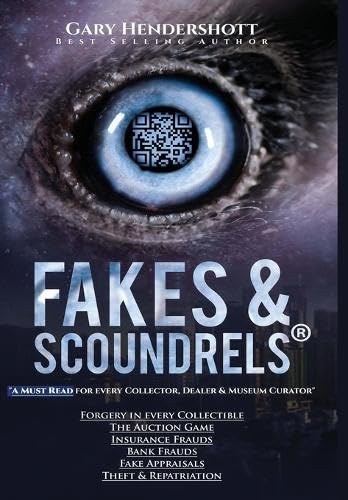
Auction sales have long been one of the most popular ways to acquire historical collectibles. Collectors often turn to Auction Houses hoping to find fine art, historical manuscripts, military artifacts, coins, and other remarkable pieces that may not be available elsewhere. While auctions create opportunities to acquire important historical objects, FAKES AND SCOUNDRELS explains that they also require careful preparation and informed decision-making. Winning a bid is only one part of the process. Understanding the risks behind every transaction is equally important.
Drawing on more than fifty years of experience in the historical collectibles market, Gary Lynn Hendershott devotes an entire chapter to auction companies. Rather than discouraging collectors from participating in auctions, the author encourages them to understand how auction companies operate, what financial obligations exist, and why careful research should always come before placing a bid.
Auctions Can Be Exciting but Require Preparation
One of the first lessons presented in FAKES AND SCOUNDRELS is that auctions naturally create excitement. Competitive bidding can encourage collectors to focus on winning instead of evaluating the complete transaction.
The author explains that successful buying begins long before the auction starts. Collectors should research every historical object, review available documentation, and understand the auction company's procedures before deciding to participate.
Approaching Auction Houses with preparation instead of emotion helps collectors make thoughtful decisions while avoiding unnecessary mistakes.
The Hammer Price Is Not the Final Cost
A major topic discussed in the book is the difference between the winning bid and the actual amount a buyer pays. Many first-time collectors assume the hammer price represents the complete purchase price, but that is not always the case.
The author explains that buyer's premiums are added to successful bids, increasing the final amount due. Collectors should understand these additional charges before deciding how much they are willing to spend.
By calculating every expense in advance, buyers avoid unexpected costs after the auction has ended.
Read Auction Agreements Carefully
Another important point throughout the auction chapter is the importance of understanding auction agreements. Every auction company establishes its own procedures, terms, and conditions for buyers and sellers.
Before participating in Auction Houses, collectors should review the agreement carefully and understand the responsibilities that accompany every purchase. Knowing how payment procedures, commissions, and buyer's premiums work allows collectors to participate with greater confidence.
The book encourages readers never to overlook the written terms that govern every transaction.
Research Every Collectible Before Bidding
Throughout FAKES AND SCOUNDRELS, the author repeatedly emphasizes that research is one of the collector's strongest protections. Auction catalogs provide useful information, but they should not replace independent investigation.
Collectors should examine provenance, ownership history, available documentation, condition, and historical significance before placing a bid. Questions should always be asked whenever information appears incomplete or unclear.
Responsible buying depends upon careful research rather than assumptions. This approach strengthens every decision made through Auction Houses.
Documentation Should Always Be Preserved
Winning an auction is only the beginning of responsible ownership. The book explains that every document received during the purchase should become part of the collection's permanent records.
Collectors should preserve:
● Bills of sale.
● Auction invoices.
● Provenance records.
● Purchase documentation.
● Collection inventories.
● Historical photographs.
These records support ownership history and become valuable during estate planning, museum donations, insurance matters, and future sales.
Organized documentation protects both the historical object and the collector.
Understand Cash Advance Loans
One subject discussed in the auction chapter is cash advance loans offered in connection with auction consignments. The author encourages collectors and consignors to understand these financial arrangements before entering into any agreement.
Financial decisions involving historical collectibles deserve careful consideration. Every agreement should be reviewed thoroughly so collectors understand the obligations associated with these transactions.
The book consistently encourages informed decision-making whenever financial matters affect historical collections.
Patience Is a Collector's Greatest Advantage
Another important lesson throughout FAKES AND SCOUNDRELS is that patience often produces better collecting decisions. Auctions move quickly, and competitive bidding may encourage buyers to exceed the limits they originally established.
The author reminds readers that another opportunity may always appear in the future.
Collectors should never feel pressured to purchase simply because an object is available today.
Remaining disciplined helps collectors protect both their collections and their financial resources while participating in Auction Houses.
Practical Tips Before Buying at Auction
The book encourages collectors to develop careful habits before participating in auctions.
● Research every historical object.
● Study provenance carefully.
● Understand buyer's premiums.
● Read auction agreements completely.
● Preserve all auction documentation.
● Maintain complete collection inventories.
● Establish a spending limit before bidding.
These practices help collectors make informed decisions while preserving the historical significance of every acquisition.
Final Thoughts
FAKES AND SCOUNDRELS presents Auction Houses as an important part of the historical collectibles market, but also reminds collectors that auctions require knowledge, preparation, and careful judgment. Buyer’s premiums, auction agreements, documentation, provenance, and financial considerations all deserve careful attention before placing a bid.
Rather than viewing auctions as simple buying opportunities, Gary Lynn Hendershott encourages collectors to approach them with research and patience. By understanding how Auction Houses operate and preserving complete documentation after every purchase, collectors strengthen both their collections and their ability to protect the history behind every historical object. Informed decisions, rather than hurried ones, remain the key to responsible collecting.

 Arabic
 French
 Spanish
 Portuguese
 Deutsch
 Turkish
 Dutch
Dutch
 Italiano
 Russian
 Romaian
 Portuguese (Brazil)
 Greek
Greek