
Looking for Faster and more Accurate Under Vehicle Inspection Technology?
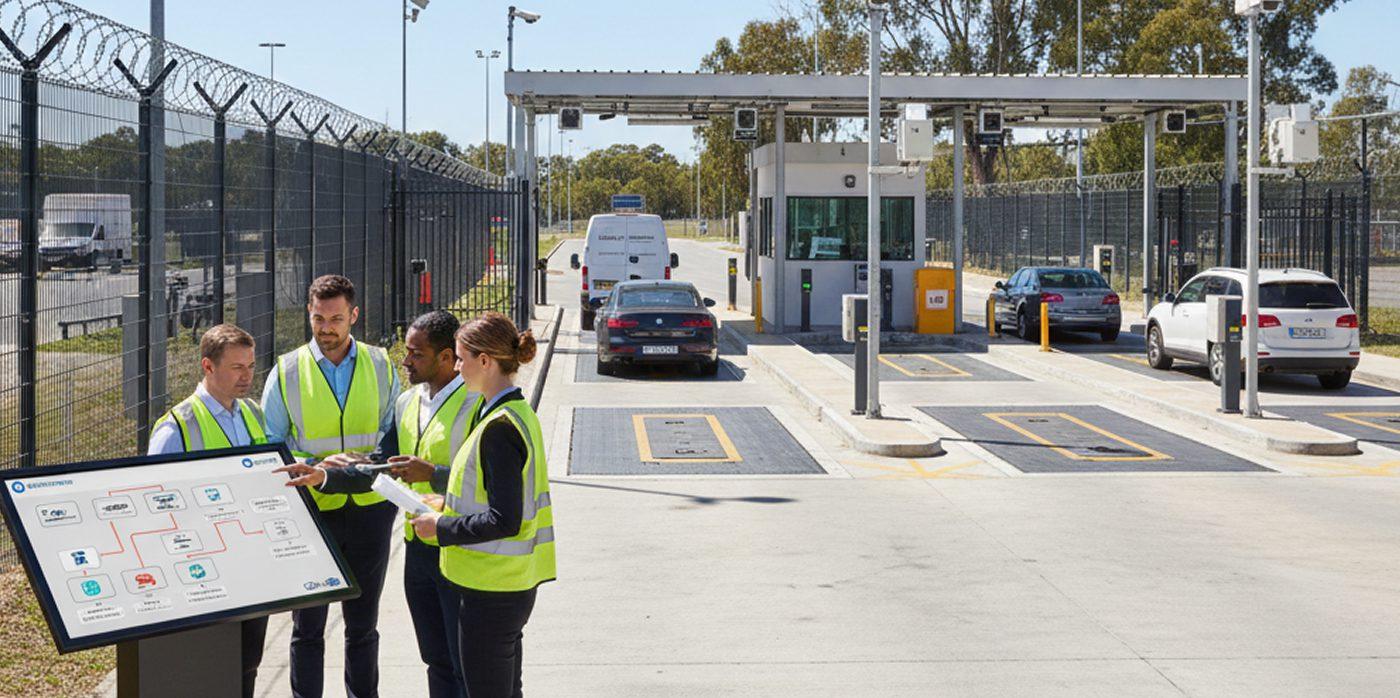
Vehicle security has become a top priority for organizations responsible for protecting people, assets, and critical infrastructure. From airports and military bases to government facilities, industrial sites, logistics centers, and ports, vehicle entry points represent one of the most important layers of facility security.
However, as vehicle traffic increases and security threats become more sophisticated, many organizations are discovering that traditional inspection methods are no longer sufficient. Manual inspections often create delays, rely heavily on human judgment, and may fail to identify concealed threats hidden beneath vehicles.
The challenge facing modern facilities is clear: how can security teams perform thorough inspections while maintaining efficient vehicle flow at entry points?
The answer lies in intelligent inspection technologies that automate vehicle screening and improve visibility where it matters most. By integrating License Plate Recognition (LPR) systems with advanced under vehicle inspection solutions, facilities can significantly enhance security while improving operational efficiency.
The Growing Challenges at Vehicle Entry Points
Every day, security teams must process a wide range of vehicles entering protected areas.
These may include:
-
Employee vehicles
-
Visitor vehicles
-
Contractor vehicles
-
Delivery trucks
-
Service vehicles
-
Fleet vehicles
While ensuring smooth access is important, organizations must also prevent unauthorized entry and identify potential threats before they reach sensitive areas.
Unfortunately, traditional inspection methods often struggle to meet these objectives simultaneously.
Security personnel must inspect vehicles quickly to avoid traffic congestion while remaining vigilant enough to detect suspicious items or vehicle modifications.
This balance becomes increasingly difficult as vehicle volumes continue to rise.
Why Traditional Inspection Methods Create Security Risks
Many facilities still rely on conventional inspection practices such as:
-
Visual vehicle checks
-
Handwritten vehicle logs
-
Credential verification
-
Handheld mirrors
-
CCTV monitoring
Although these procedures have been used for years, they present several limitations.
Human Error
Manual inspections depend on the experience, concentration, and alertness of security personnel.
Inspection Inconsistency
Different operators may inspect vehicles differently, creating variations in screening quality.
Limited Visibility
Certain areas beneath vehicles remain difficult to inspect thoroughly using mirrors alone.
Traffic Delays
Vehicles often need to stop for extended periods while inspections are completed.
As traffic volumes increase, these challenges can create both security vulnerabilities and operational bottlenecks.
Why the Vehicle Undercarriage Demands Greater Attention
One of the most overlooked areas during vehicle inspections is the undercarriage.
This area can potentially conceal:
-
Suspicious packages
-
Unauthorized attachments
-
Contraband
-
Concealed devices
-
Vehicle modifications
-
Signs of tampering
Because the underside of a vehicle is not easily visible during routine inspections, threats may go unnoticed if facilities rely solely on manual procedures.
Traditional mirror-based inspections often provide only limited views and can be affected by lighting conditions, weather, and operator experience.
As a result, organizations are increasingly investing in technologies that provide detailed and reliable undercarriage visibility.
How Advanced Under Vehicle Inspection Improves Detection
Modern under vehicle inspection systems utilize specialized imaging technology to automatically capture high-resolution images of vehicle undercarriages.
As vehicles pass over inspection equipment, detailed images are generated and displayed for security personnel to review.
This process provides several advantages over traditional methods.
Enhanced Visibility
Security teams gain clear views of areas that are difficult to inspect manually.
Improved Inspection Accuracy
Detailed imaging makes it easier to identify unusual objects and abnormalities.
Faster Vehicle Processing
Vehicles can continue moving through checkpoints without lengthy stops.
Consistent Inspection Standards
Every vehicle receives the same level of screening.
Digital Documentation
Inspection records can be stored for future investigations and audits.
These capabilities help organizations strengthen security while improving operational performance.
The Importance of Vehicle Identification
While detecting concealed threats is essential, facilities also need a reliable method for identifying vehicles entering secure areas.
This is where License Plate Recognition technology becomes a valuable component of modern access control.
LPR systems automatically capture vehicle registration information and compare it against approved databases, visitor records, and watchlists.
Benefits include:
Automated Identification
Vehicle information is captured instantly without manual entry.
Faster Access Verification
Authorized vehicles can be processed more efficiently.
Improved Recordkeeping
Facilities maintain accurate digital records of vehicle activity.
Enhanced Security Monitoring
Vehicle histories can be reviewed during investigations and audits.
These capabilities help organizations improve both security and operational oversight.
Why Integration Delivers Better Results
Although LPR technology and under vehicle inspection systems provide valuable benefits independently, their combined capabilities create a significantly stronger security solution.
Integrated systems allow organizations to:
-
Identify vehicles automatically
-
Capture undercarriage images simultaneously
-
Associate inspection images with vehicle identities
-
Compare current inspections against historical records
-
Generate alerts for unusual findings
-
Improve situational awareness
This integration creates a comprehensive vehicle screening process that supports faster and more informed decision-making.
Addressing Modern Security Challenges With Intelligent Inspection
Today's facilities require security technologies that can adapt to evolving threats and increasing traffic volumes.
An advanced under vehicle scanning system provides automated undercarriage imaging that helps identify concealed objects, suspicious modifications, and potential security threats with greater accuracy than traditional inspection methods. When integrated with LPR technology and intelligent under vehicle inspection systems, organizations gain a complete vehicle screening solution that improves visibility, enhances access control, and strengthens overall facility protection.
This approach enables security teams to maintain high standards of safety while reducing operational disruptions.
Benefits of Faster and More Accurate Inspection Technology
Organizations adopting intelligent vehicle inspection technologies often experience measurable improvements across several areas.
Enhanced Threat Detection
Improved imaging helps identify concealed risks more effectively.
Reduced Checkpoint Congestion
Automated screening accelerates vehicle processing.
Improved Security Consistency
Every vehicle receives standardized inspection procedures.
Better Data Management
Digital records simplify investigations and compliance reporting.
Increased Operational Efficiency
Security personnel can focus on evaluating alerts rather than performing repetitive manual inspections.
These benefits contribute to stronger security and smoother operations.
Commport Technologies: Supporting Modern Vehicle Security
Commport Technologies is a trusted supplier of advanced LPR systems and intelligent vehicle inspection technologies designed to meet the needs of modern security environments.
By integrating license plate recognition with advanced under vehicle inspection solutions, Commport Technologies helps organizations improve threat detection, strengthen perimeter security, and optimize checkpoint performance.
Its technologies support a wide range of applications, including:
-
Airports
-
Government facilities
-
Military installations
-
Industrial complexes
-
Logistics centers
-
Ports and border crossings
-
Critical infrastructure projects
Through intelligent technology integration, organizations can achieve greater visibility, improved efficiency, and stronger protection at vehicle entry points.
Conclusion
Traditional vehicle inspection methods are becoming increasingly difficult to manage as facilities face growing traffic volumes and evolving security threats. Limited visibility, human error, and operational delays can create vulnerabilities that compromise facility protection.
By integrating LPR systems with advanced under vehicle inspection technologies, organizations can improve inspection accuracy, accelerate checkpoint operations, and strengthen access control. Intelligent vehicle screening solutions provide the speed, consistency, and visibility needed to secure today's high-risk environments.
For facilities seeking faster and more accurate vehicle inspections, automated screening technologies are rapidly becoming an essential component of modern security strategies.

 English
 Arabic
 French
 Spanish
 Portuguese
 Deutsch
 Turkish
 Italiano
 Russian
 Romaian
 Portuguese (Brazil)
 Greek
Greek