
Can You Run an RV Air Conditioner Off-Grid?
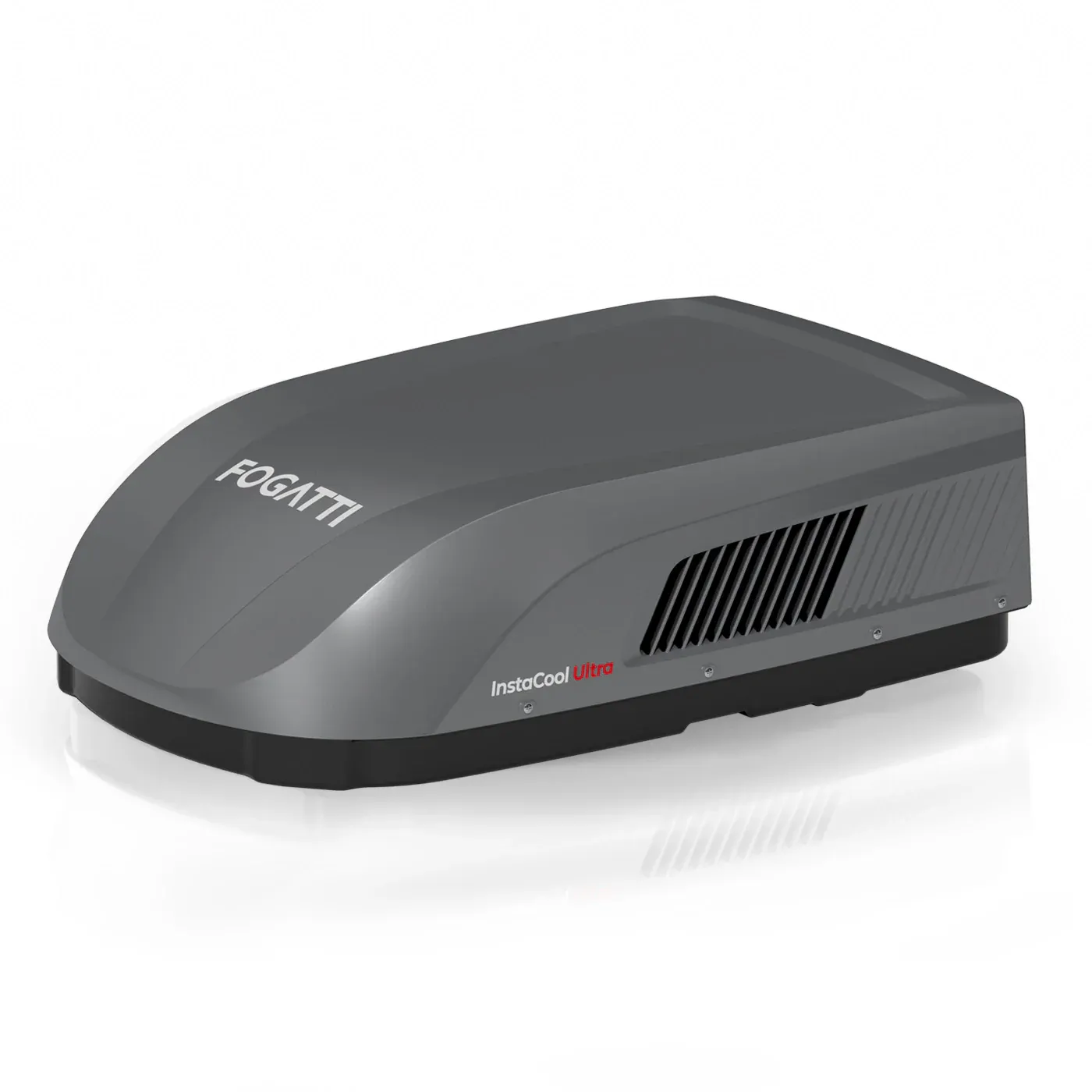
Boondocking and off-grid travel have grown more popular, but one question stops a lot of people before they commit: can the air conditioner actually keep up without shore power? The honest answer is yes, with the right setup, though it takes more planning than simply plugging in at a campground.
What Does Off-Grid AC Use Actually Require?
Running a rooftop air conditioner away from shore power depends almost entirely on battery capacity and inverter size. The compressor inside an AC unit needs a meaningful surge of power just to start up, followed by sustained power to keep running. If your battery bank or inverter can't handle that initial surge, the unit simply won't start.
Higher BTU units draw more power overall. An 18,000 BTU unit like the InstaCool Pro requires considerably more continuous energy than something in the 11,000 BTU range, so the math changes significantly depending on which capacity you're running.
How Much Battery Capacity Do You Need?
There's no single universal number, since runtime depends on how many hours per day you plan to run the AC, what other electrical loads you're managing, and how much solar or generator backup you have available. Travelers who want extended off-grid AC use typically invest in larger lithium battery banks paired with a properly sized inverter rather than trying to stretch a smaller setup beyond its limits.
Does Inverter Size Matter as Much as Battery Capacity?
Yes, arguably just as much. An inverter that's undersized for the AC's startup surge will trip or fail even if the battery bank itself has plenty of stored energy. Matching inverter capacity to your specific unit's startup and running wattage is a critical step that's easy to overlook when focusing only on battery size.
What About Solar Power?
Solar panels can help recharge batteries during the day, which extends how long you can run a RV air conditioner off-grid, but solar alone usually can't power the AC directly in real time during peak draw. Think of solar as replenishing your battery reserve rather than running the unit instantly off panel output.
Should You Choose a Lower BTU Unit for Off-Grid Travel?
For dedicated off-grid travelers, sizing down slightly within your RV's compatible BTU range can make off-grid power management more realistic. An 11,000 or 13,500 BTU unit draws meaningfully less power than an 18,000 BTU model, which can be the difference between sustainable daily AC use and constantly running out of stored power.
Planning Before You Buy
Before committing to a specific AC unit for an off-grid build, it helps to calculate startup and running wattage against your planned battery and inverter setup. Skipping this step is one of the most common reasons off-grid AC installations disappoint owners who assumed any unit would work with any setup.
Conclusion
Running an RV air conditioner off-grid is absolutely possible, but it rewards careful planning over guesswork. Battery capacity, inverter size, and BTU draw all need to align before you head off into remote camping spots expecting reliable cooling. Get the math right upfront and off-grid AC use becomes a realistic part of your travel setup rather than a frustration.
FAQ
Can solar panels power an RV AC directly?
Not typically in real time. Solar mainly recharges your battery bank, which then powers the AC, rather than running it instantly off panel output.
Do higher BTU units need bigger inverters?
Yes, higher BTU units draw more startup and running power, requiring a correspondingly larger inverter to handle the load.
Is a lower BTU unit better for off-grid travel?
It can be, since lower BTU units draw less continuous power, making off-grid battery management more manageable for many travelers.

 English
 Arabic
 French
 Spanish
 Portuguese
 Deutsch
 Turkish
 Dutch
Dutch
 Italiano
 Romaian
 Portuguese (Brazil)
 Greek
Greek