
OEM Probiotic Manufacturing vs In-House Production: A Technical Comparison
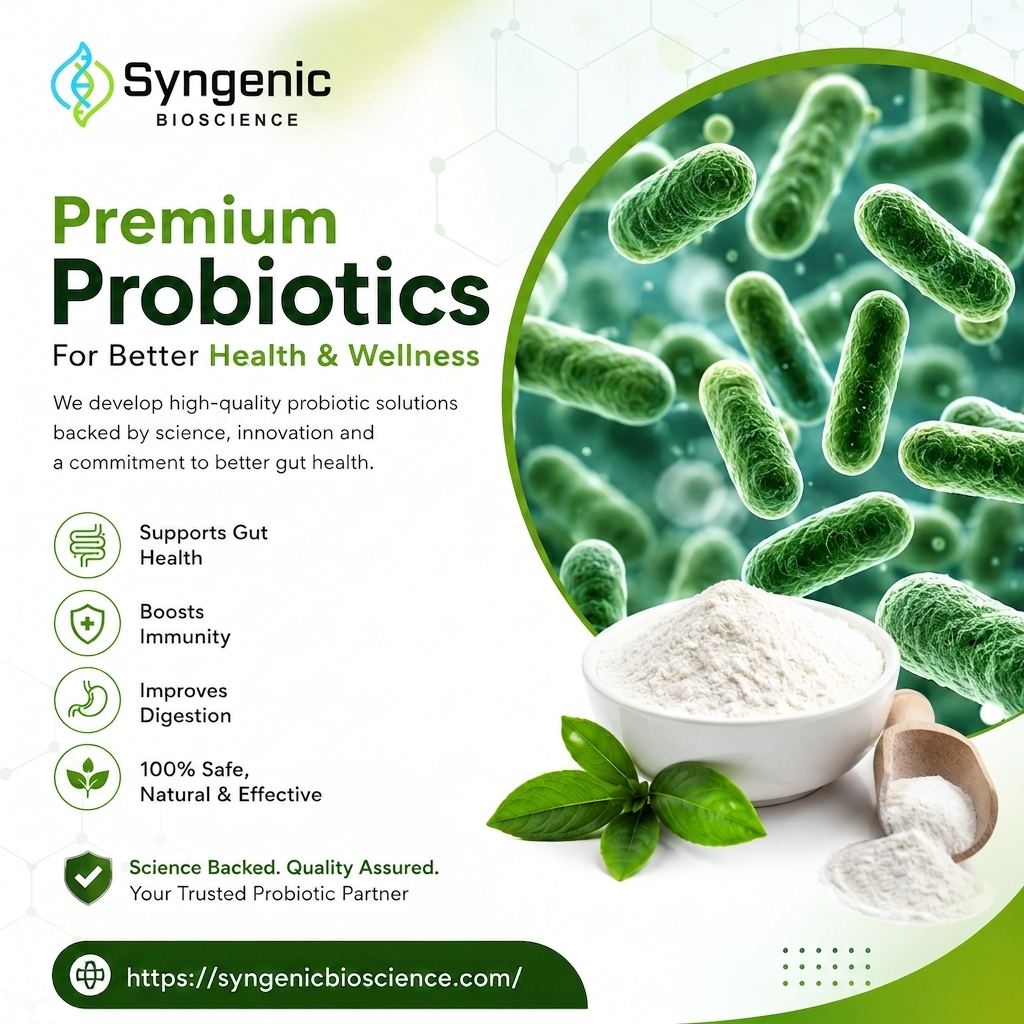
For companies planning to launch or expand a probiotic product line, one of the most important strategic decisions is whether to manufacture products through an OEM or contract manufacturing partner or establish an in-house production facility.
At first, the decision may appear to be primarily about manufacturing cost. However, probiotic production involves considerably more technical complexity than simply blending ingredients and filling capsules. Probiotic microorganisms are living biological materials, and their viability can be influenced by formulation, processing, moisture, oxygen, temperature, packaging, and storage conditions. Research on probiotic production also emphasizes the importance of reproducibility and quality control from raw materials through the finished product.
As a result, OEM Probiotic Manufacturing and in-house production represent two different operating models, each with its own technical, financial, quality, and scalability implications.
What Is OEM Probiotic Manufacturing?
OEM Probiotic Manufacturing is a business model in which a specialized manufacturer produces probiotic products according to an agreed product specification or formulation on behalf of another company.
Depending on the manufacturing agreement, the partner may support:
- Probiotic strain selection
- Formulation development
- Raw-material sourcing
- Probiotic processing
- Freeze-drying or stabilization
- Powder blending
- Capsule or tablet production
- Sachet or stick-pack filling
- Quality testing
- Stability evaluation
- Packaging
- Commercial-scale production
The exact scope depends on the manufacturer and project requirements.
Some OEM arrangements involve manufacturing an existing customer-owned formulation, while broader contract-development models can support the formulation and development stages as well.
This makes OEM production particularly useful for businesses that want to launch probiotic products without building an entire manufacturing infrastructure internally.
What Is In-House Probiotic Production?
In-house production means that the company owns and operates its own probiotic manufacturing infrastructure.
Depending on the scale and scope of the operation, this can involve:
- Research and development laboratories
- Microbiology laboratories
- Culture and strain storage
- Fermentation equipment
- Biomass recovery systems
- Drying equipment
- Blending systems
- Filling and packaging equipment
- Quality-control laboratories
- Stability facilities
- Environmental monitoring systems
- Production personnel
- Quality assurance teams
An integrated manufacturing model can provide significant control over the production chain. For example, established probiotic manufacturers may internally manage fermentation, freeze-drying, blending, encapsulation, and packaging.
However, building such capabilities requires substantial investment, technical expertise, validation, maintenance, documentation, and ongoing quality management.
OEM vs In-House: Technical Comparison
| Factor | OEM Probiotic Manufacturing | In-House Production |
|---|---|---|
| Initial investment | Lower | High |
| Manufacturing infrastructure | Provided by partner | Owned by company |
| Production control | Shared/contract-based | Direct |
| Technical expertise | Access through manufacturer | Must be developed internally |
| Quality-control infrastructure | Usually manufacturer-supported | Company responsibility |
| Scale-up | Generally easier | Requires capacity planning |
| Equipment investment | Limited | Significant |
| Production flexibility | Depends on partner | High internal control |
| Development speed | Can be faster with an experienced partner | Longer setup and development |
| Manufacturing risk | Shared with partner | Primarily internal |
| Capacity utilization | Flexible based on orders | Company must manage utilization |
| Long-term control | Contract-dependent | High |
The right choice depends on product complexity, expected volume, available capital, technical capabilities, and the company's long-term manufacturing strategy.
1. Capital Investment
One of the clearest differences between OEM and in-house production is capital expenditure.
An in-house probiotic facility requires investment in production areas, specialized processing equipment, microbiological testing, utilities, quality systems, storage, packaging equipment, and trained personnel.
The company must also consider maintenance, equipment qualification, calibration, validation, cleaning systems, environmental controls, and facility upgrades.
With OEM Probiotic Manufacturing, much of this infrastructure already exists at the manufacturing partner.
Instead of investing heavily in a complete production facility, the brand generally pays according to the agreed manufacturing and development arrangement.
This changes manufacturing from a predominantly fixed-cost model to a more flexible operating model.
2. Control Over the Manufacturing Process
In-house production provides maximum direct control.
A company can make decisions about:
- Production scheduling
- Raw-material sourcing
- Process parameters
- Equipment selection
- Manufacturing batches
- Product-development priorities
- Process modifications
This can be particularly valuable for companies with proprietary strains, unique processing technologies, or extensive internal R&D programs.
OEM manufacturing provides less direct operational control, although a well-structured agreement can establish detailed specifications, testing requirements, quality standards, documentation, and change-control procedures.
Therefore, businesses should not evaluate OEM manufacturing only by asking whether they "lose control." The more useful question is which aspects of production need to remain under direct control and which can be effectively managed through technical agreements and quality systems?
3. Probiotic Strain Management
Strain selection and handling are critical technical considerations.
Different probiotic strains can respond differently to:
- Temperature
- Oxygen
- Moisture
- Drying
- Processing stress
- Formulation ingredients
- Storage conditions
An experienced manufacturer may already have systems for handling different probiotic cultures and evaluating their manufacturing characteristics.
In-house production, on the other hand, allows the company to build its own strain-management capabilities.
This can be advantageous when the company is developing proprietary probiotic strains or wants to maintain complete control over its biological materials.
However, developing this expertise requires qualified microbiologists, appropriate facilities, validated procedures, and extensive technical experience.
4. Formulation Development
Formulation is another major difference.
A probiotic product may contain:
- One or multiple strains
- Carriers
- Protective ingredients
- Stabilizers
- Nutritional ingredients
- Vitamins or minerals
- Fibers
- Other functional ingredients
The formulation needs to remain physically and microbiologically stable during processing and storage.
OEM or contract manufacturers with formulation-development capabilities can provide technical input on ingredient compatibility, processing, dosage form, and stability.
In-house development provides greater freedom for experimentation because the R&D team works directly with its own manufacturing infrastructure.
However, an in-house operation must build the entire formulation-development capability itself.
5. Quality Control and Testing
Quality control is essential regardless of the manufacturing model.
Important parameters may include:
Strain Identity
Testing helps verify that the intended probiotic microorganism is present.
Viable Count
CFU testing can be used to evaluate viable microorganisms under the specified test method.
Microbial Purity
Testing helps detect unwanted microbial contamination.
Moisture and Water Activity
These parameters can be particularly important for dry probiotic formulations.
Stability
Stability testing helps evaluate how the product performs during its intended storage period.
Batch Consistency
Finished products should meet established specifications from batch to batch.
In an OEM model, much of the laboratory infrastructure may already be available through the manufacturing partner.
With in-house production, the company must establish and maintain its own testing laboratories, procedures, equipment, personnel, and quality systems.
6. Manufacturing Scale-Up
A laboratory formulation does not automatically behave identically during commercial production.
Changes in:
- Batch size
- Mixing
- Drying
- Processing time
- Material handling
- Equipment geometry
- Environmental exposure
can influence the final product.
This makes scale-up expertise important.
A specialized OEM Probiotic Manufacturer may already have experience transferring formulations from development batches to pilot and commercial production.
In-house production provides direct control over scale-up but requires the company to develop this expertise internally.
For companies launching their first probiotic product, the learning curve can therefore be significant.
7. Production Flexibility
In-house production can offer excellent flexibility once sufficient infrastructure and capacity are available.
A company can potentially adjust:
- Production schedules
- Batch sizes
- Formulation trials
- Equipment utilization
- Product-development priorities
However, flexibility does not mean that every change can be made immediately. Internal changes may still require testing, validation, documentation, quality review, and process approval.
OEM manufacturing provides a different type of flexibility.
A company can increase or decrease orders without owning an entire manufacturing line. This can be useful for businesses whose demand is still developing.
The limitation is that production schedules, minimum order quantities, capacity availability, and agreed specifications may depend on the manufacturing partner.
8. Speed to Market
For a new probiotic brand, speed can be an important competitive factor.
Building an in-house manufacturing facility involves:
- Facility planning
- Equipment selection
- Installation
- Qualification
- Laboratory setup
- Recruitment
- SOP development
- Quality-system implementation
- Process development
- Validation
- Commercial readiness
OEM manufacturing can significantly reduce the infrastructure-development burden because the manufacturing partner already has production systems in place.
However, the actual timeline still depends on formulation complexity, raw-material availability, testing requirements, packaging, documentation, and manufacturing capacity.
Therefore, OEM does not automatically mean instant production, but it can reduce the infrastructure-related delay associated with building a new facility.
9. Technical Expertise and Personnel
Probiotic production requires multidisciplinary knowledge.
Relevant expertise may include:
- Microbiology
- Fermentation
- Formulation science
- Process engineering
- Quality control
- Quality assurance
- Packaging
- Stability testing
- Regulatory compliance
- Production management
An OEM model gives a company access to the manufacturer's existing technical team.
In-house manufacturing requires recruitment and retention of appropriate personnel.
This is one of the hidden costs of internal production.
Equipment alone cannot create a reliable probiotic manufacturing operation. The organization also needs people who understand how living microorganisms behave throughout production and storage.
10. Cost Structure
The cost comparison between OEM and in-house production should go beyond the manufacturing price per unit.
For OEM manufacturing, costs may include:
- Product development
- Formulation
- Raw materials
- Manufacturing
- Testing
- Packaging
- Minimum order quantities
- Technical services
In-house manufacturing includes these costs plus:
- Facility investment
- Equipment
- Utilities
- Maintenance
- Personnel
- Laboratory operation
- Quality systems
- Validation
- Calibration
- Cleaning
- Inventory
- Capacity utilization
Therefore, a lower theoretical manufacturing cost per unit does not necessarily mean lower total cost.
For a company with relatively low or uncertain demand, the fixed costs of an internal facility may be difficult to justify.
For a company with large and predictable production volumes, in-house manufacturing may become more attractive because fixed infrastructure costs can be distributed over a larger production volume.
11. Risk Management
OEM manufacturing distributes certain operational risks between the brand and manufacturing partner.
The manufacturer manages many production-related activities, while the brand remains responsible for appropriate product specifications, commercial decisions, and its obligations under the applicable regulatory framework.
With in-house manufacturing, the company directly carries risks associated with:
- Equipment failure
- Production downtime
- Staffing
- Raw-material supply
- Laboratory capacity
- Process deviations
- Maintenance
- Quality investigations
- Capacity utilization
This does not make in-house production inherently riskier. Instead, it means the company needs stronger internal systems to manage those risks.
12. Intellectual Property and Confidentiality
For companies developing proprietary probiotic formulations or technologies, intellectual property protection is an important consideration.
In-house manufacturing can provide direct control over proprietary processes and biological materials.
With OEM manufacturing, confidentiality and ownership should be clearly defined contractually.
Businesses should establish:
- Formula ownership
- Strain ownership
- Data ownership
- Development records
- Confidentiality requirements
- Change-control procedures
- Use of proprietary technology
These issues should be resolved before commercial development begins.
13. When OEM Probiotic Manufacturing Makes More Sense
OEM manufacturing can be particularly suitable for:
- Startups
- New nutraceutical brands
- Companies entering the probiotic market
- Businesses testing new product concepts
- Brands with limited manufacturing infrastructure
- Companies requiring flexible production
- Businesses that want to focus on marketing and distribution
It can also be useful for established companies launching additional probiotic products without expanding their own production facility.
Contract manufacturing can cover different stages of the product lifecycle, from formulation and testing through production and packaging, depending on the manufacturing partner.
14. When In-House Production Makes More Sense
In-house production may be more attractive when a company has:
- High and predictable production volumes
- Strong internal R&D capabilities
- Proprietary probiotic technology
- Experienced microbiology and manufacturing teams
- Sufficient capital
- Long-term manufacturing requirements
- A need for direct process control
For organizations that view manufacturing capability as a strategic asset, owning production can provide greater control and opportunities for continuous process development.
Some established probiotic companies specifically identify internal manufacturing as a strategic advantage because it provides control over production and supports continued process optimization.
15. OEM vs In-House: Which Is Better?
There is no universal answer.
The better model depends on the company's business stage and technical requirements.
Choose OEM when:
- You want lower initial infrastructure investment.
- You need access to established manufacturing capabilities.
- Your production volume is still developing.
- You want to launch products without building a facility.
- You need formulation or technical support.
- You want manufacturing capacity without owning all the equipment.
Consider In-House Production when:
- Production volumes are consistently high.
- Manufacturing is strategically important to the business.
- You have sufficient capital.
- You have experienced technical personnel.
- You require extensive direct control.
- You have proprietary processes or technologies that justify internal production.
Questions to Ask an OEM Probiotic Manufacturer
Before selecting an OEM partner, businesses should ask:
- Which probiotic strains can you manufacture?
- Do you support custom formulation development?
- How do you verify strain identity?
- What CFU testing methods are used?
- How is microbial contamination controlled?
- What stability-testing capabilities are available?
- Can you support pilot and commercial-scale batches?
- What documentation is provided with each batch?
- How are formulation changes controlled?
- What packaging options are available?
- What are the minimum order quantities?
- How is intellectual property protected?
- Which manufacturing and quality certifications apply to the facility?
- Can you support long-term commercial production?
These questions help businesses evaluate technical capability rather than choosing a partner based only on price.
Conclusion
OEM Probiotic Manufacturing and in-house production are two fundamentally different approaches to building a probiotic business.
OEM manufacturing provides access to established infrastructure, technical expertise, quality systems, and production capacity without requiring the company to build every capability internally. This can make it a practical option for startups, growing nutraceutical businesses, and brands entering the probiotic market.
In-house manufacturing provides greater direct control over production, formulation development, scheduling, technology, and internal process optimization. However, it also requires substantial investment in infrastructure, equipment, personnel, quality systems, and technical expertise.
The most important decision is therefore not simply "Which option is cheaper?"
The better question is:
Which manufacturing model provides the right balance of technical control, quality, scalability, investment, flexibility, and long-term business value for the specific probiotic product?
For many companies, OEM manufacturing can provide a lower-risk path to commercial production while they validate market demand. As production volumes and technical requirements grow, an organization can then reassess whether additional internal manufacturing capability is justified.
Frequently Asked Questions
Is OEM probiotic manufacturing better than in-house production?
Neither model is universally better. OEM manufacturing can be advantageous for businesses seeking lower infrastructure investment and access to established expertise, while in-house production can be valuable for companies requiring greater direct control and having sufficient scale and resources.
Is OEM manufacturing suitable for custom probiotic formulations?
Yes. Depending on the manufacturer, OEM or contract-development services can include strain selection, formulation development, testing, scale-up, production, and packaging.
Why is quality control important in probiotic manufacturing?
Probiotic products contain living microorganisms whose viability can change during processing and storage. Consistent quality control helps monitor identity, viable count, purity, stability, and other product-specific characteristics.
Does in-house production provide more control?
Generally, yes. The company directly controls its production infrastructure, processes, scheduling, and personnel. However, this also means taking responsibility for maintaining the complete manufacturing and quality system.
What should businesses compare before selecting an OEM Probiotic Manufacturer?
They should compare technical capabilities, strain expertise, formulation development, quality testing, stability programs, manufacturing capacity, documentation, certifications, scalability, confidentiality, minimum order quantities, and total project cost.

 Arabic
 French
 Spanish
 Portuguese
 Deutsch
 Turkish
 Dutch
Dutch
 Italiano
 Russian
 Romaian
 Portuguese (Brazil)
 Greek
Greek