Real estate tokenization is reshaping how property assets are issued, managed, and traded by converting ownership rights into blockchain-based digital tokens. However, building a tokenization platform from scratch is complex, requiring blockchain infrastructure, smart contract systems, compliance layers, investor dashboards, and secondary trading capabilities.
White label real estate tokenization development has emerged as a practical solution to this challenge. It provides pre-built, customizable blockchain frameworks that allow businesses to launch tokenized real estate platforms significantly faster than traditional development approaches. Instead of spending months or years building core infrastructure, companies can focus on branding, asset onboarding, and market strategy.
This acceleration is one of the key reasons white label systems are becoming widely adopted in the Web3 real estate ecosystem.
What Is White Label Real Estate Tokenization
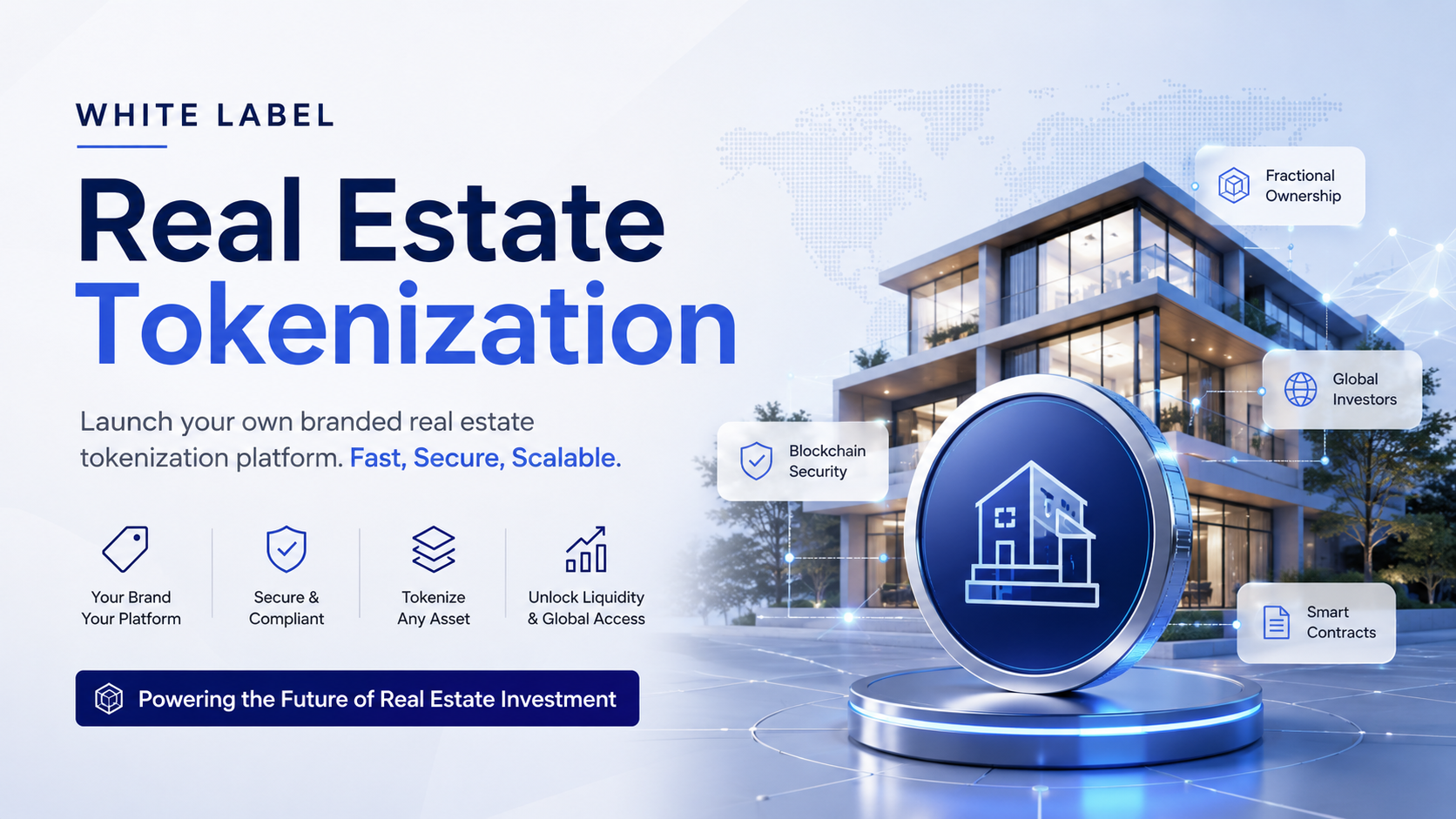
White label real estate tokenization refers to ready-made blockchain platforms that can be customized and deployed under a company’s own brand. These solutions include essential components required for tokenizing property assets, such as smart contracts, token issuance systems, compliance modules, and investor interfaces.
Rather than building each component independently, businesses can configure existing systems to suit their asset classes, regulatory requirements, and investment models. This significantly reduces development complexity while maintaining flexibility and scalability.
1. Eliminating the Need for Building Core Infrastructure from Scratch
One of the biggest time-consuming aspects of launching a tokenization platform is developing core blockchain infrastructure. This includes:
- Smart contract architecture
- Token creation and management systems
- Blockchain node integration
- Secure transaction processing frameworks
White label solutions already include these foundational elements. Businesses do not need to design, test, or deploy these systems independently. This alone can reduce development timelines from many months to just a few weeks. By removing the need for foundational engineering, companies can immediately focus on platform customization and deployment.
2. Pre-Built Smart Contracts Accelerate Deployment
Smart contracts are essential for automating ownership transfers, revenue distribution, investor rights, and compliance enforcement in tokenized real estate.
Developing secure smart contracts from scratch requires extensive coding, auditing, and testing. White label platforms provide pre-tested smart contract modules that are already optimized for real estate use cases. These templates can be quickly adjusted for different property types, investment structures, or regulatory frameworks, significantly reducing both development time and technical risk.
3. Built-In Compliance Frameworks Reduce Legal Setup Time
Real estate tokenization must comply with regulatory standards such as KYC (Know Your Customer), AML (Anti-Money Laundering), and securities regulations depending on jurisdiction.
White label solutions often include integrated compliance systems that handle investor verification, identity checks, and transaction monitoring. These systems are pre-configured to meet common regulatory requirements. Instead of building compliance workflows from the ground up and coordinating with multiple legal teams, businesses can activate existing compliance modules, significantly accelerating platform readiness.
4. Ready-Made Investor Dashboards and User Interfaces
User experience development is another major factor that delays platform launches. A complete real estate tokenization platform requires:
- Investor dashboards
- Asset performance tracking
- Wallet integration
- Transaction history views
- Portfolio management tools
White label platforms provide pre-designed UI/UX components that can be quickly customized with branding, asset details, and investment structures. This eliminates the need for long design and development cycles. As a result, platforms can move from concept to fully functional investor-ready systems in a much shorter timeframe.
5. Faster Integration With Secondary Marketplaces
Liquidity is a key feature of tokenized real estate, and secondary trading capabilities are often required for investors to buy and sell fractional ownership.
Building trading systems from scratch involves complex exchange mechanisms, pricing models, and security layers. White label solutions often include pre-integrated marketplace modules or APIs that connect to existing trading ecosystems. This enables faster activation of liquidity features without requiring full-scale exchange development.
6. Reduced Technical Risk and Development Overhead
Custom blockchain development carries significant technical risks, including security vulnerabilities, smart contract bugs, and scalability challenges.
White label platforms reduce these risks because they are pre-tested, audited, and optimized for performance. This means businesses do not need to spend additional time on debugging, stress testing, or infrastructure stabilization. With a more stable foundation in place, deployment becomes faster and more predictable.
7. Scalability Without Additional Infrastructure Delays
As tokenized real estate platforms grow, they need to support increasing numbers of investors, assets, and transactions.
White label solutions are typically designed with scalability in mind, allowing businesses to expand operations without re-engineering core systems. This includes support for multiple asset classes, geographic regions, and investor categories. Because scalability features are already embedded, businesses can launch quickly without worrying about future infrastructure limitations.
8. Lower Development Team Requirements
Building a custom tokenization platform often requires large teams of blockchain developers, UI/UX designers, compliance experts, and backend engineers.
White label solutions reduce dependency on large internal teams by providing ready-made infrastructure. Businesses can operate with smaller technical teams focused on configuration and management rather than core development. This not only speeds up launch timelines but also reduces operational complexity during early-stage deployment.
9. Faster Go-To-Market Strategy Execution
Speed is critical in competitive real estate and Web3 markets. Delays in platform launch can result in missed investment opportunities and reduced market share. White label tokenization development enables rapid go-to-market execution by combining pre-built infrastructure with customizable modules. Businesses can launch pilot platforms, onboard early investors, and start asset tokenization within significantly shorter timeframes. This agility provides a strategic advantage in emerging digital asset markets.
Challenges to Consider
While white label solutions offer speed and efficiency, businesses must still evaluate certain factors:
Regulatory alignment is essential, as compliance requirements differ across jurisdictions. Customization limitations may exist depending on the platform provider. Businesses must also ensure that security standards meet their specific risk requirements.
Despite these considerations, white label solutions remain one of the most efficient ways to enter the tokenized real estate ecosystem.
Future of White Label Tokenization Platforms
As blockchain adoption increases, white label real estate tokenization platforms are expected to evolve further. Future systems may include AI-driven asset valuation, automated investment matching, and deeper integration with decentralized finance ecosystems.
These advancements will continue to reduce launch times and make tokenized real estate more accessible to businesses of all sizes.
Conclusion
White label real estate tokenization development significantly speeds up platform launches by eliminating the need to build complex blockchain infrastructure from scratch. Through pre-built smart contracts, integrated compliance systems, ready-made user interfaces, and scalable architecture, businesses can transition from concept to operational platform in a fraction of the time.
For companies entering the Web3 real estate space, white label solutions provide a practical and efficient pathway to launch, scale, and compete in a rapidly evolving digital property ecosystem.


 Arabic
 French
 Spanish
 Portuguese
 Deutsch
 Turkish
 Dutch
Dutch
 Italiano
 Russian
 Romaian
 Portuguese (Brazil)
 Greek
Greek